"There Aren't Enough IT Budgets to Go Around": What Does IBM's Historic Plunge Mean for the Stock Market?
A Business Insider columnist suggested describing current events in terms of the apocalypse

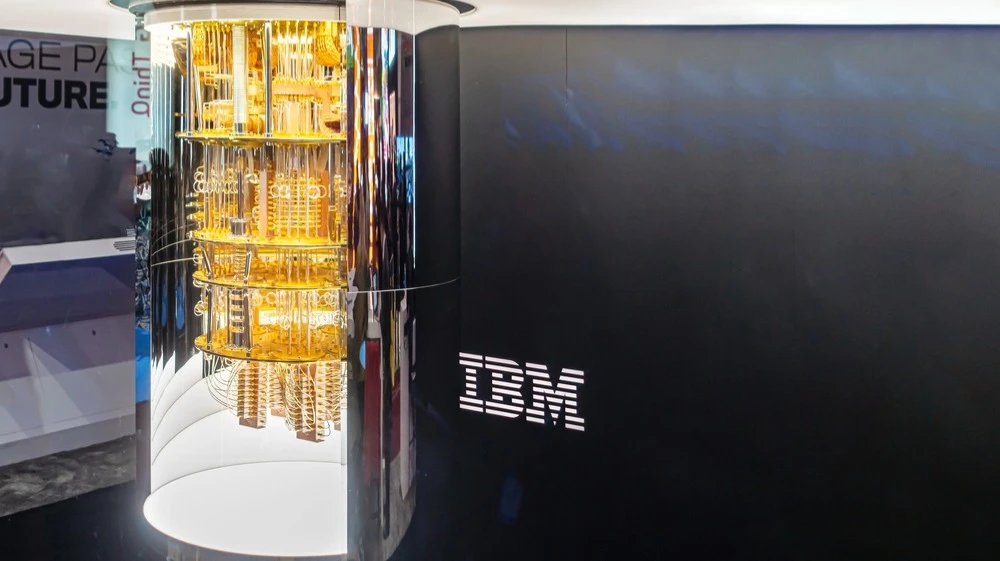
Sales of IBM computing systems fell short of forecasts as customers spent their money on AI servers / Photo: Audio und werbung/Shutterstock.com
IBM’s historic stock plunge revealed a new side of the AI boom: rising costs for servers, memory, and storage systems for neural networks are leaving less money for other technology projects. Mainframes—powerful computers on which large businesses process mission-critical operations—and IBM’s software have been hit hard. Investors have begun looking for companies that might face the same problem.
What Happened to IBM and Its Software Vendors' Stock Prices
On July 14, IBM’s stock plummeted 25.2%—a steeper drop than on any other day in the company’s history. The previous record low, a 23.7% drop, had stood since “Black Monday” on October 19, 1987. The sell-off spread to enterprise software developers: ServiceNow lost 5.8% of its market value in a single day, Workday lost 3.5%, SAP lost 3.2%, and Salesforce lost 2.1%.
Investors reacted to IBM’s warning that second-quarter earnings and revenue fell significantly short of expectations. Customers allocated more funds to AI equipment, seeking to purchase it before prices rose, and also increased spending on cybersecurity. Less money was left for the new IBM Z mainframes and software for them.
While IBM’s stock fell by a quarter, shares of memory manufacturer SK Hynix on the Nasdaq rose by more than 20%. Business Insider columnist Alistair Barr suggested calling this phenomenon the “Mainframe-alypse,” though he doubted the term would catch on.
Where Do IT Budgets Go?
Susquehanna analyst James Friedman pointed out that even the largest corporations have limited technology budgets. The more they spend on AI equipment, the less they have left for other projects. Gil Luria, head of technology research at D.A. Davidson, expects that during the current earnings season, many companies in the tech sector will report this problem—a decline in customer spending on software and hardware not related to AI, The Wall Street Journal reported.
Chamat Palihapitiya, a former Facebook vice president and venture capitalist, believes that the sustainability of the current spending cycle depends on customers’ ability to recoup the costs of using AI. The revenues of AI model developers are enormous, but that’s not enough for the industry to grow. “The rest of the supply chain needs to make money too,” he said (as quoted by Business Insider).
Who's next?
Nicholas Mugalli, CEO of World Trade Securities, called IBM the first major casualty of the reallocation of corporate IT budgets. Its clients did not cancel software projects, but rather postponed them in order to purchase servers, memory, and storage systems—which are becoming more expensive—earlier. “This is exactly how the fallout for SaaS begins: not with contract cancellations, but with them being pushed to the back burner,” Mugalli wrote. He suggested that Palantir and ServiceNow would face a similar problem.
Dan Niles, founder of Niles Investment Management, also expects further warnings from software developers. He is particularly concerned about the shortfall in revenue from mainframe software: a significant portion of this revenue is typically recurring, so the decline is especially alarming. “Since most software sales occur at the end of the quarter, I doubt IBM will be the last victim,” Niles warned.
Jeffrey Favuzza, an analyst at Jefferies, suggested waiting to see how investors react to the upcoming earnings reports from chipmakers and software developers. If strong results from Intel and Texas Instruments trigger a significant rise in stock prices, while reports from SAP and ServiceNow are met with a more subdued reaction, this would confirm the market’s continued preference for the semiconductor sector, according to MarketWatch.
Isn't it the apocalypse yet?
Analysts at Evercore ISI, led by Amit Daryanani, stated that IBM’s disappointing quarterly results were primarily due to weaker-than-expected sales of mainframes and related software, rather than a general deterioration in business performance. Other segments of IBM’s business, including the development of the Red Hat enterprise operating system, remained stable, Evercore emphasized.
Barclays did not change its investment rating for IBM. The bank maintained its “Overweight” rating (equivalent to a buy recommendation) and a price target of $350 per share. A weak quarter does not yet prove that the development of AI will undermine demand for mainframes in the long term, Barclays noted.
It remains to be seen how long corporate clients will continue to allocate more funds to AI equipment while putting other IT projects on hold. BNP Paribas sees no signs of this trend slowing down. Friedman of Susquehanna acknowledges that the shift in spending toward AI is affecting the entire technology sector, but believes that IBM’s weak results are due to “more specific” factors. To understand whether the pressure is spreading further, he suggests keeping an eye on reports from Accenture, Cognizant, and other IT service providers, according to Bloomberg.
This article was AI-translated and verified by a human editor