'Too vague': Trump's new Strait of Hormuz plan has perplexed the market
Trump's announced operation to withdraw ships from the Gulf has not been discussed in any way with market participants, and its details remain "disturbingly unclear," shipping companies say

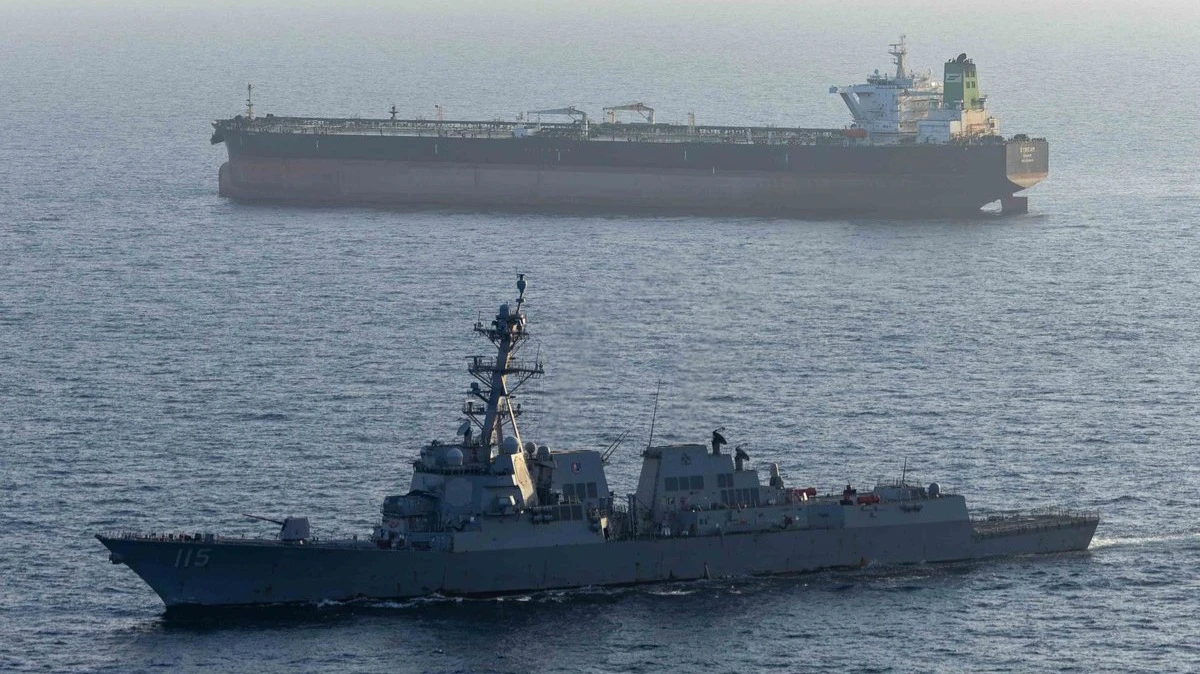
Vessel owners fear that tankers escorted by U.S. warships will become an even more attractive target for the IRGC / Photo: X/U.S. Central Command
The new plan to help ships through the Strait of Hormuz, announced by US President Donald Trump, came as a complete surprise to the maritime industry. Shipowners complain about the lack of specifics and fear that the U.S. military convoy will only multiply the risks for commercial vessels.
Details
The announcement by the head of the White House that the US will start removing stranded vessels from the Strait of Hormuz took both shipowners and maritime safety specialists by surprise, Lloyd's List reports. There had been no prior consultation with market participants until Sunday's announcement of Operation Project Freedom on Trump's Truth Social media network Truth Social. The Joint Maritime Information Center (JMIC), which monitors threats in the region, said the Americans had established a security zone in Omani territorial waters for passage through the strait, but did not disclose details.
Correspondence in profile chat rooms where employees of companies whose ships were blocked in the Persian Gulf communicate confirms that the news about Project Liberty caught market participants completely unprepared, writes Lloyd's List. On the morning of Ma 4, security chiefs at shipping operators told the publication that many aspects of the US plan remain "disturbingly unclear". Their main fear is that the US military will not intervene if Iran attacks merchant ships.
What the industry is saying
The initial reaction of industry representatives to Trump's initiative was cautious. "Given the expected Iranian opposition, the passage of merchant ships through the strait promises to be a high-risk venture," said Jakob Larsen, director of safety at shipping association BIMCO. "It is highly likely that hostilities will resume - and the question is whether further military moves can weaken the Iranian threat to the point where shipowners will find the risk of passing through the strait justified," Larsen was quoted by Lloyd's List.
Market participants need more details and assurances on key risks, including the mine threat and defense against Iranian attacks, several shipowners and representatives of management companies told Bloomberg. In contrast, Trump's announcement raises the risk of an escalation of the conflict, said Anil Jai Singh, vice president of the Indian Maritime Foundation. "In what order will vessels be escorted out? Will some of them get priority over others? What will happen to foreign-flagged vessels? Many questions arise and the answers are not at all obvious," the retired officer stated.
"The proposed plan looks vague, to say the least. Coming out [of the Gulf] accompanied by a Western warship risks making you an even more attractive target for the IRGC," warned Kostas Karathanos, chief operating officer of Athens-based GasLog, one of whose gas carriers has been blocked in the Gulf of Oman on its way to Asia since the war began, according to The Wall Street Journal. The European businessman told the WSJ that his vessels in the Gulf would not move until a "final cease-fire" in the Middle East.
What's up with oil prices
Brent oil futures rose by more than 3%, above $112 per barrel in the afternoon of Ma 4. The jump in quotations occurred after the Iranian agency Fars reported that at the entrance to the Strait of Hormuz two missiles hit a U.S. warship that ignored Tehran's warnings. The United States military command responded by saying, "No U.S. Navy ship was hit."
At the same time, the IRGC published a map of the Middle East region, declaring part of the waters of the Strait of Hormuz a zone of Iran's military control. It included key areas between the coasts of Iran and the UAE, Anadolu reported citing the semi-official Iranian Fars news agency. This has sharply increased market concerns about the security of oil transit in the region, according to Trading Economics.
This article was AI-translated and verified by a human editor