U.S. stocks opened lower due to high inflation and expectations of a rate hike
The tech sector is under pressure again

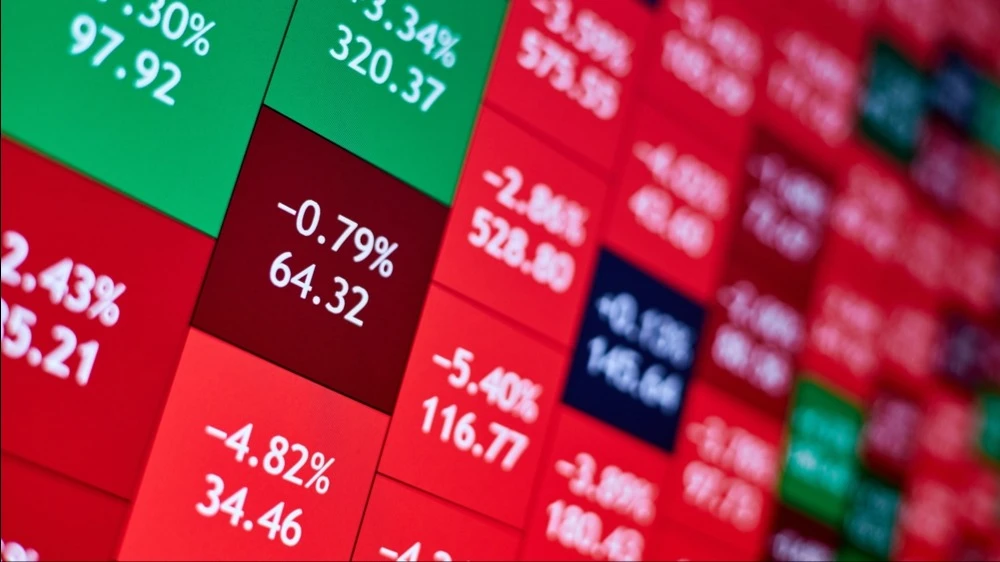
The U.S. market opened lower / Photo: marketlan/Shutterstock.com
Stocks on the U.S. stock market fell at the start of trading on November 10: all major indices were in the red. The Nasdaq Composite Index, in which technology companies have significant weight, fell by about 1.2%, although it later slowed its decline. The broad-market S&P 500 index fell 0.6%, while the Dow Jones Industrial Average—a blue-chip index—dropped 0.5%. The Russell 2000 index of small- and mid-cap companies lost 1.1%.
Stocks began to fall after the release of a higher-than-expected Consumer Price Index (CPI): it rose 0.4% month-over-month in October, although economists had expected a 0.3% increase. Year-over-year figures were not reported because data collection in October 2025 was disrupted by the U.S. government shutdown.
Inflation data has convinced traders that a Federal Reserve rate hike at its December meeting is inevitable, and the only question is by how much the rate will be raised. Market participants believe there is an 85% probability of a 25-basis-point rate hike—bringing the target range to 4–4.25%—and a 15% probability of a 50-basis-point hike, according to the FedWatch tool. Prices do not currently reflect the possibility of the rate remaining unchanged. On November 10, Federal Reserve Board Member Christopher Waller also acknowledged the possibility of a 50-basis-point hike in December.
Oil prices continued to fall on Tuesday: the price of Brent futures dropped below $90 per barrel for the first time since August. At its intraday low, the price was down 3.7% at $89.16 per barrel. WTI prices fell to $83.88 per barrel.
What Analysts Are Saying
"Ahead of the CPI release, investors were 'expecting greater relief following thevery high September figures,'" noted Adam Krisafulli, founder of Vital Knowledge, in a Bloomberg report.
The October consumer price data, however, is a negative factor for risky assets, which include stocks, says Jeff Schulze, an investment strategist at the Franklin Templeton Institute.
“It’s not just the headline CPI that’s too high: the oil shock has also spilled over into the core index,” noted Brian Jacobsen, senior economic strategist at Annex Wealth Management, as quoted by Bloomberg. The core CPI excludes volatile food and energy prices.
This article was AI-translated and verified by a human editor