"A Changed Company" with Old Rules: What Changes Does the Market Have in Store for Nvidia?
Corporate governance at Nvidia and the actions of its top executives remain under close scrutiny by regulators and rating agencies

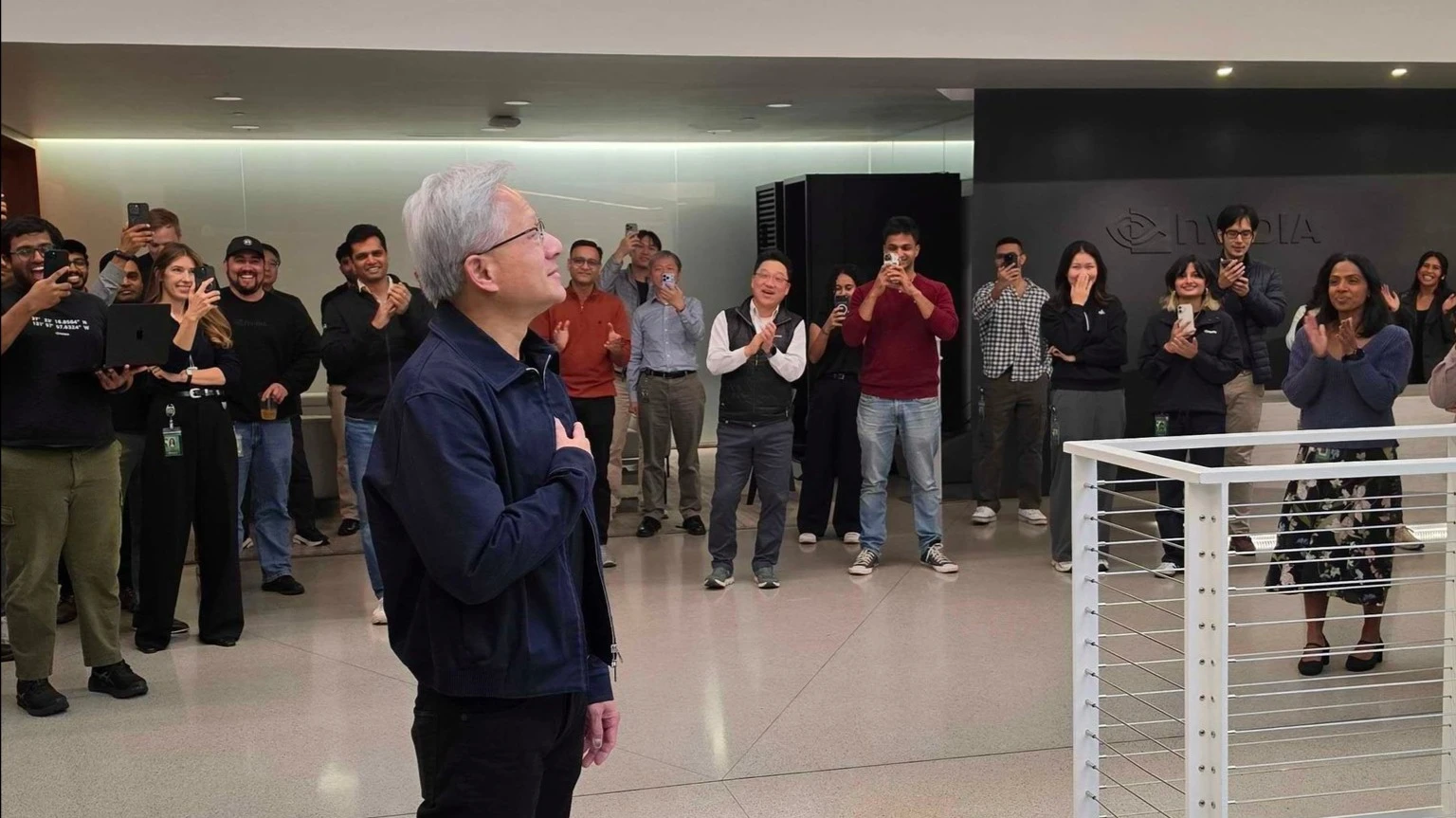
Nvidia posted this photo of Huang with employees after he was reinstated / Photo: X/Nvidia
Now that Jensen Huang has returned to lead Nvidia, company employees, analysts, and corporate law experts have been wondering whether he can continue to run the $3.6 trillion company using his old methods—surrounded by loyal top executives and with the current board of directors, according to the Financial Times. At a meeting with employees following his return on November 24, Huang promised to “be the best CEO this time around” and acknowledged that he needs to soften his management style, but said virtually nothing about whether he would overhaul the entire system, the newspaper noted.
The company’s market value jumped by nearly $1 trillion on November 23 following news of his return, but the rally was short-lived—since then, the stock has fallen by about 10% amid a broad sell-off in the semiconductor sector. What can we expect from “Huang 2.0”?
What the Experts Say
At the same meeting with employees, Nvidia’s CEO spoke out against a formal succession plan and defended the current organizational structure, in which dozens of top executives report directly to him, according to the FT. But Huang will still have to change, according to Gene Munster, managing partner at Deepwater Asset Management.
“It’s clear that Jensen will lead as a changed man. He’s had a near-death experience and is grateful to be back at the helm,” said Munster. Following a wave of criticism over Huang’s longstanding habit of yelling at subordinates in front of colleagues, “some of the pressure on employees, partners, and politicians will take on a softer tone,” Munster believes. “Most likely, this means the company will lose half a step. I believe this loss is more than offset by the fact that, for the first time in a decade, Jensen has something to prove,” the investor added.
Amid a scandal that “exposed vulnerabilities” in Nvidia’s management system, S&P Global Ratings warned on November 25 that it might downgrade the company’s credit rating (currently at AA) by one notch if “significant” corporate governance deficiencies are not addressed. Ann Lipton, a law professor at the University of Colorado Boulder, called Nvidia’s reluctance to establish a succession plan “catastrophic” and “exactly the kind of situation the market should punish.” It is the board of directors that is responsible for establishing systems to ensure that such issues are brought to its attention in a timely manner, Lipton added.
So far, the board has taken only limited measures: it has promised to appoint an official chief compliance officer and has established a committee to oversee national security and export controls. Board Chairman Harvey Jones stated that the company is committed to working constructively with government and industry partners to protect national security while preserving technological innovation. However, the future of the board itself in its current composition remains in question, according to the FT. Some investors are disappointed that the company made a sharp U-turn and reinstated Huang under pressure from U.S. President Donald Trump just a few days after Jones had ruled out that scenario.
Two of Huang’s key deputies have also come under close scrutiny. Chief Financial Officer Colette Kress oversaw the accounting department, which is currently under investigation by the SEC amid investor concerns about Nvidia’s revenue dependence on China. According to two FT sources, she had previously clashed with Huang’s son-in-law, Nico Capres, who quickly rose to become the lead for major Asian clients and took control away from Kress’s team.
General Counsel Tim Teter was responsible for ensuring compliance with U.S. export controls and, according to sources in Washington, earned a reputation for downplaying national security risks; Next week, he and Huang will testify at closed-door congressional hearings. A former high-ranking official at the U.S. Department of Commerce told the FT that Nvidia effectively had no professional government relations department: “I’ve never seen a compliance team take its job less seriously.” At the same time, a source familiar with the company’s lobbying activities in Washington noted that Nvidia simply disagreed with its critics on how best to protect national security, believing that allowing some sales to China to compete with Huawei would ultimately serve U.S. interests.
That said, according to one Nvidia employee, Huang is unlikely to fire his deputies: “Firing people isn’t Jensen’s style. His approach will be: we need to give Tim and Colette a big hug.”
Nvidia shares rose more than 4% in pre-market trading ahead of the U.S. market open on November 27. Compared to the start of 2026, the stock is now trading 20% lower. However, only two of the analysts who cover the company’s stock recommend selling it (a “Sell” rating), according to MarketWatch. The stock has 57 “Buy” and “Overweight” recommendations and 14 “Hold” recommendations. The average price target of $239.8 is 61% higher than the most recent closing price (as of November 25).
This article was AI-translated and verified by a human editor