"A Startup by Necessity": Compass Could Be the First to Bring a Psychedelic to the U.S. What About Its Stock?

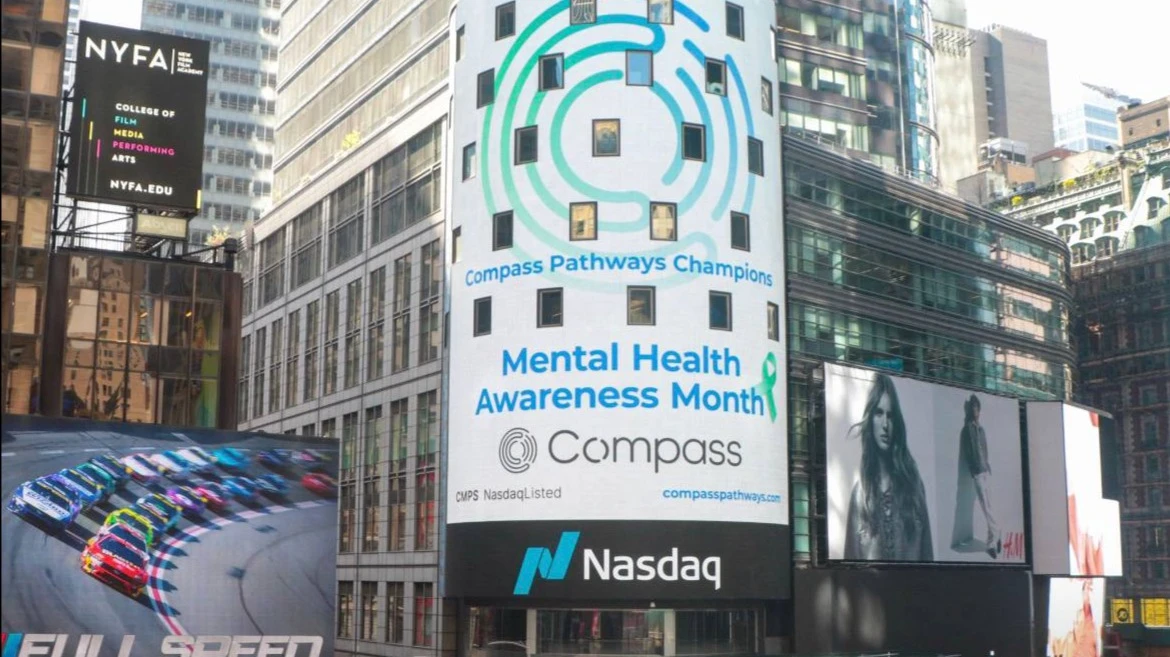
If the COMP360 drug is approved by the FDA, Compass plans to begin sales in the first half of 2027 / Photo: Compass / LinkedIn
“We often refer to Compass as a ‘startup by necessity,’” said the company’s founders, husband and wife George Goldsmith and Ekaterina Malievskaya. It wasn’t founded on a clear business plan, but rather on a personal family tragedy—their son’s severe depression, which didn’t respond to standard therapy.”
To help such patients, the couple founded the nonprofit organization Compass. This later evolved into the biotech startup Compass Pathways. The company is developing a psychedelic for the treatment of severe depression and post-traumatic stress disorder (PTSD), which could become the first drug of its kind to be approved in the U.S.
How Compass Got Its Start
Ekaterina Malievskaya is a doctor by training. She was born in Yekaterinburg, graduated from the St. Petersburg Medical Academy, and moved to New York in the 1990s to continue her education and career. There, she met her future husband and business partner, George Goldsmith, a consultant at McKinsey & Company and founder of TomorrowLab and the Tapestry Networks entrepreneurship community.
“None of this prepared us for the devastating consequences of the failure of the psychiatric care system when my son fell ill. Even when the best doctors at the best institutions turned us away, I kept looking for solutions,” Malievskaya wrote in an article for the MAPS newsletter, published by the Multidisciplinary Association for the Study of Psychedelics.
In his search for an alternative, Goldsmith—who had spent five years in a clinical psychology graduate program—recalled the work of neuroscientist John Lilly — who, back in the 1960s, had studied the effects on the body of psilocybin, the active compound found in hallucinogenic mushrooms. “We had the resources and connections, and we were able to understand and assess the risks and benefits of new approaches,” Malievskaya wrote.
That’s how Compass came into being in 2015—a nonprofit organization created to support the development of psilocybin-based therapies and fully funded by the couple, who had already moved to the United Kingdom by that time.
They planned to conduct clinical trials at a hospice on the Isle of Man, as well as at one of the research centers in the United States. The problem was that the centers in the U.S. did not have psilocybin, so some members of the board of trustees suggested that the organization not wait but produce it on its own, Maliyevskaya wrote. By the time the nonprofit had organized production, the situation on the Isle of Man had changed as well—“the opportunity had been missed.”
At the same time, costs were rising, and their personal funds were no longer sufficient. Following the advice of a consultant, Malievskaya and Goldsmith decided to register a company in the United Kingdom that would conduct research and be eligible for tax benefits not available to nonprofit organizations.
In 2016, they founded Compass Pathways to produce psilocybin for research. Their partner in this venture was German entrepreneur Lars Christian Wilde, who himself suffered from treatment-resistant depression and anxiety, which he was able to overcome with the help of an experimental psilocybin treatment. He said that a “happy coincidence” brought him together with Malievskaya and Goldsmith.
However, the partners decided not to limit themselves to just manufacturing the substance for research, and in 2017, Compass Pathways decided to conduct its own clinical trials. It focused on treating PTSD and treatment-resistant depression, for which existing antidepressants are ineffective. More than 320 million people worldwide suffer from major depressive disorder (MDD), and in about one-third of cases, standard treatments are ineffective. In the U.S. alone, the economic burden of MDD and its associated conditions is estimated at more than $200 billion a year, the company reported.
In the early stages, the company received support from three investors: Christian Angermayer, a founder of Apeiron Investment Group (who was acquainted with Wilde and had already invested in his projects); Mike Novogratz, a founder of Galaxy Investment Partners; as well as Peter Thiel, co-founder of Palantir and PayPal.
In 2018, the biotech company atai Life Sciences became a shareholder of Compass with a 29.21% stake. It was founded that same year by Angermayer and Wilde with support from Thiel. At that time, it was not developing drugs but was essentially operating as a venture capital fund, investing in other biotech companies. But following a partnership and subsequent merger with Beckley Psytech, a developer of a competing psychedelic, atai began reducing its stake in Compass. In July 2026, pharmaceutical giant Eli Lilly announced plans to acquire ataiBeckley at a premium to market value.
In 2020, Compass went public on the Nasdaq, offering 7.5 million American Depositary Receipts (ADSs; one ADS equals one share) at $17 each. Since then, the stock has fallen by about 50%, but year-to-date, it is up nearly 67.5%.
What's Happening with Compass Right Now
Clinical trials of Compass’s drug, known as COMP360, are nearing completion. In February, the biotech company published the first data from the final phase of trials of the drug in patients with treatment-resistant depression. The interim results confirmed the efficacy of COMP360 in treating treatment-resistant depression and its rapid and sustained effect, with an overall favorable safety profile. On the day the interim data were released, Compass’s stock price soared 31%.
At the same time, Compass is studying COMP360 in patients with PTSD—the drug is in the final stage of clinical trials.
All of this is taking place at a time that Oppenheimer analyst Jay Olson has called “a structural turning point for the U.S. psychedelics sector.” In April, U.S. President Donald Trump signed an executive order aimed at accelerating research and expanding patient access to psychedelics intended to treat post-traumatic stress disorder (PTSD), but which are not yet in use in the United States.
Just six days after Trump signed the executive order, the regulator granted Compass the opportunity to submit an application for the registration of COMP360 in stages—that is, as data is received and documents are completed, wrote the law firm Vicente, which specializes in psychedelics and cannabis. The FDA also selected the company’s drug to participate in the National Priority Review Program (CNPV), which reduces the review time for a drug registration application from the usual 9–12 months to 1–2 months.
What Matters to Investors
If the drug is approved, Compass plans to begin selling COMP360 in the first half of 2027, the company said. This is about two years ahead of a competing development by ataiBeckley, notes The Motley Fool. Thus, COMP360 could become the first psychedelic approved in the U.S., Vicente notes. However, Vicente points out that Trump’s executive order does not mean psilocybin has been legalized at the federal level. It remains on the strictly controlled Schedule I list, alongside heroin and LSD. Only the U.S. Congress or the Drug Enforcement Administration can reclassify it, Vicente writes.
Since the beginning of the year, Compass shares have risen 70%; over the past 12 months, they have risen 170%. The company’s stock has 16 “buy” recommendations from Wall Street analysts and only one “hold” recommendation. The average target price for the stock is $23.35—twice the stock’s price at the last close.
This is not intended as individual investment advice.