A Trillion by 2030 and Moon Factories: Musk’s Key Statements Following the SpaceX Report
Elon Musk reported on second-quarter results, promised regular Starship flights, and explained why SpaceX’s AI competitors are playing in the “kids’ league” compared to SpaceX

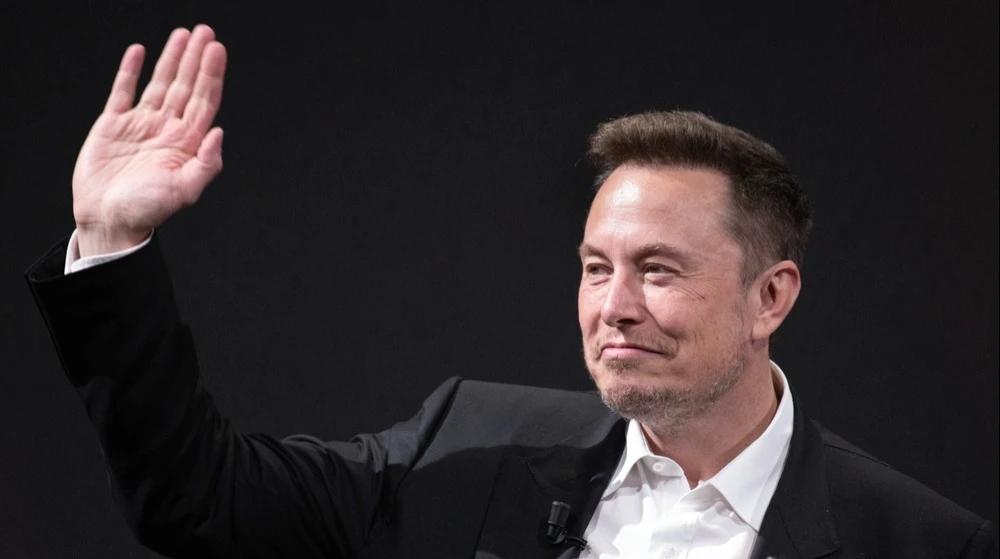
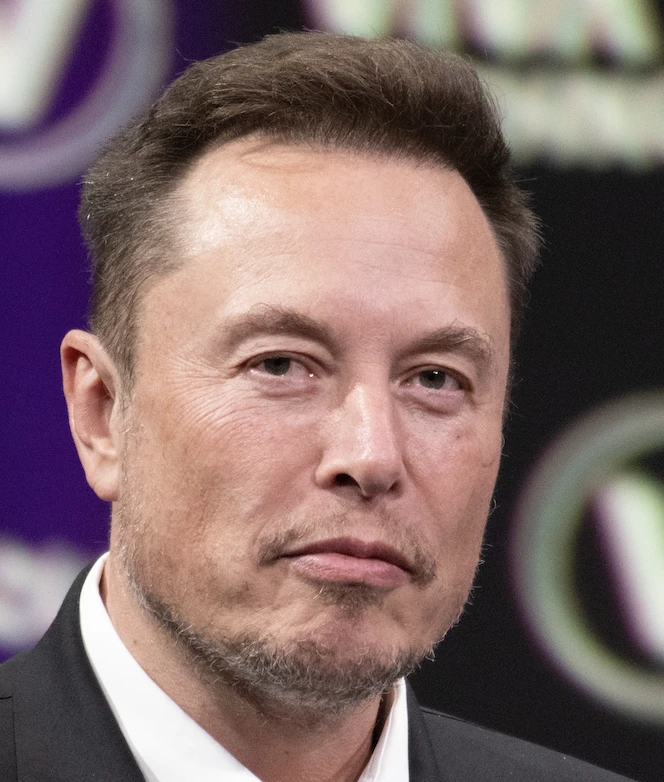
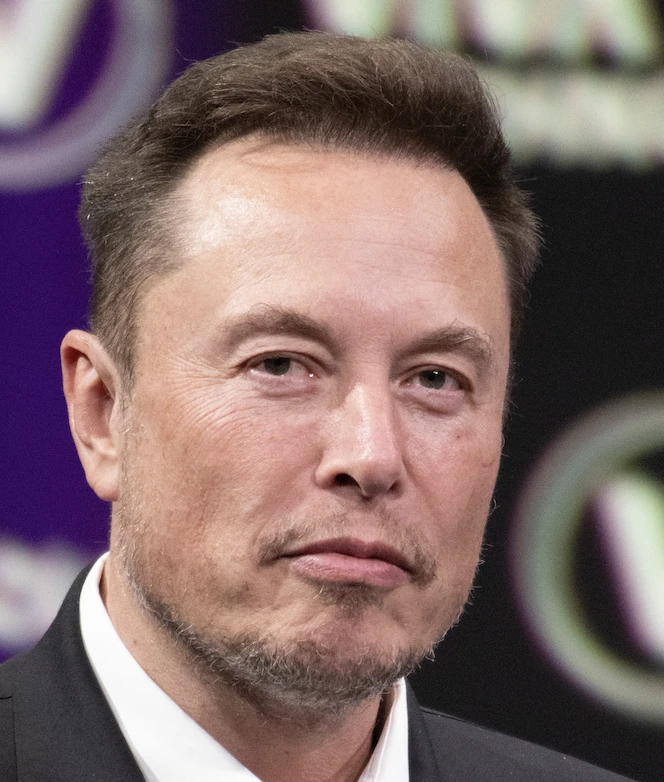
The founder of SpaceX stated that competitors are unable to replicate the company’s innovations: the team’s unique experience gives SpaceX an overwhelming advantage in the market / Photo: Frederic Legrand - COMEO / Shutterstock.com
During the second-quarter earnings conference call on August 4, Elon Musk stated that SpaceX will reach $1 trillion in revenue by 2030, the Starship launch vehicle will be flying daily within a year, and the Starlink satellite network will account for the majority of global internet traffic in less than ten years. However, Musk barely mentioned any potential challenges and did not always explain the basis for his predictions. Oninvest has compiled the key points from his speech.
About Money
According to Musk, all business segments are growing faster than expected. AI cloud services are expected to be the biggest contributor to revenue growth: SpaceX provides Google, Anthropic, and other companies with access to the computing power of its data centers.
Following the launch of the new V3 satellites, Musk expects a sharp increase in Starlink’s revenue: the V3 satellites offer more than ten times the bandwidth of the previous V2 generation, and the company plans to launch approximately ten times as many of them into orbit. Another source of revenue will be Direct-to-Cell—a service providing direct satellite connectivity to cell phones.
By the end of the year, SpaceX expects to reach annual recurring revenue of over $100 billion, Musk said. According to him, this is more of a lower-end estimate: the current growth trajectory is sufficient to reach this level, and the actual figure will likely be higher. In addition, SpaceX has revised its timeline for reaching $1 trillion in annual revenue. Prior to its IPO, the company expected to reach this level in 2031; it is now targeting 2030, although Musk did not rule out that it could happen as early as 2029.
About Starship
Musk expects that regular flights of Starship—the most powerful launch vehicle in history—will dramatically increase the volume of space transportation. Currently, Falcon rockets launch about 2,500 metric tons of cargo into orbit each year—80–90% of the global total. According to Musk, with Starship, the company plans to increase this figure first to more than 1 million metric tons, and then to 10 million metric tons per year.
Over the past 90 days, the company has conducted two successful test launches of Starship. The 13th test, which took place on July 24, confirmed the operation of the systems necessary for Starship to reach orbit and return to Starbase.
“I was a little worried about the 13th flight—after all, it inevitably brought to mind ‘Apollo 13,’ where things didn’t go according to plan. But in the end, the flight went incredibly well. The heat shield looks very sturdy. The spacecraft is still drifting in the ocean, but we plan to recover it and study it.”
If SpaceX does not uncover any major issues during its analysis of Starship and receives regulatory approval, the company will attempt to return the spacecraft’s upper stage to the launch tower for the first time during its 14th flight, scheduled for late August.
According to Musk, Starship will be able to fly at least once a day as early as next year. But before using the spacecraft for crewed flights, SpaceX must verify its reliability. The company expects to quickly accumulate the necessary data—thanks to the high frequency of launches—and reach the required safety level by the end of 2027.
About the Moon
According to Musk, manufacturing on the Moon will be one of the main areas of application for SpaceX’s robotics. The company plans to deliver large volumes of cargo to the Moon and use autonomous robots to build factories there.
Musk believes that manufacturing solar panels and cooling systems on the Moon will make it possible to increase the amount of computing power deployed in space. He estimates that, over time, the scale of such infrastructure could exceed “Earth-based” capabilities by a thousand or even a million times.
"Manufacturing on the Moon sounds like science fiction today, but it will become a reality. This will make it possible to build a mass driver there—an electromagnetic accelerator for launching cargo."
About Starlink
Starlink already serves millions of users in 170 countries and regions, and the volume of data transmitted, Musk said, could increase dramatically. In that case, even a tenfold decrease in revenue per bit transmitted would allow Starlink to increase its revenue tenfold.
"It's possible that, over time, Starlink will account for the majority of global internet traffic—at least in countries where we're allowed to operate, which is the vast majority of nations. And we’re not talking about the distant future: this could happen in less than 10 years,” Musk said.
He expects that once approximately 1,000 V3 satellites are deployed, Starlink's performance will improve significantly. He estimates that the constellation will reach this scale in the second quarter of 2027.
Next year, SpaceX plans to begin deploying Starmind AI—a satellite infrastructure for AI computing in orbit. For this project, the company is developing its own design for the Nvidia Vera Rubin NVL72 computing complex, which is intended to replace the standard rack-based architecture.
"It will be cheaper and more efficient. And since we're going to launch it into space, why not use it on Earth, too? I think that would be really cool."
About the AI Business
By the end of 2026, SpaceX expects to increase its computing capacity to 2 GW, and by the end of 2027, to approach 10 GW. While the planned capacity of the facilities currently under construction is higher, Musk acknowledges that some projects may not be completed on time, and therefore is factoring a lower figure into his forecast. The company will equip the new infrastructure with Nvidia hardware. According to Musk, the Vera Rubin architecture is best suited for AI tasks.
Expanding computing capacity will shorten Grok’s update cycle: Musk announced that version 4.6 will be released as early as next week, and version 4.7 in three to four weeks. Grok 5 is expected to be released by the end of the year. According to Musk’s estimates, over time, training Grok will account for about 10% of SpaceX’s computing power, while the remaining resources will be allocated to running already-trained models or provided to third-party clients.
On Memory Deficit
In his view, the economic return on computing power will grow rapidly: models are becoming more efficient, require fewer resources, and are capable of handling increasingly complex tasks. He estimates the potential revenue from using Rubin chips at $30–50 per watt of power, emphasizing that this is only a rough estimate.
But Musk believes that such growth will lead to a sharp increase in demand for computing components. He identified memory as the main bottleneck: its production is growing by about 20% per year, while demand, according to his estimates, could increase by 200% or more. With such a gap between supply and demand, memory prices will only go up.
On Competition
Musk emphasizes that SpaceX does not prevent competitors from copying its designs and even encourages them to do so, but, according to him, creating a counterpart to Starship is extremely difficult.
“On every flight, the rocket desperately tries to break apart into tiny pieces. And the whole engineering challenge lies in convincing it not to do that, but to still deliver the payload into orbit,” is how the founder of SpaceX described his team’s day-to-day work. Musk stated that the company’s track record of successfully launching giant rockets on a regular basis gives it such an advantage in building data centers that its rivalry with competitors resembles a game between the New York Yankees and a Little League team.
This article was AI-translated and verified by a human editor