AI Agents vs. Marketplaces: Who Is Morgan Stanley Backing in This Battle?
Wall Street is undervaluing e-commerce companies because it is factoring in the potential threat that AI poses to their business models


Analysts at Morgan Stanley believe that investors are factoring the risks associated with the introduction of AI agents into their valuations of the e-commerce sector more than the benefits of their emergence.
Just a year and a half ago, when I wrote about shopping bots (then called “castobots”) that would soon be doing our shopping for us, it sounded more like science fiction. My first attempts to buy something through the AI agent Perplexity ended in a curious incident: it seemed to have successfully purchased toothpaste on Walmart’s website, but two hours later it reported that the item was out of stock.

But today, investors are already reassessing the value of the world’s largest e-commerce companies. According to Morgan Stanley’s July report (available from Oninvest), the sector is trading at its lowest levels since the end of the pandemic: its EV/revenue multiple (the ratio of a company’s value to its revenue) stands at 2.4, and the gap with the Nasdaq is close to a historic high—minus 2.9.
“Agent technologies will be a turning point for e-commerce,” says Nathan Fezer, an analyst at Morgan Stanley Research. “As consumer wallets become increasingly digitized, this could radically change the e-commerce funnel, which will impact retailers and players in the digital advertising sector.”
Who will kill the goose that lays the golden eggs?
Few ordinary shoppers realize the scale of online retailers' advertising business. In fact, sellers and brands pay them enormous sums of money to promote their products.
Analysts at the consulting firm Simon-Kucher aptly described these in-store advertising systems (Retail Media Networks, RMN) as “the goose that lays the golden eggs.”
According to their estimates, the profit margin on the advertising business of marketplaces reaches 75–90%, compared to the margin on the sale of actual goods, which amounts to only a few percentage points. Nearly one-third of Walmart’s operating profit comes from advertising. Amazon—surprise!— earned more than $70 billion over the past 12 months ending March 31, 2026, and became the third-largest player in the global digital advertising market, trailing only industry giants Google and Meta.
"Amazon's advertising revenue is growing because the platform is closely tied to the moment when a purchase decision is made. Most advertising platforms help brands reach their target audience. Amazon, however, helps brands engage with shoppers at the very moment they are already searching for products, comparing offers, and ready to make a purchase,” writes the agency Sales Duo.
This whole setup is based on a simple premise: a customer visits a marketplace website and sees “sponsored links.”
The closer it gets to the point of purchase, the more expensive advertising becomes. As long as the buyer is on your platform, you control the entire process.
An AI agent simply disrupts this process. Instead of going to Amazon and typing “sneakers under $150” into the search bar, a person asks ChatGPT, for example. The agent compares, filters, recommends—and may even place the order right away. Even if it’s on Amazon itself. But the buyer didn’t visit the site, didn’t see any ads, and bought only what they wanted.
The marketplace has lost out on additional sales, customer data, and advertising revenue per click. And yet an agent could easily—horror of horrors—find a more profitable option on another marketplace, in which case Amazon would lose the customer altogether.
There’s another loss as well—a loss of information. The agent knows everything about the buyer: what they were looking for, their budget, what they bought, and why they rejected other options. But the marketplace, which used to receive all this data and use it to target ads and generate enticing personalized offers, now sees only one fact: the customer came, bought something, and that’s it.
“Only the agent will be able to see which brands and price categories the client has been researching,” Simon-Kucher writes. “Combine this with insights from all the conversations people have with their agents, and the information asymmetry will be unprecedented.”
Searching for Solutions
Marketplaces, however, aren't sitting idly by—their response is being developed along three fronts at once.
First, defense: build your own agent and keep others out. Amazon is the most aggressive of all. Its own AI shopping agent, Alexa for Shopping, generates $12 billion in additional sales per year, and its users’ conversion rate is 60% higher than that of regular shoppers, according to company data cited by Morgan Stanley.
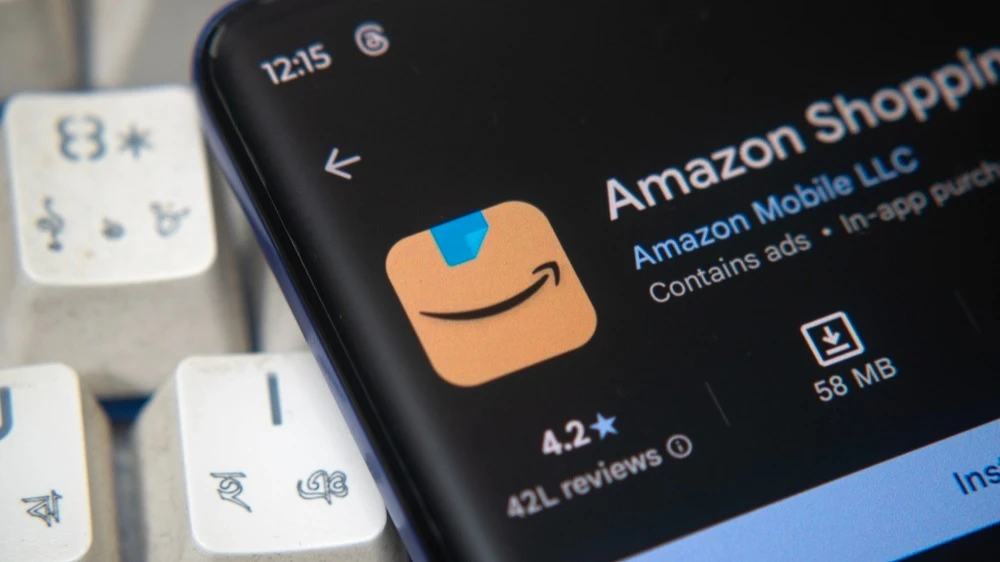
At the same time, Amazon withdrew from Google Shopping and blocked AI crawlers from OpenAI and Anthropic (bots that collect information about product availability and prices from the site). This is a rare instance of a retailer voluntarily giving up traffic. And in the case of Perplexity, Amazon even “stirred up a full-blown legal scandal,” demanding that the developer’s AI agents stop “pretending” to be humans by acting through their accounts.
“Stop for a moment and read that again: an e-commerce seller doesn’t want people to buy products on their website. At least, not the way those people want to. Rather, an e-commerce seller wants people to buy products the way he wants them to. That’s the crux of the matter: it’s all about power,” writes Forbes.
I don't mean to brag, but this is exactly how I predicted things would turn out.
Walmart has launched Sparky: customers using the assistant spend 35% more than the average. Lowe's has Mylow, which generates three times the conversion rate compared to regular online shoppers.
The Kazakhstani platform Kaspi has developed Kasper, an AI assistant built into Kaspi Shop. Instead of searching by keywords, shoppers can simply describe what they need in everyday language—via text or voice, in Russian or Kazakh.
Second, collaboration: if traffic is flowing to AI platforms, you need to place ads right there. In February 2026, Target was one of the first to launch Roundel ads within ChatGPT. As a result, traffic from ChatGPT to Target’s website is growing by an average of 40% per month, according to the company. Walmart Connect has expanded beyond its own platform: it has launched campaigns on Meta and TikTok, and the product assortment offered off-site is growing twice as fast as on the website, according to Retail Media Network.
Shopify and Etsy have integrated with OpenAI through a special interface called the Agentic Commerce Protocol, allowing sellers to process purchases directly within ChatGPT.
Third, shifting to offline channels—areas where algorithms haven’t yet reached. The advertising division of the Albertsons supermarket chain has developed a program to measure the effectiveness of in-store advertising. A pilot project with Mondelez , a major snack manufacturer , showed a return of $2.41 for every dollar spent on advertising and a 14% increase in sales across 116 stores. A physical shelf is an advertising space that AI agents cannot reach. But to take advantage of this, you need to have brick-and-mortar stores.
A Crisis or an Opportunity
On July 19, 2026, Morgan Stanley released a 118-page report titled “The Age of Agents: A Catalyst for Growth and Innovation.” Its main thesis runs counter to the market consensus: agents will not destroy marketplaces—they will accelerate their growth. At least for those who manage to make effective use of new technologies.
According to analysts, the scale of the threat is still relatively small. Although about 30% of consumers already use some form of AI tool for online shopping, AI platforms account for less than 0.5% of traffic to e-commerce sites.
By way of comparison, consider the state of the internet in the 2000s: at that time, about 42% of users were already making purchases online, yet online retail accounted for only 1% of total retail sales. In other words, while consumers are trying out and getting used to new tools, companies have time to adapt. The market underestimates the e-commerce sector not based on numbers, but based on expectations.
In addition, another interesting trend has emerged. A large-scale study released in April by Adobe showed that during the first three months of 2026, AI-related traffic to U.S. retailers’ websites grew by 393% compared to the same period last year, as more and more consumers used AI assistants for online shopping.
In August–September 2025, the traffic conversion rate (the rate at which visits turned into actual purchases) from AI visitors was higher than that from “regular” visitors.
"As of March, revenue from visits generated by AI was 37% higher than from traffic without AI. Just 12 months ago, organic traffic generated 128% more revenue than AI-driven traffic,” writes TechCrunch.
However, the industry still has work to do—Adobe found that about a quarter of the content on retailers’ homepages is not optimized for AI, nor is the content on category pages. The situation is even worse for individual product pages: about 34% of them cannot be properly accessed by AI. Adobe recommends that retailers work to make their websites more accessible to AI if they want to remain in the spotlight for online shoppers in the future.
Morgan Stanley expects that AI agents will account for about 20% of all e-commerce sales by 2030. But the sector, by its very nature, involves the physical movement of goods—finding suppliers, warehousing, order fulfillment, delivery, and returns processing.
That is precisely why the bank’s analysts remain confident in the long-term value of e-commerce companies, even if the adoption of AI agents turns out to be more widespread than expected. If an agent can select and purchase a product, Amazon or Walmart will still deliver the package to the door.
"Although sustained pressure on the sector's valuation multiples remains one of the key risks, we believe that current valuations are already so close to their cyclical low that the risk-reward ratio looks attractive, especially for our top picks,” the analysts note.
According to Morgan Stanley’s forecast, thanks to agents, the average annual growth of the e-commerce sector will accelerate from 7% in 2021–2025 to 9% in 2025–2030, and by 2030, the market size will reach $7 trillion.
Morgan Stanley's top picks for this period—Amazon, Walmart, Alibaba, MercadoLibre, Sea Limited, and Allegro—all have "outperform" ratings.
Morgan Stanley has identified an additional five companies in the U.S. and six in Asia and Australia (all with an “outperform” rating) that could benefit from the development of AI agents. These are Wayfair, Shopify, Chewy, Target, eBay, Meituan, Coupang, LY Corporation, Mercari, FSN E-Commerce Ventures, and Temple & Webster.
Throughout history, there have been companies that thought they owned the customer forever. But the interface between people and shopping has changed several times—from brick-and-mortar stores to online catalogs, from catalogs to search engines, and from search engines to marketplaces. Now it’s up to the marketplaces to figure out who actually controls the final click.
This article was AI-translated and verified by a human editor