Alibaba has unveiled “China’s most powerful AI chip.” Is this a threat to Nvidia?


Photo: Blossom Stock Studio / Shutterstock
Alibaba Group, a Chinese IT giant, has unveiled what it claims is the “most powerful” Chinese chip for artificial intelligence. It is expected to serve as an accelerator capable of competing with Nvidia’s products and to enable a large-scale expansion of data center capacity in the coming years, according to Bloomberg.
On the back of this news, Alibaba's shares jumped nearly 2% in Hong Kong and 0.79% in after-hours trading in the U.S., while Nvidia's shares fell 0.5%.
Details
Alibaba unveiled its new chip at the annual Apsara Conference, the flagship event of the company’s cloud division, held in Hangzhou, according to CNBC. The chip in question is the next-generation Zhenwu V900 AI chip, which, according to the company, delivers three times the performance of its predecessor, the Zhenwu M890, released in May.
“The new accelerator is equipped with 216 GB of memory <...> and inter-chip bandwidth of 1,200 GB per second, and is designed for powerful AI tasks,” the company’s press release states. According to Alibaba, the Zhenwu V900 is capable of “significantly reducing the cost of inference (generating responses for end users—Oninvest note) while increasing computational density.”
Alibaba noted that mass production and the commercial launch of the chip are scheduled for the first quarter of 2027. Existing Zhenwu chips are already being used by more than 650 customers across various industries, including finance, energy, the automotive industry, and others.
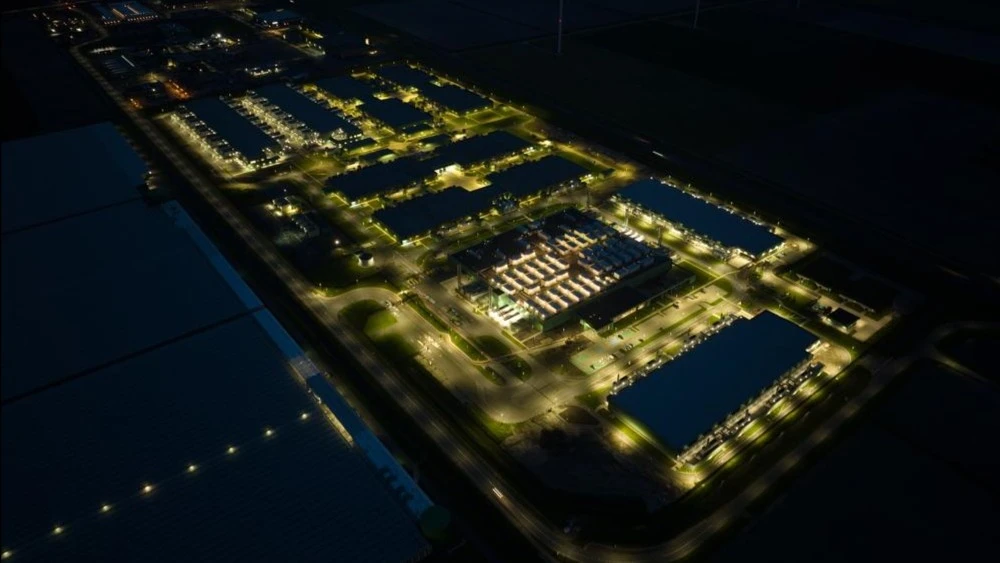
The company also announced plans to expand the global capacity of its data centers to more than 20 gigawatts by 2032. Although this is a massive project for the Chinese company, it is still relatively smaller than some other similar projects being implemented around the world, notes Bloomberg. For example, SoftBank plans to build a 10-gigawatt data center in Ohio alone, the agency points out.
Overall, Alibaba plans to spend more than $53 billion over the next three years to expand its capabilities in the field of AI.
This article is being updated
This article was AI-translated and verified by a human editor