Burry acknowledged that speculators' interest in Nvidia has grown. He himself is betting on other stocks.

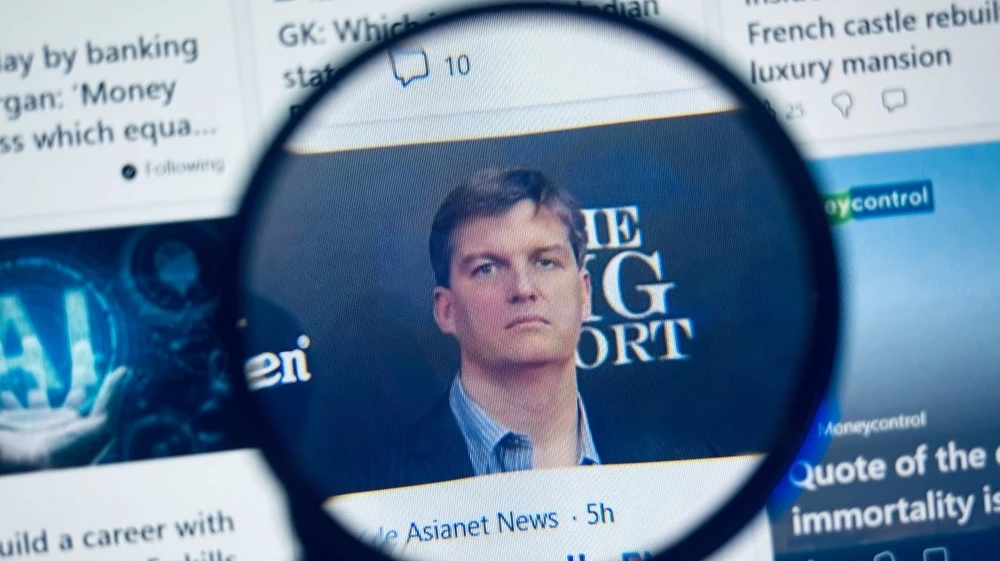
Iconic investor Michael Burry believes that the Nvidia scandal will cause the company to lose its competitive advantage. Photo: favoritesphoto / Shutterstock.com
Shares of Nvidia, whose CEO Jensen Huang has found himself at the center of a spying scandal, have fallen 9.5% since Monday. But well-known short seller Michael Burry has no plans to buy them: he believes the scandal could accelerate the erosion of the company’s competitive advantages. Which companies and sectors is he betting on now?
What does Burry think about the fallout from the Nvidia scandal?
The scandal surrounding Nvidia’s CEO is, as Michael Burry admits, “not what he expected.” But what “shocked” him was how drastically the market’s attitude toward the company had changed. “If it weren’t for the investment thesis I’ve been following for the past year, such a sell-off of Nvidia shares might even have excited me,” he wrote on his blog.
Burry still does not view buying Nvidia stock as a long-term investment, even at current prices. However, he acknowledges that market participants may soon find its stock attractive for short-term buying.
The investor had already bet against this company last year, and had generally viewed it with skepticism even before that.
He now believes that the scandal involving Jensen Huang will not affect Nvidia’s financial performance, but that its competitive advantage will erode over the next five years. Moreover, this process may even accelerate: the controversy surrounding Huang’s personal life, Nvidia’s trade in cutting-edge graphics processors with China, and the U.S. Department of Justice’s antitrust investigation (which began under President Joe Biden and is still ongoing) will likely come back into the spotlight, he does not rule out.
I have long believed that Nvidia’s tactics—which resemble mafia-like behavior, such as investing in numerous players in the AI market and imposing demands on them—create all the conditions for antitrust action. There are plenty of grounds for a serious investigation if the Department of Justice, the Department of Commerce, and other regulatory agencies stop turning a blind eye to what’s happening and launch investigations. I never could have imagined what might force them to change their approach. But now I’m reminded once again: the powerful remain powerful only until they begin to lose their ground.

Burry's Latest Bets
Currently, Burry's largest holdings are the Australian retailer Temple & Webster and the Latin American e-commerce platform MercadoLibre. Each of these holdings accounts for more than 10% of his portfolio.
Moreover, he continues to buy more of the company’s stock, despite the possibility of a further decline in the share price. Over the past few trading sessions, he has done so twice—at a price below $1,500. Burry considers a price level around $1,400 for this company’s stock to be attractive for long-term investments. He wrote that he will buy more MercadoLibre shares if the price drops another 20%.
In addition, Michael Burry increased his position in Adobe shares, despite the stock’s weak performance. Earlier this spring, the company announced a $25 billion share buyback program set to run through the end of April 2030. He expects that the share buyback at current low prices will support the stock’s price and is prepared for the stock to continue trading above $200 for some time.
He also bought additional shares of the Chinese e-commerce giant JD.com. Burry believes that investors are unfairly overlooking this company's stock, which, in his opinion, is currently undervalued.
Burry still sees potential in the stocks of the athletic apparel brand Lululemon and the footwear manufacturer Deckers. In his view, given their current earnings levels, their valuations appear unreasonably low. In early October, he sold his Lululemon shares to lock in a loss and reduce his tax liability, and in their place purchased Deckers shares, which he initially viewed as a temporary replacement. Now, Burry has written that he may wait for the right moment to buy more shares of the athletic apparel brand while maintaining his investment in Deckers.
Going forward, Burry intends to take a cautious approach to further purchases in the consumer sector due to the high concentration of such stocks in his portfolio.
In addition to Deckers and Birkenstock, the investor holds shares in Build-A-Bear, a manufacturer and retailer of teddy bears, and long-term call options on Sprouts Farmers Market, a supermarket chain specializing in farm-fresh and organic products. He also increased his position in the latter on November 10.
Burry also wrote that he had retained his holdings in the pharma-tech giant Veeva Systems, despite a significant rise in its stock price: he closed out the call options he had previously sold and maintained a long position in the stock.
The composition of Burry’s portfolio of Chinese companies remains unchanged, despite the weak performance of their stocks and ongoing challenges with consumer demand in China. In addition to JD, Burry’s portfolio includes shares of tech giant Tencent, food delivery service Meituan, home appliance manufacturer Haier Smart Home, restaurant chain Haidilao, and electric vehicle manufacturer BYD. With the exception of JD, each of these holdings accounts for just over 2% of his portfolio.
While buying shares that have fallen in price, Burry also holds put options on the Nasdaq 100 Index, the VanEck Semiconductor ETF (SMH), and shares of Oracle, Palantir, Caterpillar, and MetLife.
***
In the “Guru Portfolios” section on Oninvest, you can track the composition and changes in the portfolios of the world’s largest investors and funds. The service allows you to analyze the largest holdings, new ideas, and changes in asset allocations based on 13F filings, as well as compare portfolio performance over time.
This article was AI-translated and verified by a human editor