Consumer stocks outperformed the tech sector. Which companies did Bridgewater bet on?

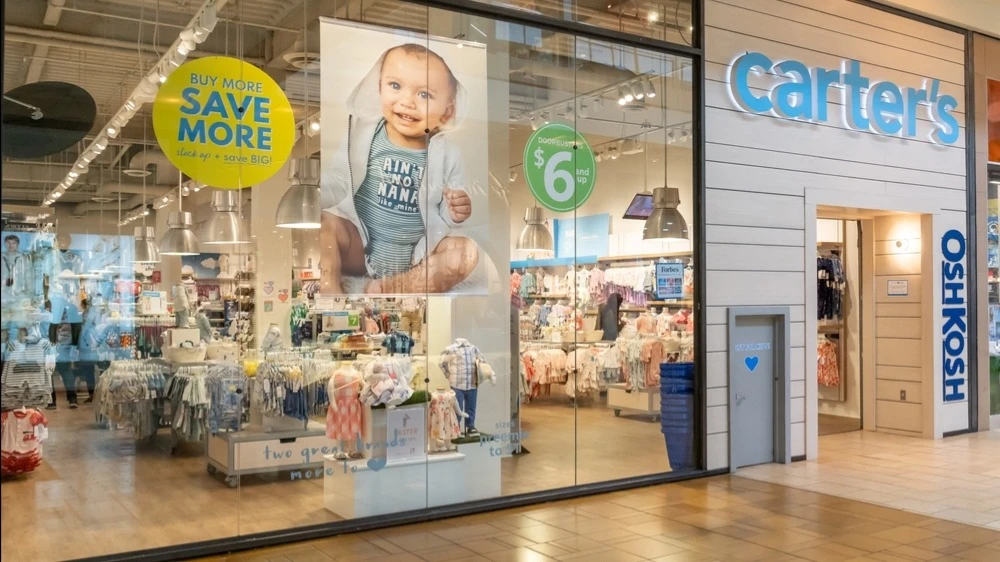
Carter's is North America's largest retailer of clothing for young children, according to the company's website / Photo: JHVEPhoto / Shutterstock.com
In October, small U.S. consumer companies outperformed the tech sector. However, the three stocks that Bridgewater Associates—a fund founded by Ray Dalio—added to its portfolio in the second quarter underperformed the consumer sector. Oninvest analyst Aldiyar Anuarbekov analyzed these companies’ financial statements and determined where Wall Street sees the greatest growth potential and what risks should be taken into account.
What Bridgewater Bought
According to its Form 13F filing, as of June 30, Bridgewater disclosed 997 positions with a total value of $24.38 billion. Oninvest noted that in the second quarter, the fund increased its holdings in three consumer stocks: Adient, a manufacturer of automotive seats; Carter’s, a manufacturer of children’s clothing; and National Vision, a chain of optical stores. Since then, Adient and Carter’s have lost approximately 30% and 15% of their value, respectively, while National Vision’s stock price has remained virtually unchanged.
In October, the consumer staples sector of the S&P 500 rose 11.6%, the consumer discretionary sector gained 3.9%, while the technology sector fell 6.8%, according to Nasdaq. Investors began shifting capital more actively from tech companies to other sectors, including consumer goods, amid concerns that massive investments in AI would fail to meet expectations. The Democrats’ victory in the U.S. midterm elections provided additional support to the market. Investors expect that Democratic control of both chambers of Congress under a Republican president will limit the scope for drastic changes in economic policy, Reuters reports.
Against this backdrop, shares of small consumer companies that have fallen in price may offer promising opportunities.
Adient (ticker symbol ADNT)
Adient describes itself as a global leader in the manufacture of automotive seats; the company has approximately 200 plants in 29 countries. The company operates in the cyclical consumer sector, as it depends on automobile sales. Its customers include Volkswagen, Ford, GM, Toyota, BMW, Audi, the Chinese automaker BYD, and others. According to Adient’s estimates, Chinese automakers will account for about 60% of its sales in China in fiscal year 2026.
During the second quarter, Bridgewater increased its stake in Adient by 30.6%; as of the end of June, the stake was valued at $6.96 million.
In the fourth fiscal quarter of 2026 (ended September 30), Adient’s revenue rose 1% to $3.73 billion, and adjusted EBITDA was $229 million. However, the company reported a net loss of $47 million, compared with a net income of $18 million a year earlier. For the full year, revenue increased by 4% to $15.17 billion, and free cash flow reached $222 million. The company allocated $100 million to share buybacks, and net debt stood at $1.47 billion.
For fiscal year 2027, Adient forecasts a decline in revenue to $14.8–15 billion but expects adjusted EBITDA to grow to $900–925 million due to improved operational efficiency. Free cash flow is expected to exceed $100 million. The company has increased its share repurchase program by $400 million.
BNP Paribas recommends buying the company’s shares (Outperform rating) with a target price of $26. This is 60% higher than their closing price on November 10. According to analysts, Adient is trading at the lowest EV/EBITDA multiple among the retailers covered by the bank—about 3.5—and free cash flow in fiscal year 2027 could amount to about 11% of market capitalization (BNP Paribas’ report is available at the Oninvest editorial office).
Deutsche Bank considers Adient’s heavy reliance on Europe to be the main risk, while citing the relocation of production to the U.S. as a positive factor, which is expected to generate approximately $400 million in additional revenue for the company starting in 2027 (the report is on file with the editorial office). In November, the bank maintained its “buy” rating but lowered its price target from $27 to $23.
Since June 30, Adient’s stock has fallen by nearly 11%, and by about 15% since the beginning of the year. According to MarketWatch, the company’s stock has nine “Buy” ratings from analysts, three “Hold” ratings, and one “Underweight” rating (a recommendation to sell the stock). The average price target of $22.8 is 40% higher than the closing price on November 10.
Carter's (CRI)
Carter's is North America's largest retailer of clothing for young children, according to the company's website. It owns the Carter's, OshKosh B'gosh, and Skip Hop brands.
In the second quarter, Bridgewater increased its position by 40.4%; the fund's stake was worth $3.6 million as of June 30. Since then, the company's stock has fallen 15.5%.
In the third quarter, Carter's sales declined by 0.7% to $752 million. At the same time, adjusted operating income rose 45% to $57 million, and adjusted earnings per share rose 39% to $1.03.
Following the earnings report, UBS maintained its neutral rating on Carter’s but lowered its price target from $38 to $33. Analysts noted that the company’s earnings exceeded expectations, but sales growth was weaker than forecast. UBS views the company’s initial steps toward rebranding and restructuring its management positively, but believes it is too early to speak of a sustained recovery in business growth.
According to MarketWatch, the company’s stock has four “Hold” ratings, two “Buy” ratings, and one “Underweight” rating. The average target price is $36.5, which is 6.5% higher than the closing price on November 10. The highest target implies a 45% increase in the stock price.
National Vision (EYE)
National Vision operates more than 1,200 optical stores in 40 U.S. states and Puerto Rico under the America's Best and Eyeglass World brands. Bridgewater increased its position in the company the most among the three stocks, by a factor of 4.4; as of the end of July, it was worth $2.22 million.
In the second quarter, National Vision’s revenue rose 2.5% to $498.8 million, and adjusted operating income increased to $31.6 million from $23.8 million a year earlier. The company raised its operating profit forecast for 2026 to $119–139 million. The company is moving away from a low-price model and focusing on customers whose insurance covers eye exams and the purchase of eyeglasses: these customers buy more expensive lenses and accounted for 42% of National Vision’s revenue in 2025 (according to data from a Barclays report).
Roth Capital and Barclays recommend buying the company’s stock with a price target of $27. Jefferies has assigned a “Buy” rating with a target price of $31. Since June 30, the company’s stock has remained virtually unchanged; year-to-date, it has fallen 26%. According to MarketWatch, National Vision’s stock has eight “Buy” recommendations and three “Hold” recommendations. The average price target is $27.5, which is 45% higher than the last closing price.
What Else Has Changed in Bridgewater's Portfolio?
In the second quarter, Bridgewater increased its position in tire manufacturer Goodyear by 3.6 times and more than doubled its position in bread manufacturer Flowers Foods. As of the end of June, these holdings were valued at $1.83 million and $2.86 million, respectively. Herbalife was the only company in our sample (consumer small-cap companies with a market capitalization of up to $2 billion) in which the fund reduced its position—by 40%. The third-quarter report, which Bridgewater must file with the SEC by November 16, will show how these positions changed by the end of September.
This is not intended as individual investment advice.