Altman's strategy or Amodea's plan: what to bet on for the investor
Why one must read Hemingway and Gladwell in order to understand Altman
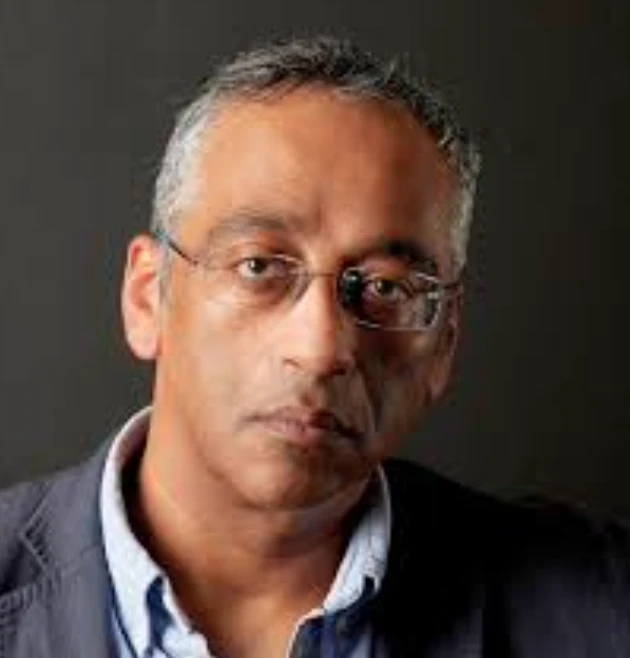
The management of OpenAI, which created the chatbot ChatGPT, has been at odds over the timing of its IPO and the amount of capital expenditure - The Information. Photo: Mikael Alemu Gorsky / Facebook
40 years ago, marketer Howard Moskowitz proved that there is no perfect spaghetti sauce. Apparently, Sam Altman is convinced of the same thing about generative AI: it has no single purpose, no single "killer application," no single winning formula. However, not everyone at OpenAI agrees with him, writes Mikael Gorsky, AI researcher at the Holon Institute of Technology and author of The AI Pravda.
Chat interface as an admission of powerlessness
We are used to a pure text field in the interface of chatbots like ChatGPT. It should be understood that such a design decision was not made from a good life. In fact, it's an admission of ignorance. In November 2022, when OpenAI released ChatGPT, no one at the company knew exactly how users would use AI. A field to enter any text was the only honest interface for a technology with no known purpose.
Today, 900 million people use ChatGPT every week. About one in eight people on earth has accessed ChatGPT in the past seven days. People write letters, review medical test results, help kids with homework, research legal documents, compose greeting card text, debug Python code, and submit search queries. The range of applications is so broad that it defies a single description. And the interface that made it all possible remains the same: an empty text field.
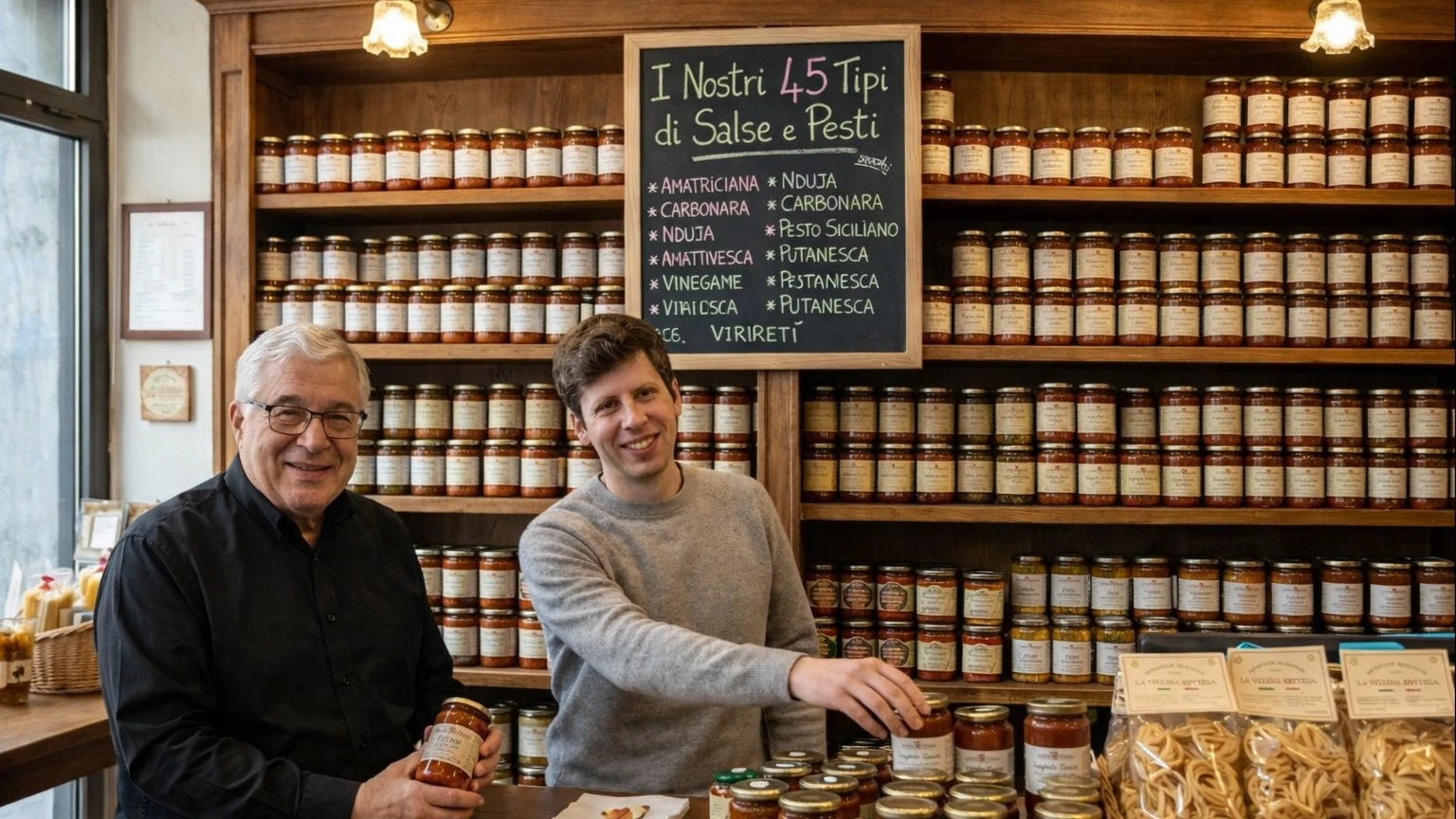
45 sauces
Sam Altman has always viewed OpenAI as a research laboratory where a wide variety of ideas and projects are developed. I dare to suggest that this strategy is the only possible option in a situation where it is impossible to limit AI applications to a single sphere. You can't focus if you don't know what to focus on. Altman calls this method "betting on a series of startups." In recent years, OpenAI has launched the Sora video generator, the Atlas browser, a hardware project with Jony Ive, e-commerce inside ChatGPT, and an "adult" chat mode in the pipeline.
This strategy has a historical analogy. In 1986, Campbell Soup hired food technology specialist Howard Moskowitz to revitalize Prego's spaghetti sauce business unit. The company expected a consultant to help it find the perfect sauce recipe. Moskowitz tested 45 variations on thousands of people across the country. The results of the surveys didn't point to a single winner. Instead, people's preferences fell into three groups: those who like plain sauce, those who like spicy, and those who like sauce with large chunks of vegetables. No one in the industry had ever sold a sauce with chunks. Moskowitz told Prego to sell all three.
The result was stunning: the chunky sauce line alone brought in $600 million over the next decade.
Malcolm Gladwell turned this story into one of the most watched TED talks in history and made a simple point: the food industry has been searching for years for one perfect product, when the answer was to stop searching and sell several. There are no perfect sauces. There are perfect sauces, plural.
Altman's OpenAI is conducting a Moskowitz experiment in the AI industry: try everything, see what's popular.
Chunky sauce
But last year Anthropic found "chunky sauce", i.e. a popular and heavily used application of AI as an agent for writing code, and everyone forgot the lesson of Prego.
While OpenAI was passionately developing dozens of projects, Anthropic focused on the quality of its models. It created Claude Code, focused its sales on corporate clients, and ignored everything else: generating pictures, songs, videos, producing devices.
The results came quickly. While Anthropic estimated 2024 revenue at $4 billion, 2026 revenue is estimated at $19 billion. Claude Code alone generates $2.5 billion. Among U.S. companies tracked by Ramp, Anthropic's share of AI spending for business grew from 10% to more than 65% in about a year.
Hemingway wrote that change happens gradually and then suddenly.
People looked at Anthropic's numbers and decided that "suddenly" had arrived: coding and the corporate marketplace is the answer, the one true recipe, and the search is over.
Some of OpenAI's new top managers agreed. On March 16, Fiji Xi Simo, OpenAI's director of applications (she came from Meta), told employees that the company was dropping "side projects." CFO Sarah Fryer, who came from Nextdoor, supported the turnaround. Both are managers, not founders, and they did what managers do when a competitor gains momentum: cut experiments and doubled down on what works today.
Eight days later, Sora was shut down. The app came out six months ago, gained a million users at its peak, then slipped to half a million, burning through a million dollars a day in computing power. Disney signed a billion-dollar contract to bring two hundred of its characters to Sora, and learned of the closure less than an hour before the public announcement. The contract collapsed along with the app. Altman called Disney's new CEO and said he was "terribly sorry." But computing power is computing power, and Sora was eating chips needed by Codex, OpenAI's coding agent.
So far, everything looks like Hemingway's "suddenly". The company finds focus, closes non-core projects, and turns around to what works. Quite a story for a Harvard case study.
The body rejects the transplant
Except that OpenAI didn't agree with itself.
On April 1, Brad Lightcap was interviewed on the Uncapped podcast. The host is Jack Altman, Sam Altman's brother. Throughout the conversation, Lightcap talked about what excites him: the variety of uses, how many different problems the tool solves, the wide range of things people build with it. Two weeks after the internal "no side projects" email, the COO was on the record raving about side projects.
On the same day, Sam Altman spoke with Lori Sigall on her Mostly Human podcast. Sigall asked what OpenAI's main areas of development were. Altman's answer had nothing to do with corporate sales or coding tools. His priorities: automating scientific and other research, and building a super-personal assistant for humans.
The next day, OpenAI bought TBPN, a daily technology talk show with eleven employees and approximately 70,000 viewers per episode - at a cost that sources estimated at "several hundred million." The show will report to Chris Lehane, OpenAI's director of global affairs. It's a pretty ironic situation: a company that just shut down a video app to save computing power has spent hundreds of millions on a media asset. CNN compared it to how RCA created NBC in 1926 to sell radios. Jessica Lessin at The Information put it more simply: Musk has X, and now Altman has TBPN.
Still "gradually."
Meanwhile, on March 31, investors handed OpenAI $122 billion at a valuation of $852 billion. They're not valuing the business. They're valuing optionality: betting that no one knows where generative AI is headed, and that a company whose 900 million people look into its text box every week will be the first to find out.
People who looked at Anthropic's numbers and concluded "coddling and the corporate market, that's the answer" may be repeating the same mistake the food industry made before Moskowitz. They found one sauce that sells and decided it was the only one.
Moskowitz tested 45 variants before the data told him the truth. We tested four or five at most. Coding works, chat works, search more or less works, picture generation remains a toy, and video generation just got shut down. That leaves a lot of empty space on the shelf. Hemingway's "suddenly" has not come.
We're still in the "gradually" phase. Xi and Fryer looked at Anthropic and saw a reason to focus. Altman looked at the same numbers and saw one prescription out of forty-five.
This article was AI-translated and verified by a human editor