Michael Kors owner expects profit growth at the expense of youth. What about the stock?

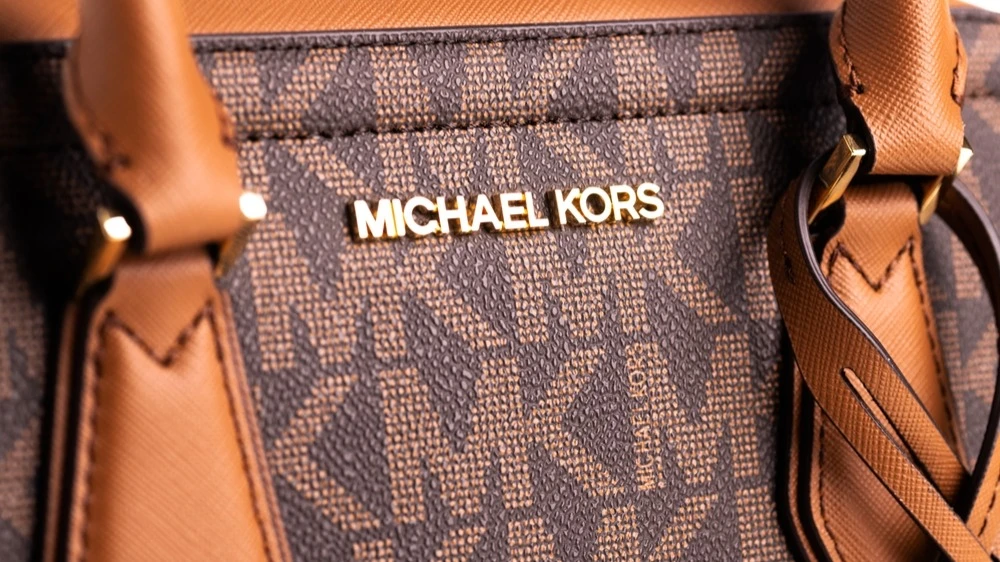
Michael Kors owner expects profit growth at the end of the year - the company's forecasts exceeded analysts' expectations / Photo: Kosoff / Shutterstock
U.S. fashion holding company Capri, which owns handbag, accessories and footwear brands Michael Kors and Jimmy Choo, on Wednesday, Ma. 27, projected earnings for fiscal 2027 above Wall Street estimates. The luxury retailer is banking on a crisis strategy focused on rebounding demand for Michael Kors handbags after several disappointing quarters. Capri is looking to expand its customer base, including young and affluent shoppers. This category of consumers continues to spend money on non-first necessities, including accessories, despite inflationary pressures due to rising fuel and food prices, Reuters notes.
Details
- For fiscal 2027, Capri expects earnings per share of about $2.15, while analysts expected to see that figure at $1.83 per share (according to information compiled by LSEG), Reuters writes.
- The company's revenue in fiscal 2027 will be approximately $3.53 billion, Capri forecasts - compared to the consensus estimate of $3.48 billion. If the company's forecast is realized - Capri will record slight revenue growth - in the low single digits - at the end of the next fiscal year.
- Capri's revenue in the fourth quarter ended March 28 declined 3.7% year over year to $796 million, broadly in line with analysts' forecasts. Adjusted EPS of $0.22 beat analysts' expectations of $0.11, Reuters reports.
- Capri recorded another quarterly decline in the performance of its Michael Kors Mark, which accounts for the bulk of its sales. The brand's fourth quarter revenue declined 5.5% year-over-year to $656 million, while Jimmy Choo's revenue increased 5.3% to $140 million. Michael Kors has faced criticism in recent years for its lack of design innovation. The Mark's steady decline in sales over several quarters contrasts markedly with the results of its rival in the handbag market, Coach (owned by Tapestry), which recorded a 31% jump in revenue in its most recent quarter, Reuters notes.
- In response to criticism, Capri introduced new initiatives and marketing campaigns that succeeded in increasing the appeal of the Michael Kors and Jimmy Choo brands among the younger generation. For example, the line refresh and advertising campaign for Michael Kors' Modern Jet Set bags increased Michael Kors' global customer base by 8%. A similar trend was recorded at Jimmy Choo, where the expansion of its casual footwear and accessories assortment also provided an influx of new customers by 7% year-on-year, according to the report.
- Capri's gross margin for the fourth quarter was 64.8%, up from 59.9% a year earlier. This, among other things, contributed to the company's calculations on the return of the U.S. customs duties paid by it, which the U.S. Supreme Court recognized in February 2026 as illegal. In total, the company said, it expects to recover $65 million of previously paid duties. Capri reported $40 million of that as a "reduction in cost of goods sold" for fiscal 2026. Another $25 million is reported as a "reduction in inventory," according to the March 28 filing.
Despite the positive outlook of the luxury holding company, Capri shares fell by 2.4% in trading on May 27. They are down 25% since the beginning of the year. "Demand for both brands (Jimmy Choo and Michael Kors) is quite strong. I think investors were disappointed that the first-quarter sales forecast didn't come in higher, but that's a long process," Reuters quoted Morningstar analyst David Schwartz as saying.
Context
Last year Capri sold to Prada the Italian fashion house Versace, which it had acquired seven years earlier. Thus, the American fashion holding expects to focus all its efforts on the development of the Marks Michael Kors and Jimmy Choo, according to Reuters.
The luxury sector is now operating under severe macroeconomic pressure, with declining consumer confidence triggered by rising gasoline and food prices. An additional negative factor has been the war in the Middle East, which has hit the demand for luxury goods in the Middle East. Because of this, luxury group LVMH, Gucci owner Kering Holding and Hermes recorded weaker results at the beginning of the year. In the first quarter, LVMH and Kering's combined revenues fell 6% year-on-year, while Hermès' total sales rose 5.6% in the same time.
What else you need to know about Capri plans
During a conference call following the release of its financial results, Capri executives said they are cutting back on promotions and selling bags and apparel at full price to "reboot" the Michael Kors brand. The company is also changing its product mix, particularly focusing on smaller bags and more casual shoes, which Capri's top executives believe appeal more to younger shoppers.
"A premium brand such as Michael Kors must avoid over-discounting, otherwise it reduces brand value," Reuters quoted Morningstar analyst David Schwartz as saying. Even with high prices, Michael Kors products cost much less than luxury brands, Schwartz added.
Nine of the 16 analysts covering Capri Securities recommend them as a buy. The remaining seven have a neutral stance.
This article was AI-translated and verified by a human editor