An investor from "The Short Game" has almost stopped shorting. What's left in his portfolio?
Michael Burry has closed his short positions on the Nasdaq 100 and Nvidia and is now primarily holding long-term positions
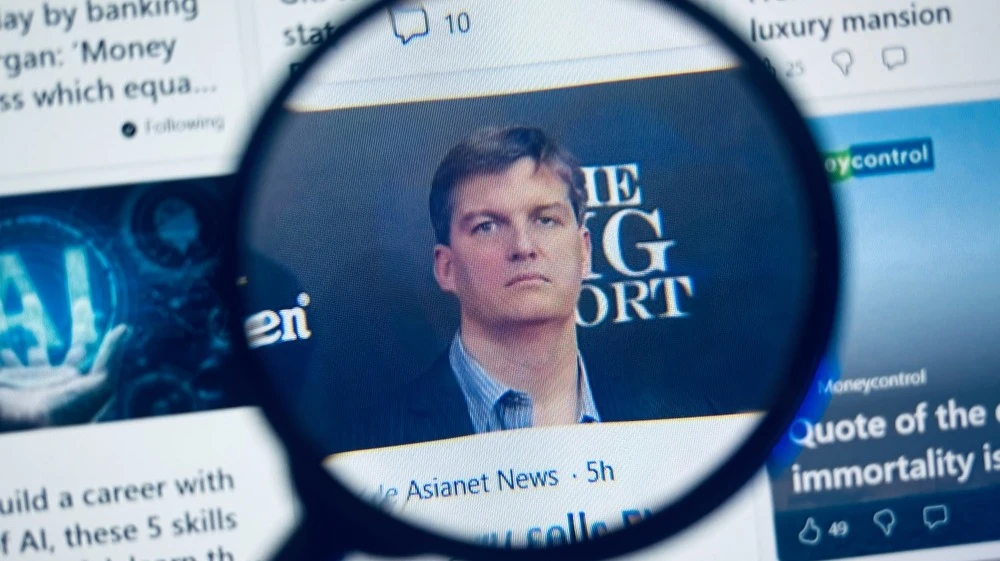
Michael Burry has temporarily stopped placing virtually all bets on a market decline / Photo: favoritesphoto / Shutterstock
Investor Michael Burry, known as the inspiration for the character in *The Big Short*, has temporarily abandoned nearly all of his bets on a market decline and is focusing on buying undervalued stocks for the long term. In his blog, “Cassandra Unchained,” on Substuck, the investor revealed the structure of his portfolio, named his largest holdings, and explained under what conditions he intends to resume shorting Nvidia.
Which shorts did Burry decide not to wear?
The investor said he is no longer betting on a decline in the Nasdaq 100 index. On November 25, as tech stocks fell in premarket trading, the investor sold his remaining put options on the index.
Of his short positions, Burry currently holds only two—put options on shares of AI developer Palantir and insurance company MetLife. According to the investor, his portfolio hasn’t had such a heavy bias toward long positions in a long time, but he emphasizes that this is temporary: he continues to look for opportunities to bet on a market decline. However, the market decline and rising volatility have made even put options on shares of stable companies—those only indirectly linked to the development of AI infrastructure—expensive, Burry explained.
The short seller has not given up on his plans to short Nvidia again. “I plan to open a new short position on Nvidia when the stock price approaches $200 and the market is brimming with optimism. Now is not the right time to do so,” Burry wrote.
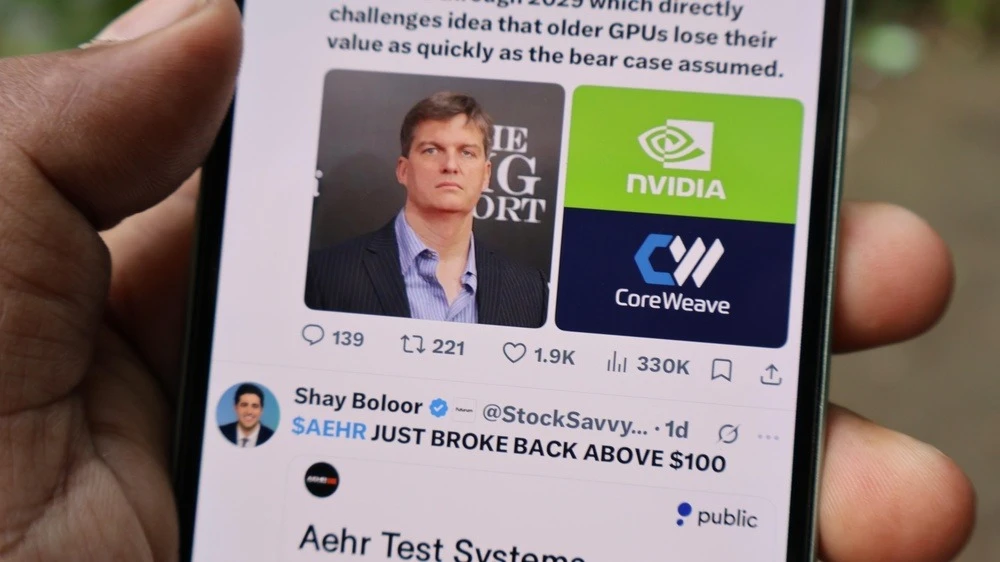
He said he continues to hold the call options on Nvidia stock he bought on Friday, which have a strike price well above the current market price. They cost him only a few dollars and have already doubled in value. Unlike put options, call options give investors the opportunity to profit from a rise in the asset’s price.
What is currently in Burry's portfolio?
The largest holdings (each ranging from 8% to 20% or more) in Burry’s portfolio are the Latin American e-commerce platform Mercado Libre, the Australian online furniture retailer Temple & Webster, and the Chinese marketplace JD.com. Burry also holds call options on JD.com shares with expiration dates through 2029. A focus on foreign companies is characteristic of Burry’s strategy: the investor explains this by noting that U.S. stocks remain overvalued.
Burry has 3–6% of its portfolio invested in IT company Adobe, footwear manufacturers Birkenstock and Deckers, health insurance provider Molina Healthcare, the HCA Corp. network of clinics, athletic apparel brand Lululemon, fintech companies Fiserv and PayPal, cloud software developer Veeva, and the Build-A-Bear stuffed animal store chain.
“Most of these stocks are also seeing active trading as they attempt, with mixed success, to find a bottom. In a few years, the high trading volumes will seem like a clear sign that the market was feeling its way toward a bottom. Right now, of course, it seems as though these sharp price swings will never end.”
Burry also holds preferred shares in the building materials supplier QXO (Series B) and call options on shares of the Sprouts Farmers Market supermarket chain and the veterinary pharmaceutical manufacturer Zoetis. Hong Kong stocks account for just over 20% of Burry’s portfolio, although his individual stakes in electric vehicle manufacturer BYD, tech giant Tencent, food delivery service Meituan, the Haidilao restaurant chain, and home appliance manufacturer Haier Smart Home are small—2–3% or less.
Burry sold most of the shares in copper producer Ero Copper that he had purchased in September—to realize a loss for tax purposes. The investor still views the company favorably but acknowledges that he chose an inopportune time to buy its shares. He plans to revisit this investment in a month.
About 25% of Burry’s portfolio is currently in cash—this cash reserve was built up mainly through successful put option trades and account deposits. According to the investor, he is looking for opportunities to invest this money, but admits that he may not be able to do so.
This article was AI-translated and verified by a human editor