An investor who made a 900% return during the 2008 crisis has placed a new bet on a decline
Short seller Lee Robinson expects shares of Berkshire Hathaway and other insurers to fall

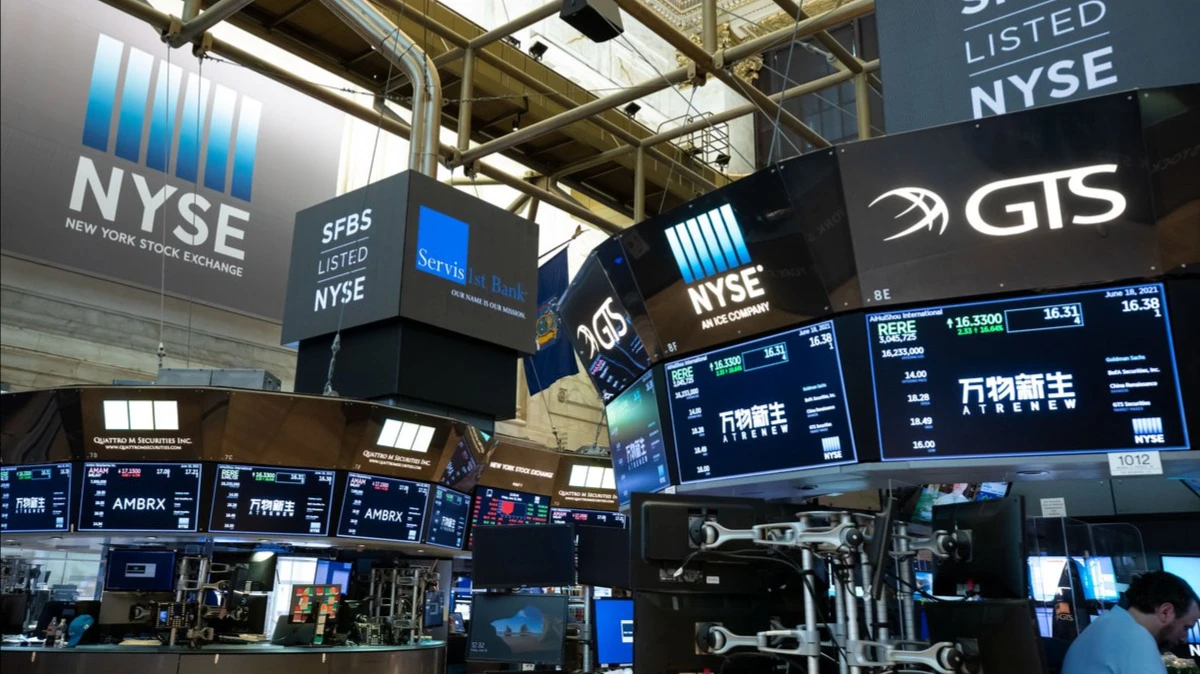
A Wall Street veteran bet against insurers that had invested in private credit funds / Photo: X/NYSE
Lee Robinson, founder and chief investment officer of London-based Altana Wealth, has bet against insurance companies, believing that they will be the ones most affected by the challenges arising in the private credit market, according to Bloomberg. Robinson is increasing his “bearish” bets on several companies—from Lincoln National to MetLife and even Berkshire Hathaway—using credit default swaps: derivative contracts designed to protect investors against default. His firm is launching a new fund, into which it is also investing its own capital, to hedge against what Robinson considers an inevitable downturn in the private credit sector, the cooling of the hype surrounding AI, and the impact of reduced liquidity on corporate valuations.
Lee Robinson is known for turning a $20 million portfolio into $200 million thanks to well-timed bets against the U.S. subprime mortgage market in 2008, Bloomberg notes.
What market challenges does Robinson see?
According to the trader, there are parallels between the general calm that prevailed in the subprime mortgage market before the collapse of Lehman Brothers Holdings in 2008 and current markets, where corporate bond yield spreads remain at historically low levels, Bloomberg reports. This investor confidence—or overconfidence, as Robinson argues—persists despite growing fears of a “soft apocalypse.” Borrowers in the software development sector, who received loans from these funds and are now threatened by artificial intelligence, may be unable to repay their loans.
“In August 2008, we were tearing our hair out trying to figure out how on earth volatility could be so low,” Lee Robinson told Bloomberg. “Right now, it’s a bit like that situation.”
Why Robinson is taking on the insurance companies
Insurance companies face an existential threat due to their investments, Bloomberg explains, citing Robinson’s reasoning. The trader believes that the markets are not sufficiently factoring in the additional risks of write-offs in the unrated segment of the debt market, which has already shown a tendency toward trouble spots.
Investment in private credit is growing in the industry, particularly among life insurance companies, and although such debt instruments currently account for a relatively small portion of many established companies’ investments, they still carry risks, Robinson points out. Another attractive aspect of this trade—shorting the insurance market—is that it is not easy to directly take short positions against private credit: not all funds are listed on the stock market.
Insurers have increased their investments in private credit funds over the past decade as asset managers sought returns and diversification, especially during an era of cheap money when traditional assets yielded near-zero returns, according to Bloomberg. The shift toward private credit has been particularly noticeable among life insurance companies owned by asset management giants with private equity divisions, such as KKR & Co. and Apollo Global Management, according to researchers at the Federal Reserve Bank of Chicago. However, there is no indication that Robinson and other investors are specifically targeting these companies.
Some insurance companies have been open about their investments in private credit. Last year, Lincoln Financial launched a fund in partnership with Bain Capital to “provide individual investors with access to private credit,” according to Bloomberg. MetLife reported that as of March 31, it held about $85 billion in what it called “high-quality” private fixed-income instruments, the agency states.
The cost of protection against defaults by major U.S. insurers, including American International Group, has already begun to rise and this year has exceeded the cost of protection based on a broad indicator of high-quality credit risk in North America, according to data compiled by Bloomberg. A similar pattern is observed among European giants Allianz SE, Generali, Aviva Plc, and Axa SA when compared to their own European index of investment-grade credit default swaps, the agency notes. The scale of the situation was such that it caught the attention of the European Central Bank, which warned of potential losses for insurers, Bloomberg reports.
"Going forward, retail and institutional investors are in for more pain, and insurance companies will likely have to write off part of their investments," Spectrum Asset Management CEO Mark Lib, who has been working with preferred securities since the 1970s, told Bloomberg.
According to Robinson, the market situation is such that a single troubled insurer—"any single collapse"—is enough to send shockwaves throughout the entire industry.
This article was AI-translated and verified by a human editor