How Lindblad built a business taking travelers to the ends of the Earth

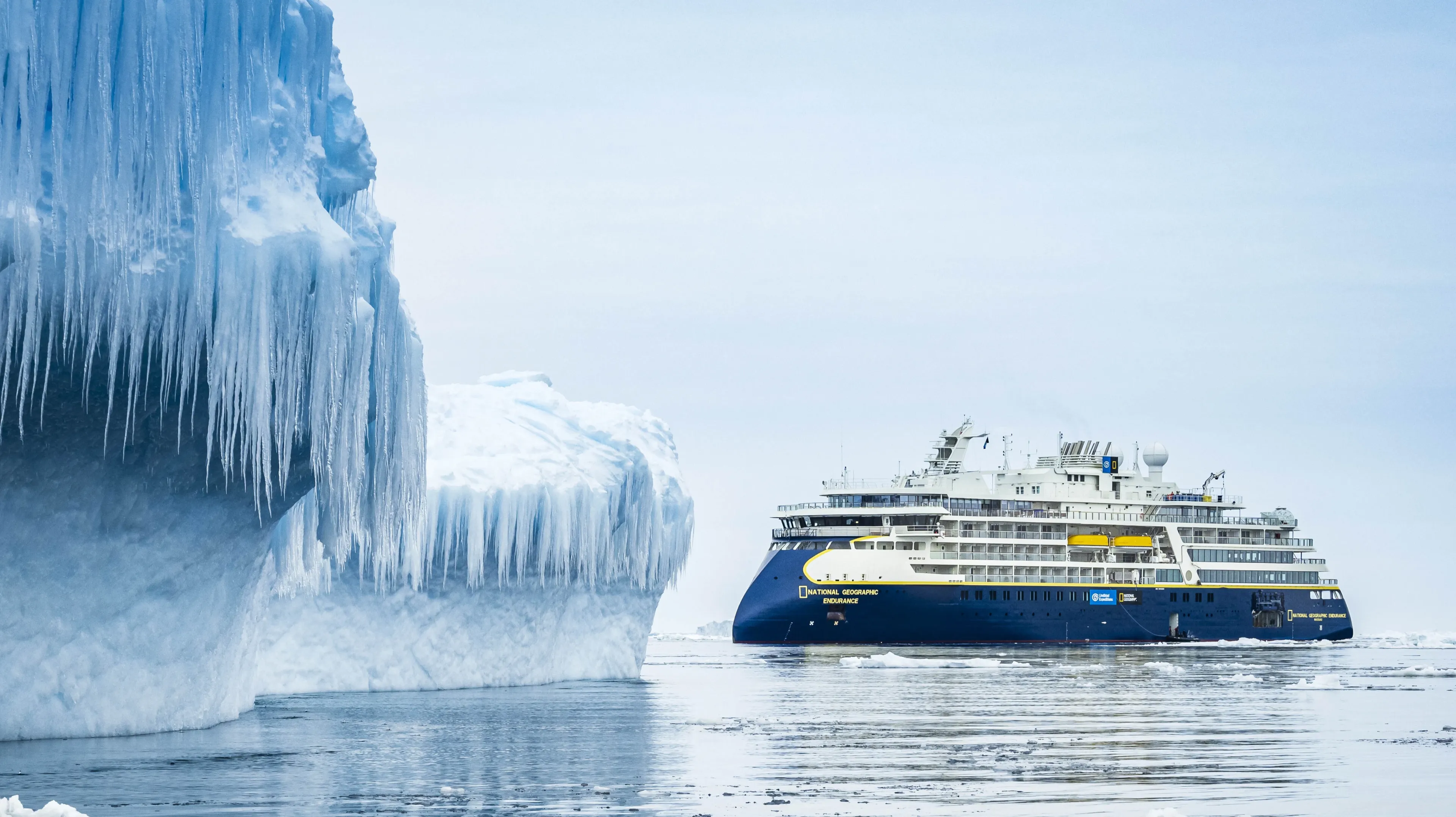
In 2004, Lindblad Expeditions and the National Geographic Society became strategic partners / Photo: press.expeditions.com
Lindblad Expeditions offers voyages that bear little resemblance to conventional cruises. Its ships sail to Antarctica, the Galápagos, and other remote destinations, while passengers attend lectures and educational programs led by National Geographic experts. The company caters to affluent travelers who are less interested in luxury liners than in visiting hard-to-reach places and feeling part scientist, part explorer.
That niche is helping Lindblad Expeditions build demand: fleet occupancy exceeded 90% in the second quarter of this year. Oninvest examines how its business works, how the company attracts clients, and what opportunities this creates for equity investors.
How Lindblad got its start
The roots of Special Expeditions go back to 1958, when the father of its founder, Sven-Olof Lindblad, Swedish-American entrepreneur Lars-Eric Lindblad, founded Lindblad Travel. He began taking small groups of affluent travelers to unusual destinations that were difficult to reach, such as to the Mongolian steppes and on African safaris.
In 1966, Lars-Eric Lindblad organized the first civilian cruise to Antarctica. Its 57 passengers became the first ordinary travelers to visit a continent that had previously been accessible only to professional explorers and scientists. It marked an important milestone in the history of expedition travel.
The defining principle behind Lindblad’s expeditions was “you cannot protect what you do not know.” He sought not merely to show travelers the natural world, but to help them learn about and understand it. This is how he earned the title of “father of eco-tourism.”
How Lindblad survived crises
The elder Lindblad expanded the geographic footprint of his business, while in 1979 his son Sven-Olof took charge of the Special Expeditions division, focusing on educational and environmentally responsible expeditions. Lindblad Travel went bankrupt in 1989 after organizing trips to Vietnam and Cambodia that violated U.S. restrictions and subsequently being fined. But the expedition business, which had been separated into a standalone operation, continued operating and later became the foundation of Lindblad Expeditions.
The September 11 terrorist attacks on the U.S. in 2001 dealt a severe blow to Lindblad Expeditions and the entire tourism industry, with airline passenger traffic falling 50%. Lindblad depended on air travel and had to find ways to support the business. Sven later told Leaders magazine that the company had jettisoned its land business, initially viewing the move as temporary. At the same time, the company introduced its Friends for Life program, encouraging customers to continue traveling in exchange for discounts and other benefits.
National Geographic comes aboard
In 2004, the company entered into a strategic alliance with the National Geographic Society. Lindblad Expeditions says the move “marked a new era in exploration.” In 2005, one of the company’s ships, Endeavour, was renamed National Geographic Endeavour. The vessels were equipped with state-of-the-art exploration technology, while National Geographic scientists, researchers, and photographers joined expeditions to conduct research and interact with travelers.
By then, the company already had a fleet of six ships. In 2007, other Lindblad vessels also adopted the National Geographic name, and the partners established a joint conservation fund.
Sven-Olof Lindblad told Barron’s, “by carving out access to the most unimaginable, far-reaching places on this planet, and blending science, nature, and purpose-driven exploration, we coined a new archetype of travel: expedition travel.”
Lindblad Expeditions went public through a merger with SPAC Capitol Acquisition Corp. II. Following the deal, the combined company was renamed Lindblad Expeditions Holdings, and its shares began trading on the Nasdaq on July 9, 2015. After the listing, Sven-Olof Lindblad became Lindblad Expeditions’ largest individual shareholder, with a 31.6% stake. The National Geographic Society owned 6.3% of the stock and received an option to acquire a further 5.0% stake from Lindblad. National Geographic exercised the option in 2019.
Over the last decade, Lindblad Expeditions has expanded its fleet from around 10 to 19 expedition vessels, continuing to invest in the business. In November 2023, the strategic partnership with National Geographic was deepened and extended through 2040.
Beyond cruises
In recent years, Lindblad Expeditions has gradually expanded its business beyond expedition cruises. In 2016, the company acquired an 80.1% stake in Natural Habitat, which specializes in land-based nature expeditions, including trips to see polar bears in Canada and grizzlies in Alaska. In 2021, Lindblad added three more companies to its portfolio – DuVine, Off the Beaten Path, and Classic Journeys – spending $23.4 million on controlling stakes in them. In 2024, the company acquired the Wineland-Thomson group through Natural Habitat. It includes safari operator Thomson Safaris, Gibb’s Farm lodge, and Kilimanjaro climbing operator Nature Discovery.
Latest financials
Lindblad Expeditions’ revenue rose 19% year over year to $199.2 million in the second quarter of 2026. Analysts polled by FactSet had expected $185.9 million, MarketWatch wrote. The net loss attributable to stockholders was $1.4 million, or $0.02 per diluted share, versus $9.7 million, or $0.18 per share, a year earlier. The company attributed the narrower loss to improved operating results. In addition, Lindblad Expeditions did not pay preferred stock dividends this year, versus $1.2 million a year earlier. Vessel occupancy increased to 91% from 86% a year earlier. Finally, the management raised its 2026 tour revenue outlook to $830-860 million from $800-850 million.
Stock performance
On Monday, the day the results were released, the stock surged 12%. Several analysts refreshed their valuations on Lindblad Expeditions following the earnings. Craig-Hallum upgraded the stock to “buy” at a target price of $40 per share. The Benchmark Company maintained its “buy” rating on the stock, also at a target price of $40 per share. The TPs imply 17.4% upside from the Thursday closing price. Oppenheimer maintained its “outperform” rating on the stock at a TP of $37 per share. TCBI Securities downgraded the stock to “hold” but raised its TP to $31 per share.
Lindblad Expeditions stock has now gained 136.5% year to date. The company has a market capitalization of $2.2 billion. According to MarketWatch data, the stock has four “buy” calls versus two “hold” ratings from the six Wall Street analysts covering it. The average target price is $35.67 per share, implying 5% upside from the Thursday closing price.
This text is for informational purposes only and does not constitute personalized investment advice.