People's AI: Why Zuckerberg Wants to Give Everyone Access to Superintelligence
Meta's CEO wrote an essay on how widespread access to artificial intelligence will help reshape the labor market, prevent total state control, and protect society from biological threats

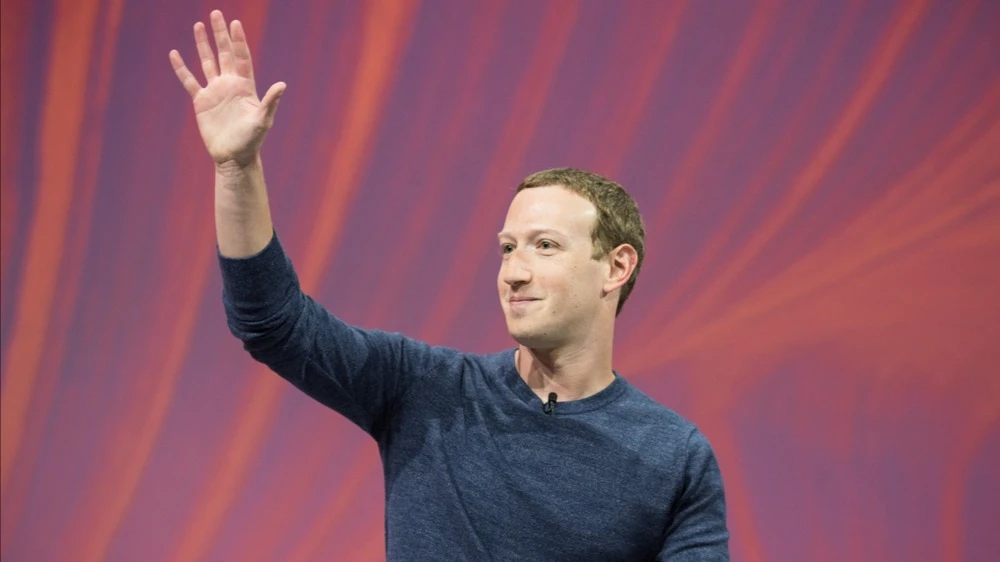
AI will not replace people in the labor market, but will give them more opportunities to create new products and knowledge, according to Meta's founder / Photo: Frederic Legrand - COMEO / Shutterstock.com
Artificial intelligence could displace people from the labor market, make cyberattacks and the creation of biological threats easier, and give the government greater surveillance capabilities. Meta CEO Mark Zuckerberg believes that widespread access to the most powerful AI systems will help mitigate these risks. In his essay “A Future for Everyone, ” published on August 10, he explains how “AI for the people” will not only expand human capabilities but also help protect against the threats posed by the technology itself.
Superintelligence and Superpowers
Major technological shifts have always sparked fears that some people will be left behind, but so far they have brought greater prosperity, health, and freedom to more people, Zuckerberg writes. He expects that AI will lead to the same outcome.
"It's surprising that the discourse among many AI developers is so steeped in gloomy predictions. I don't understand why anyone who believes that AI will destroy most jobs and render a significant portion of humanity obsolete would rush to create such a future."
According to Meta’s CEO, past technological shifts have been beneficial precisely because they gave people new opportunities. Major breakthroughs, he writes, were often achieved not by large institutions, but by individuals who were given the tools to bring their ideas to life. Artificial intelligence, in his view, should continue this trend: the more opportunities it provides to each individual, the more actively people will be able to create new products, knowledge, and companies, and shape their own futures.
"Although the number of questions a person can ask in a day is limited, the number of valuable things that a superintelligence can invent to help you achieve your goals is limitless."
"People's AI"
Zuckerberg sees the main risk in the fact that concentrating superintelligence in the hands of a single entity—whether a person, a company, or a government—will dramatically increase its influence. In cybersecurity, this would give an attacker an advantage, and in business, it would allow a single company to crush the competition. If only a few select laboratories gain access to superintelligence, they will be the ones to determine how its capabilities are used, Zuckerberg warns.
"At Meta, we will focus our efforts on providing personalized superintelligence to billions of people and small businesses to help everyone achieve their goals and create the world they want to see."
At the same time, he believes it is a mistake to create a single system that would act in the interests of all humanity: people’s values differ too greatly, so such a system would inevitably have to prioritize some values over others. He sees the solution in distributing the capabilities of superintelligence among as many people as possible—Meta intends to make personal AI a mass-market product.
"We will offer free versions available to billions of people. Those who need more computing power will be able to obtain it through a dynamic auction. This will allow users to pay the lowest possible price for the AI capabilities and computing resources they use, while directing available capacity toward the tasks in highest demand.”
"People's AI" Scenarios
In his essay, the head of Meta also described several specific examples of how a personal superintelligence could improve everyone's life.
● Zuckerberg believes that a personal AI agent should become an everyday tool—helping people learn, work, monitor their health, create new products, and tackle everyday tasks.
“My agent highlights interesting information for me and helps me develop prototypes of ideas. He helps me stay healthy: he tracks my sleep, monitors my workouts, and gives me feedback. My daughter loves to bake, so my agent creates personalized recipes so we can cook together every weekend, orders the ingredients, and then gives me tips while we’re baking.”
● Creative and development tools will help you turn ideas into finished projects faster—from apps and videos to new content and other solutions that used to require months of work or specialized skills.
"My 8-year-old daughter can now write code for her ideas and create videos in a single evening—something that used to take me months or would have been impossible altogether. Right now, we're designing a robot together."
● Tools for starting a business will enable people to bring their ideas to life on their own—ideas that previously required large teams and significant investment—and to launch companies with far fewer resources.
"I predict that, over time, this will lead not only to significantly higher economic growth, but also to an increase—rather than a decrease—in employment."
● A personal AI tutor will adapt to each individual and help them master school subjects, professional skills, languages, and other areas of interest.
● AI for scientific research will help scientists test hypotheses and make discoveries more quickly, including in biology and drug development. Zuckerberg hopes this will accelerate the development of personalized treatments, including for rare diseases.
People's AI Against Global Threats
Zuckerberg also believes that the widespread adoption of artificial intelligence is important for maintaining U.S. leadership in the global market. In his view, the more widely American models are used around the world, the stronger the country’s position will be in global competition. At the same time, new developments are quickly copied, so even a lead of just a few months can make a difference.
He believes the U.S. needs to build data centers and energy infrastructure more quickly while maintaining the export restrictions that are slowing down foreign developers.
"The United States and its allies currently hold an advantage in semiconductor design, but lag behind in the speed of deploying power generation capacity and physical infrastructure. Countries such as China are bringing more than 1 GW of nuclear capacity online every two weeks, so we will need to accelerate the construction of both power facilities and data centers to remain competitive.”
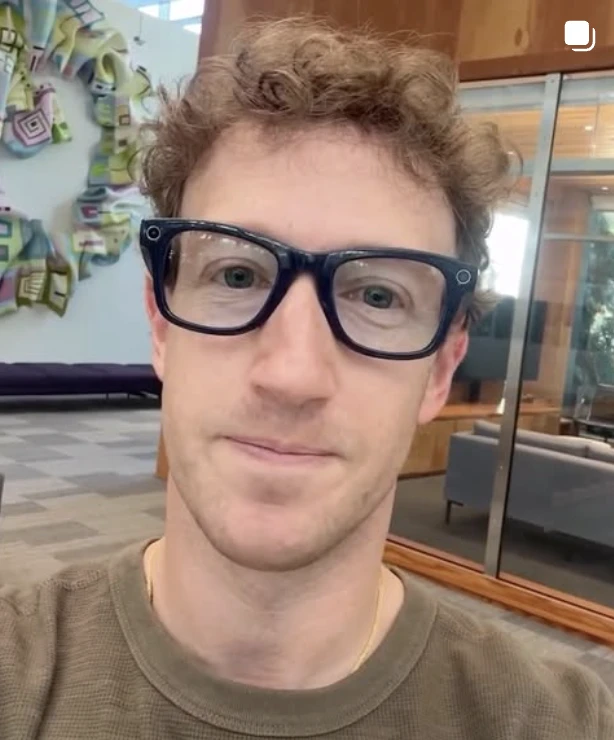
Zuckerberg proposes determining the duration of safety testing for new models based on the U.S.’s position in the technology race. If American developers are several months ahead of their competitors, part of that lead can be used for additional safety testing. But with only a minimal lead, such a delay becomes a risk: foreign models could pull ahead.
Therefore, the government should receive interim versions of the models while they are still being trained, so that it can assess new risks and prepare defenses for critical infrastructure in parallel with development, rather than delaying the public release of the final model for that reason.
However, Zuckerberg does not believe the U.S. should ban foreign open-source models. Instead, he says, some restrictions on American developers need to be lifted—primarily regarding the use of data and training models on the outputs of other models—so that they can compete with foreign AI on equal footing.
This article was AI-translated and verified by a human editor