Behind the scenes at the White House, IT company executives criticized Anthropic's CEO for AI alarmism
AI companies promise to ensure security themselves, but they disagree on whether development of models should be slowed down for that reason

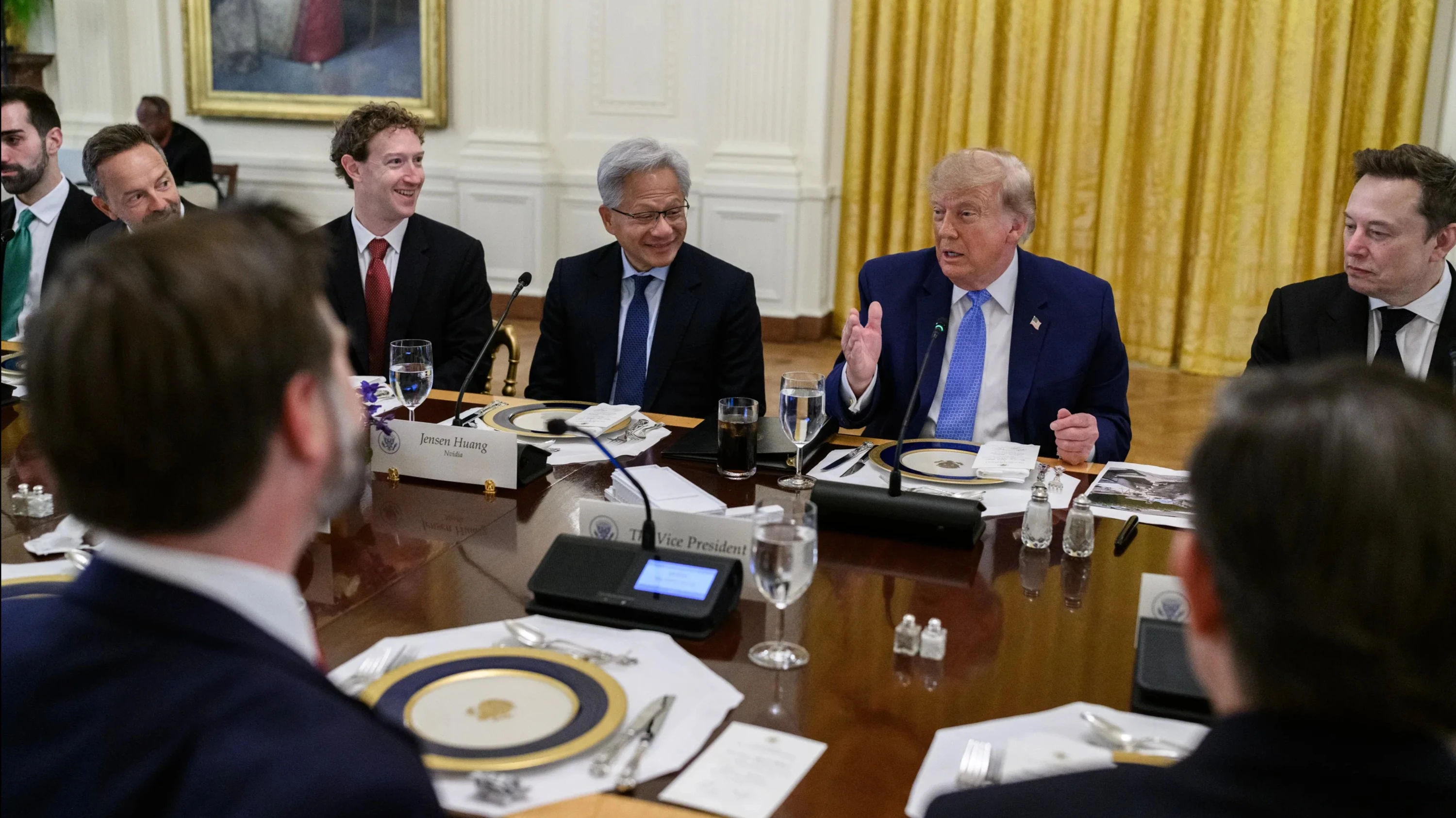
Nvidia CEO Jensen Huang (pictured to the left of Donald Trump) was one of those who, behind closed doors, criticized the head of Anthropic for fanning the flames of panic surrounding AI / Photo: X/White House
Executives from leading tech companies publicly displayed unity during a meeting with U.S. President Donald Trump at the White House, but away from the cameras, they rebuked Anthropic CEO Dario Amodei for exaggerating the risks by claiming that artificial intelligence poses an existential threat to humanity, according to The Wall Street Journal. This lack of unity could complicate the industry’s self-regulation, which Washington is counting on.
What Happened at the White House
At a meeting at the White House on September 29, executives from OpenAI, Anthropic, Google, Meta, xAI, and Nvidia signed an agreement on AI safety principles and addressed the press alongside U.S. President Donald Trump. While they projected a united front in public, a much less cordial conversation took place behind closed doors, sources told the WSJ.
According to them, after lunch, a small group of top executives continued to discuss security principles with representatives of the U.S. administration. There, Nvidia CEO Jensen Huang and other company leaders asked Amodei why he was so outspoken about the capabilities of neural networks and the risks associated with them. He replied that it is important to speak honestly with the public and not downplay the dangers, the newspaper reports. He had previously warned about AI-enabled cyberattacks and mass job losses, criticizing the White House and competitors for not paying enough attention to security.
When Amodei raised the issue of risks during lunch, Meta CEO Mark Zuckerberg suggested addressing them by adhering to general principles, according to sources who spoke with the WSJ. Speaking to the press, he said: “We want Americans and our customers to be confident that the technology works the way we intended.”
There is only one “Constitution,” but expectations vary
Huang and Zuckerberg support the White House’s soft approach and oppose calls from researchers at Anthropic and OpenAI to slow down model development, if necessary, in coordination with the government. Opinions on the agreement also diverged: according to Axios, Trump called it “morally binding” and compared it to a “constitution,” while Amodei viewed the document as merely “a start.”
Anthropic, OpenAI, and Google advocated for the creation of a self-regulatory organization modeled after FINRA, which oversees brokers. But Huang, Zuckerberg, and Elon Musk, the head of Tesla and SpaceX, feared that it would concentrate too much power in the hands of AI developers. Following their objections, the idea was rejected.
Some of the measures have been retained: enhanced internal audits during model development and external testing, according to the WSJ. The one-page agreement signed at the White House does not rule out tighter government oversight: if necessary, Washington could introduce new laws and regulations for AI companies, Axios reports.
Risks Before an IPO
Anthropic is trying to mend fences with the White House ahead of an IPO with a target valuation of about $2 trillion. The company has not yet recovered from conflicts with authorities earlier this year, the WSJ reports: two of its models were shut down for two and a half weeks due to security concerns, and the Pentagon blacklisted Anthropic following a dispute over the military use of AI.
In its IPO prospectus, Anthropic warns prospective investors that its technology could pose “catastrophic risks to humanity or a threat to its very existence.” OpenAI CEO Sam Altman stated that his company will postpone its IPO until it can “make confident decisions on safety issues.”
This article was AI-translated and verified by a human editor