British Airways owner to raise business class ticket prices due to expensive fuel

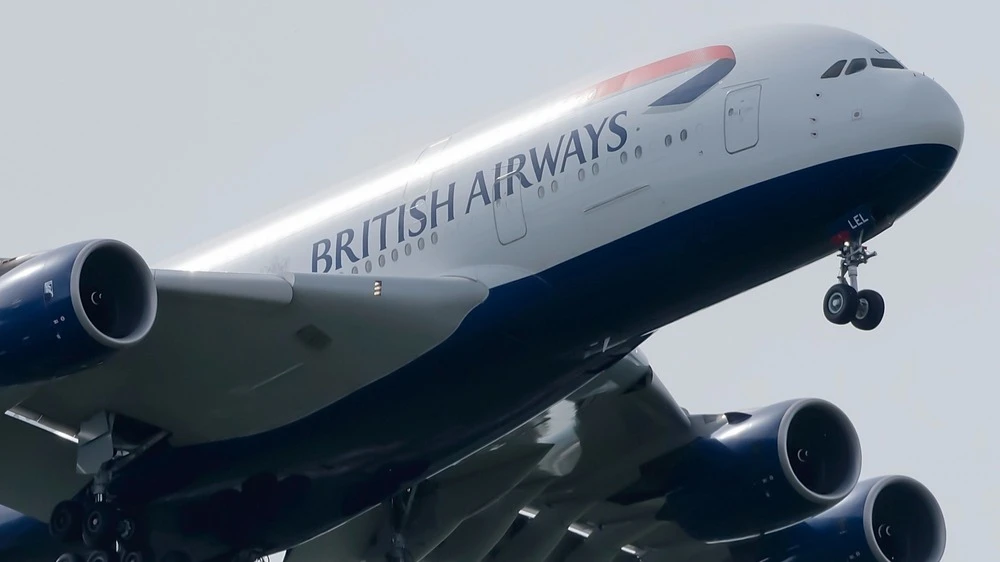
British Airways business class passengers will face higher ticket prices / Photo: Vytautas Kielaitis / Shutterstock
The owner of British Airways - International Airlines Group (IAG) - will raise ticket prices in business class, as well as on long-haul flights of the carrier "stronger" than other airlines in the group. In this way, IAG will try to compensate for additional expenses due to the fuel price rise amid the Iranian crisis. The costs associated with this, in IAG this year has already estimated at € 2 billion ($2.35 billion), wrote the Financial Times (FT) and Reuters. However, in its report for the first quarter of 2026, the company assured that it has sufficient jet fuel reserves for the summer season. The group also includes Aer Lingus and Iberia.
Details
International Airlines Group said in a conference call with reporters following its financial results that fares for premium cabin tickets as well as long-haul flights on British Airways will rise more than other airlines in the group, including Aer Lingus and Iberia, the FT writes. The price hikes and cost cuts should help the FTSE 100 UK-based company offset about 60% of the costs incurred due to soaring jet fuel prices, the newspaper said. IAG CEO Luis Gallego noted that the 60% figure is only "an average for the group," the FT reports.
The company also said in its report that it has hedged about 70% of its jet fuel requirements for this year. This strategy "protected the [IAG] business from the short-term impact of the recent significant increase in jet fuel prices," the company said. Against that backdrop, however, the airline group now expects its total fuel costs to rise to €9 billion ($10.6 billion) this year, up from the previously projected €7 billion ($8.2 billion). Overall, jet fuel costs this year will be about €2 billion more than in 2025, Gallego said during a conference call, Reuters reported.
That said, IAG does not expect flight disruptions in the summer due to fuel shortages. "We expect to fulfill all flights that are on the summer schedule," Gallego told reporters. "Given the strength of our supply chain and available inventory, as well as investments in our own fuel supply systems in key hubs, based on current information, we are confident of sufficient jet fuel supply in our key markets throughout the summer," IAG said in its report. The main problem now is fuel price rather than physical availability, the group said. At the same time, Gallego warned that if the war in Iran continues to limit the supply of oil and jet fuel from the Middle East to markets, it could lead to a shortage of jet fuel "already at the global level."
The company's shares fell by 2.8% at the trading in London on May 8. Since the beginning of the year, they are down 7%.
What else did the owner of British Airways say in the report
- IAG's first quarter pre-tax profit rose nearly 77% year-on-year to €422 million ($497 million). This is despite the fact that the first quarter is generally considered the least profitable for airlines, the Financial Times notes.
- The company's first-quarter revenue rose 1.9% year-on-year to €7.2 billion ($8.5 billion).
- The number of passengers carried in the first three months of 2026 also increased by 0.8% year-on-year to 26.4 million people.
- The company did not give a specific amount by which its year-end earnings may be reduced, but said: "While the first quarter was relatively little affected by the war in the Middle East, we expect its impact to become more significant in the remainder of the year as higher fuel costs begin to manifest themselves."
- The group has also lowered its forecast for year-end capacity growth: as a result of measures already taken by the company, it will be less than the 3% growth forecasted in February, the report said. The company now expects capacity growth of about 1% in the second quarter of 2026 and 2% in the third quarter. Prior to the conflict in the Middle East, about 3% of the company's capacity was in the Middle East, the IAG report said. This region was mainly served by British Airways in the group. A significant part of this network has been redistributed, the company representatives noted. Thus, on some routes in Asia, the capacity of some of its airlines was increased.
What the analysts are saying
After publication of IAG reports several analysts published their estimations on shares of the company. Thus, Goldman Sachs kept the recommendation to buy shares of the company, follows from the data of MarketScreener. The investment bank also raised the target price of securities - from 440 pence to 450 pence. The new target assumes growth of shares by more than 14% relative to the last closing price.
Barclays also reiterated its recommendation to buy the shares of the airline group, keeping the target price of the securities unchanged at 425 pence. This implies the securities growth by 9% relative to the last closing price.
15 out of 16 analysts covering the company's securities recommend buying them. Only one recommends selling.
Context
British Airways has already been forced to cancel many popular flights to the Middle East, including routes to Dubai and Abu Dhabi, amid Iranian attacks on the United Arab Emirates and other Gulf countries, The Telegraph notes.
Jet fuel prices have roughly doubled since late February, when the U.S. launched strikes against Iran. According to the International Air Transport Association (IATA), the average global jet fuel price this week was about $181 per barrel.
Brent crude futures for July delivery on May 8 were trading just above $100 a barrel, while June contracts for West Texas Intermediate (WTI) were trading around $95 a barrel.
This article was AI-translated and verified by a human editor