"Buy the Whole World": Vladimir Savenko's Investment Rules

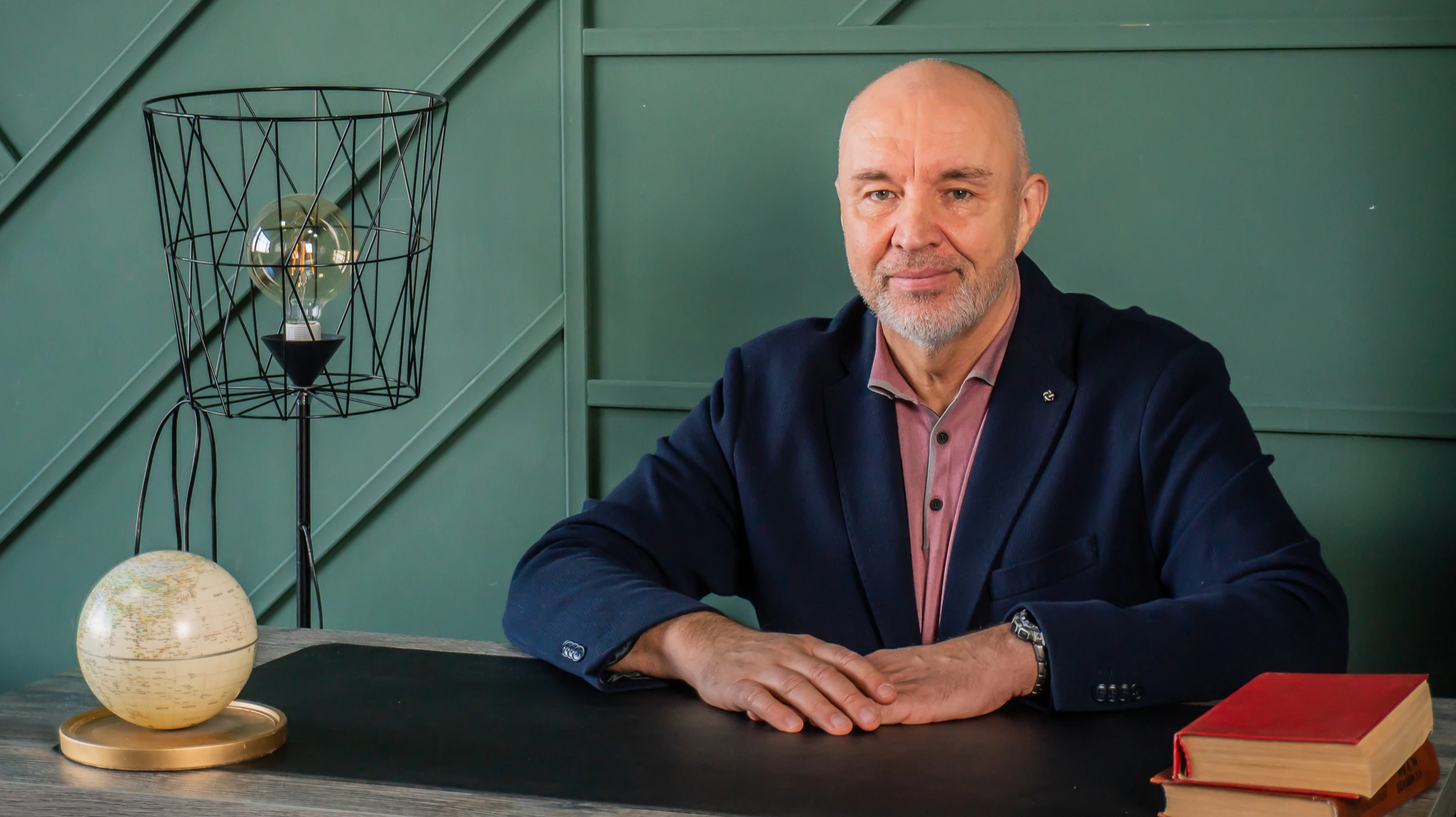
Vladimir Savenok, founder of LK Finance
Vladimir Savenok is an investor and the founder of the consulting firms LK Finance LLP (Kazakhstan) and Lichny Kapital (Russia). He is the author of 13 business books—on rules that work, predictions that don’t, and the difference between “earning” and “receiving.”
What do you invest in— and why that in particular? There’s a popular saying at
: “I invest in what I know.” Do you follow that advice?
This principle really took off in the 1930s through the 1950s—there were “monsters” who knew everything and everyone. We used to look at a lot of companies back then, too. But now, if something has already taken off, it’s just hype—it’s too late to buy. And I often discourage clients from buying individual stocks. Indices are more reliable. How many funds outperform the index? RenTech’s legendary—but completely closed-end—Medallion Fund has managed to do so for 50 years. But it’s the only one of its kind. In Europe, only about 3% of funds have managed to outperform the index over the past 10 years.
I got started in the late ’90s. It was the height of the dot-com boom. The stocks I bought back then—Nokia, CheckPoint—rose 140% in six months. But for an investor, it’s harder to sell than to buy. And I only made my 20% instead of 140%. You might accidentally time the sale right. I’ve heard phrases like, “I made 130%, but you, kid, only made 50%,” more than once. But those fortunes have vanished, and experience shows that even 8–9% is a good return. It might be higher, but you shouldn’t count on that as a reliable benchmark. Who made 1,000% on NVIDIA or Tesla? I haven’t met anyone like that—people tend to sell when they’ve made a 100–200% profit. But the index remains—and constantly reflects that growth.
History repeats itself. In the ’90s, Cisco was the symbol of growth that NVIDIA is today—“equipment that everyone will always need.” It would seem—what could possibly happen to Cisco, looking back from the year 2000? And how many people even remember it today? I’m not saying there’s the same kind of bubble in the market now as there was then. But market growth isn’t keeping pace with GDP growth: everyone is using AI, but companies aren’t turning a profit yet, nor are they having a significant impact on the global economy.
Do you remember your first investment? How did it go?
I was in Cyprus, sitting on the terrace one evening—a Coke, a whiskey, a cigar, and some men’s magazine lying nearby. So I bought what I saw—Coca-Cola, Playboy, and Philip Morris. Coca-Cola returned 8% over the year, Playboy returned 20%, but the tobacco stocks dropped by about 15%—so in the end, I sold it all without making a profit.
What is one thing you would definitely never buy again?
The first time, I bought stocks based solely on their names: what could possibly go wrong with Coca-Cola or Playboy? I didn’t look at the financial statements. Now I value predictability. But commodity assets are impossible to predict. Cryptocurrencies, oil, wheat—they all depend on nature, Donald Trump’s words, and thousands of uncontrollable factors. And I don’t believe in predictions for specific industries.
But aren't there "timeless values"— gold, for example?
In 1999, oil cost $10–15 per barrel. And the most optimistic forecast came from the U.S. Department of Energy—a rise to $21 over 10 years. But in 2008, oil cost $145. And just the same, no one knows whether Bitcoin will be worth $1,000 or half a million in ten years. Right now, we’re seeing a massive surge in gold prices over the past two or three years. But in 1980, prices also peaked—and then declined for 27 consecutive years. Yes, it’s “eternal,” but are you prepared to hold an asset for 27 years? Right now, I also keep part of my funds in gold. However, for me, normal, low-risk investing means stock indices—either those of the world’s leading economy or the global market: 60% in the U.S., 40% in the rest of the world. A strategy that’s 100% foolproof: no index can stay in the red for 10 years. Want to take a risk? You could go with tech stocks, like the Nasdaq. But again—only the index.
So Buffett is no longer relevant?
Buffett is my role model when it comes to fundamental analysis: I love reading analysts’ reports and recommendations. But you can’t just blindly follow them. I take the list and pick out the ones I’ve already liked myself—that often works out. Buffett also experimented: for example, in 2008, he bet against hedge funds that the index would outperform them over ten years. And he did this right before the market crashed by 45%. But over the course of ten years, he still made his million.
Is Kazakhstan for you a “land of opportunity,” a “source of
country risk,” or “just the way it turned out”?
I was looking for a country that met certain criteria: access to all tools and its own market. And Kazakhstan is the best place. Russia has a larger economy, but it no longer has an external market. In 2003, when I was just getting started, I was in Russia; now I’m in Kazakhstan. Here, the market lags behind those of developed countries, but there’s room to grow.
But do you invest in the U.S.?
There are essentially no index funds in Kazakhstan, but there are only about a dozen liquid companies on the KASE. Therefore, it’s not difficult to evaluate them and select the best ones in terms of growth potential and undervaluation: I compared five major banks and selected two. A small market is an advantage. It allows you to compare and choose.
However, you should always aim for “the whole world.” Kazakhstan, Vietnam, and Argentina may be good options, but only for a small portion of your investments. The main focus should be on developed countries. If you live in Kazakhstan and are inspired by what you see, explore the opportunities. Right now, it makes sense to keep your money in deposits in Kazakhstan. This is a general rule: if the economy is growing, invest in
the index. If it isn’t growing—we pull out.
What does an investor fear when the screen goes dark?
An investor shouldn’t be afraid of anything. They invest in a business. A trader, on the other hand, should be afraid: if the screen goes dark, they’re missing out on profits and opportunities. But with a business, nothing will happen in two hours or even a day. Of course, I also check my portfolio on Yahoo Finance every morning, but I want to break that habit. There’s no point in it. I make trades a few times a year. If you hold individual stocks, quarterly reports are important. But two hours of peace and quiet are always a good thing.
Have you ever been jealous of someone else's briefcase?
I saw some impressive portfolios. I was envious of the profits people were making with the simplest strategies—they were getting results effortlessly, while I was struggling and coming up with new ideas, but I couldn't outperform them.
Do you have a "lucky" investment? Something you hold onto—even
—even when there's little logic behind it?
There was an unusual holding—almost a “mascot”—Abercrombie & Fitch (an American retail company specializing in casual clothing). I liked their approach and their fundamentals, and I bought their stock several times. But you have to look at the market with a cool head. I currently hold Halyk Bank—I like the business and the strategy. But I’ll sell them at any moment.
What would have to happen for you to cash out everything?
If you need money, you can cash out. But only when you suddenly have urgent expenses of your own. Yet in the event of a catastrophe in the economy and the markets—what kind of cash should you cash out? If everything collapses, money won’t do you any good either. In that case, only gold and silver coins will help—so you can trade them for food. But in principle, you don’t need cash—there are always ways to make money.
Do you have a guilty pleasure when it comes to investing?
I’m human, too, and I like to gamble as well. Before the war in Iran, I bet on oil prices falling—it’s a bet like “red” or “black” at a casino. There was a situation with Credit Suisse: their stock plummeted to half a dollar per share amid bankruptcy—I bought it, figuring they’d have to be bailed out, that they couldn’t possibly let a bank like that fail. I lost half my investment literally in a single day. However, now that Trump is in office, I’m staying completely out of that sort of thing—it’s impossible to predict anything at all.
This article was AI-translated and verified by a human editor