Citi has downgraded its rating on U.S. stocks. What are the bank's strategists choosing instead?
Investbank has lost confidence in the U.S. technology sector

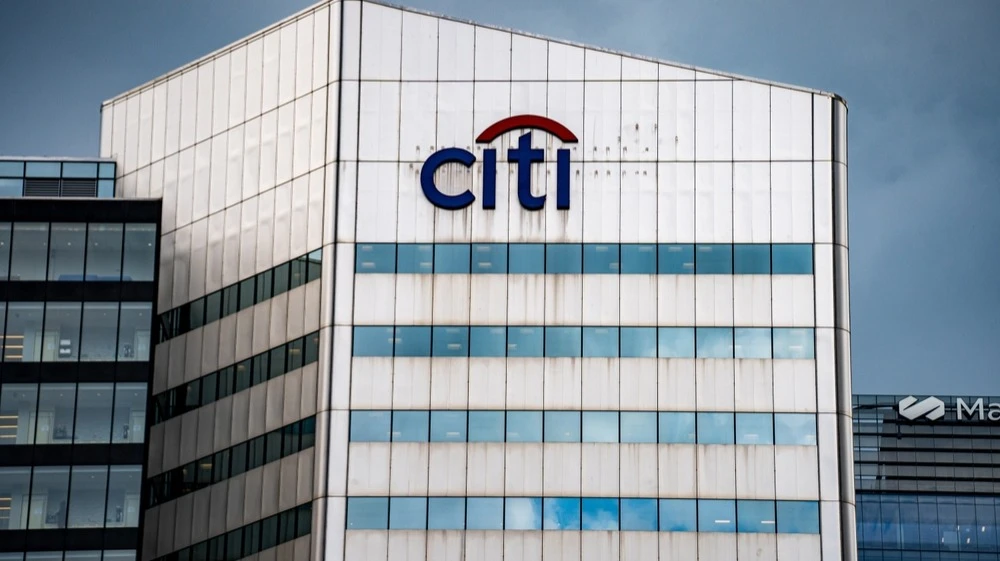
Strategists at Citigroup have downgraded their ratings on U.S. stocks and the global technology sector. Photo: Erman Gunes/Shutterstock
Strategists at investment bank Citigroup downgraded U.S. stocks and the global technology sector while upgrading European securities, as they are less exposed to turbulence in the AI sector. The Citi team took this step following last week’s massive market crash, which affected markets around the world and was triggered by the Democrats’ victory in the U.S. midterm elections, according to Bloomberg.
Details
Citigroup analysts downgraded their rating on the entire U.S. market and the technology sector in particular to “neutral,” while upgrading their rating on Europe (excluding the U.K.) to “Overweight,” Bloomberg reported. Citi continues to view the outlook for artificial intelligence positively but acknowledges the possibility of further sell-offs before sentiment stabilizes and earnings revisions provide a more solid foundation for trading, Bloomberg reports.
“We fear that positions in key indices, such as the Nasdaq, could fall even further, moving into net short territory,” the strategists said. “And although the sell-off was most aggressive in the technology sector, volatility was widespread.”
Europe’s diversified stock market, by contrast, has become an attractive destination as global investors seek to reduce their exposure to artificial intelligence-related stocks, Bloomberg notes. A mix of stable industrial companies, banks, and reliable safe-haven assets helped the region avoid the worst effects of last week’s turmoil. Furthermore, according to the bank, Europe is also benefiting more from the drop in oil prices.
The bank's strategists say that their global sector strategy now strikes a balance between cyclical stocks, which are sensitive to economic conditions, and defensive stocks. In addition, they have upgraded the healthcare sector to “Overweight,” placing it on par with the basic materials sector.
"We believe that value stocks or quality stocks, as well as certain defensive assets, may outperform in such conditions," Citi notes.
Citi added that its market outlook for the coming year remains positive, as lower interest rates, solid economic data, and a potential reduction in geopolitical risks are expected to provide support.
What Other Analysts Are Saying
The main trigger for panic in the U.S. market last week was concern over stricter AI regulations following the Democrats’ victory. As a result, the S&P 500 posted its sharpest weekly decline since April 2025, and the Nasdaq 100’s market capitalization plummeted by $2.3 trillion last Thursday alone. Meanwhile, the European Stoxx 600 index ended the week up 0.2%.
Although Europe has benefited less from the AI boom, this is now becoming its advantage, according to Goldman Sachs analysts, who are also quoted by Bloomberg. AI infrastructure accounts for about 15% of the Stoxx 600 index and will contribute less than a quarter of the 9% earnings growth projected for 2027 for companies in that index, the analysts noted. By comparison, in the S&P 500 index, these stocks account for about 40% of market capitalization and more than two-thirds of expected earnings growth next year.
“This lower concentration provides diversification at a time when the AI trend is reversing: during the eight largest sell-offs in the AI sector since 2023, Europe has outperformed the U.S. market every time,”, the Goldman team noted.
Europe will benefit from the recent market turmoil in the U.S. as investors seek a “safe haven,” according to Nadia Calviño, president of the European Investment Bank (EIB). “The turbulence in the U.S. is causing capital to flow into Europe,” she said in an interview with Bloomberg TV. “I expect this to continue.” Calviño stated that she currently sees no negative impact on investment in the European region, adding that demand for new EIB bond issues has been very high and she expects this trend to continue in January.
This article was AI-translated and verified by a human editor