European Stocks Under Pressure: A Short-Lived Correction or the Start of a Deep Downturn?

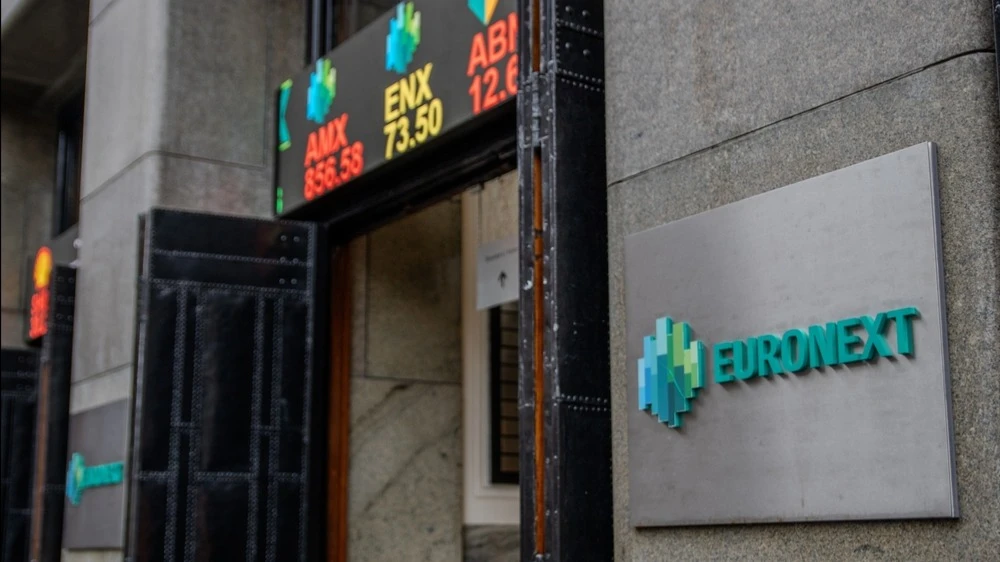
Photo: SimoneAmi / Shutterstock.com
The European market has been in a correction phase since mid-August. At its low in early October, the STOXX Europe 600 was down about 5.7% from its August peak, but it subsequently recovered most of those losses. The market is under pressure from rising energy prices, rising bond yields, and France’s fiscal risks.
A global sell-off of AI-related stocks dealt an additional blow. Nevertheless, the current correction appears to be part of a long-term uptrend: the eurozone economy continues to grow, and corporate earnings forecasts remain positive. How long will the energy shock last, and which companies will be able to sustain growth under these conditions? Francesco Bergamini, Freedom24’s representative in Italy, provides the answers.
Bond yields are intensifying the pressure
According to a preliminary estimate by Eurostat, annual inflation in the eurozone accelerated from 3.8% to 4% in October—a three-year high, Reuters reported. Energy prices rose 20.8% year-over-year, up from 18.9% in September. Meanwhile, core inflation stood at 2.5%, indicating that the energy shock has so far had a limited impact on other prices.
The economy remains stable for now, although October data point to a slowdown. The Eurozone composite PMI fell from 53.1 to 51.9 points, while remaining in positive territory. France once again found itself in contraction territory, while Germany posted better results.
The paradox is that sustained business activity supports profits but, at the same time, prevents the market from anticipating an end to the ECB’s policy tightening. The central bank has already raised rates twice this year, bringing the deposit rate to 2.5%. High energy prices pose an inflationary risk, while high bond yields and borrowing costs are holding back demand. The market finds itself caught between two signals: the economy is holding up, but the cost of capital is rising.
Another source of pressure is France. Fiscal uncertainty and political risks are driving up the premium that investors demand on French debt. This increases the cost of financing for banks and intensifies pressure on cyclical sectors and interest-rate-sensitive companies.
Earnings were stronger than the overall macroeconomic picture
Against this backdrop, the fundamental outlook for European companies does not yet appear to be in crisis. In August, Goldman Sachs forecast a 15% increase in earnings per share for STOXX Europe 600 companies by the end of 2026. However, more recent estimates show just how important the sectoral composition of this growth is.
According to LSEG data as of October 29, earnings for companies in the index are expected to rise 23.6% year-over-year in the third quarter. The energy sector continues to be the main contributor, with earnings expected to grow by 139%. But even excluding the energy sector, the forecast has improved from 8.4% to 9.8%, which is higher than the average rate for the previous 16 quarters (7.1%). Profit growth is expected in eight out of ten sectors, while declines are expected in real estate and cyclical consumer sectors. So far, analysts’ forecasts have been exceeded by about 54% of the companies that have reported results, which is in line with historical norms. Therefore, much will depend on fourth-quarter results and the companies’ own forecasts for next year.
According to Reuters, at the end of August, the STOXX 600 index was trading at approximately 14.6 times forward earnings, at a 26% discount to the U.S. market. In November 2024, this gap reached a record 41%. Until 2015, European stocks traded at a slight discount to U.S. stocks, so the current gap is wider than the historical norm, although it is significantly narrower than the record high.
From a technical standpoint, it remains important for the STOXX 600 to hold above the previous resistance zone of 640.3–645.7 points. As of November 6, the index was trading within this range, but the sustainability of this move has yet to be confirmed. The next key level in the current technical picture is the all-time high of around 663 points.
On October 29, the ECB kept its interest rate at 2.5% and provided no guidance on future decisions. Eurostat reported that inflation accelerated to 4% in October—a three-year high. The next events the market will be watching are Siemens Energy’s earnings report on November 11 and the ECB meeting on December 17. Currently, the market is pricing in a 0.25 percentage point rate hike at that meeting.
Which companies appear more attractive than the market?
Under these circumstances, companies that generate revenue globally, have their own sources of growth, and are less dependent on consumer demand in Europe are of particular interest. The sell-off in AI stocks reflected deteriorating expectations, while current orders remain strong. ASML noted that even in 2027–2028, it will not be able to fully meet demand, and Siemens Energy’s order backlog stands at €162 billion. If growth in AI investment slows, the first sign will be the trend in new orders.
ASML is the most vulnerable to a slowdown in AI investment, while Air Liquide is the least vulnerable, as its electronics segment accounts for about 10% of its revenue. At STMicroelectronics, AI data centers are expected to account for about 9% of revenue this year.
— ASML: Focus on AI and Investments by Chip Manufacturers
ASML is one of the most attractive growth stocks in Europe. The company is the market leader in lithography equipment for the production of cutting-edge chips, and investments in AI infrastructure are supporting long-term demand for its systems.
The third-quarter report confirmed steady demand: revenue reached a record €11.7 billion, gross margin stood at 57.5%, and the full-year revenue forecast was set at €44–45 billion. Management stated that the deliveries scheduled for 2027–2028 will not be sufficient to fully meet customer demand: some customers are already inquiring about orders for 2029–2030.
Following the earnings report, the stock price fell amid a global sell-off in chipmakers—over the past month, the stock has lost about 18% of its value. On the U.S. stock market on November 6, the stock was trading at around $1,424. Analysts’ average 12-month price target is approximately $2,074, implying upside potential of about 45.5%.
The main risks include high stock valuations, export restrictions on China, and a potential slowdown in global investment in chip manufacturing and AI infrastructure.
— Air Liquide: Defensive Growth with a New Driver
Air Liquide—a French supplier of industrial and medical gases—has become particularly attractive following the unveiling of its “Beyond” strategy through 2030. The company aims for an average annual growth in recurring earnings per share of approximately 10% and an increase in operating margin of 4–6 percentage points. The new plan also calls for a €4 billion share buyback in 2027–2028.
These drivers extend beyond the traditional industrial gas market: Air Liquide is counting on growth in the semiconductor industry, AI infrastructure, the energy transition, and the return of high-tech manufacturing to its countries of origin.
At the close on November 6, the stock was trading at €187.8. The 12-month average price target is approximately €201.7, which implies upside potential of about 7.5%. The main risks include the capital-intensive nature of the business, energy costs, and the implementation of the new strategy. Rising bond yields could also put pressure on the stock’s valuation.
— STMicroelectronics: A Riskier Bet on Recovery
STMicroelectronics is placing a more aggressive bet on the recovery of the semiconductor cycle. AI infrastructure is of particular interest: the company expects to generate more than $2 billion in revenue from data centers in 2027, assuming current demand trends continue.
It is estimated that chips for optical interconnects will account for about 80% of this revenue. According to the CFO, the larger opportunities in server power conversion will not begin to yield significant results until after 2028. Thus, near-term growth is primarily driven by data transmission.
At the close of trading on November 6, the stock price stood at €37.6. Analysts' average price target is around €64.7—approximately 72% higher than the current price.
The main risk for STMicroelectronics is a weak recovery in automotive demand, as revenue growth from AI may not be enough to offset the weakness in its core business and pressure on profitability. The industrial segment is already recovering: in the third quarter, its revenue grew 40% year-over-year and 12% quarter-over-quarter.
In the automotive segment, revenue remained at the second-quarter level. A key indicator of the company’s recovery is quarterly growth in this segment. Another key indicator is whether the company will meet its fourth-quarter forecast for revenue (approximately $4.15 billion) and gross margin (approximately 39%).
— Siemens Energy: Betting on Growth in Electricity Demand
Siemens Energy is the most aggressive pick in the selection. The investment thesis is based on growing demand for electricity, grid expansion, and the need for new generating capacity. AI data centers are becoming one of the key drivers of these investments. Third-quarter results confirm strong demand: the company reported record orders and revenue.
As of November 9, the company's shares are trading at around €120, but remain well below their April high. Analysts' average price target is around €200, suggesting upside potential of more than 60%.
Siemens Energy’s main sources of profit growth are gas turbines and power grids. In April–June, the gas division’s profit margin was 17.3%, while the grid division’s was 19.9%. The Siemens Gamesa wind power division returned to profitability for the first time since 2022, but its profit margin remains at just 2.7%.
The next key event for investors is the annual report on November 11 and the outlook for the new fiscal year. On average, analysts expect net income to rise from €4 billion to €5.3 billion. The main risks include stock valuations, the company’s ability to fulfill orders and maintain profitability, as well as a possible reduction in investment by industrial customers amid high interest rates.
This article was AI-translated and verified by a human editor