Closer to Apple: Intel Has Begun Production of Its Most Advanced Processors
The new 18A-P production process is intended to revitalize the company's business after years of setbacks

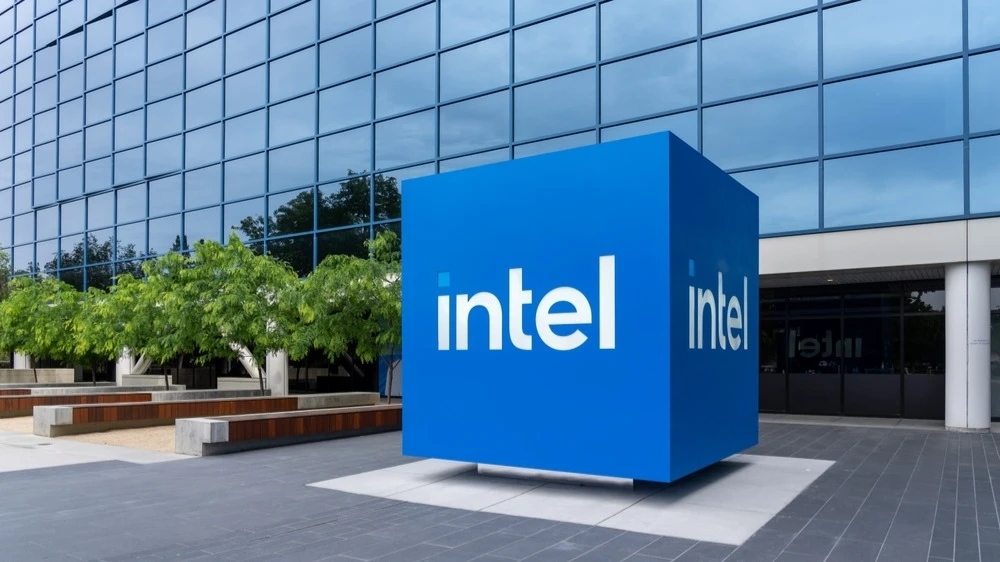
U.S. chipmaker Intel has launched production using its most advanced manufacturing process / Photo: JHVEPhot/Shutterstock.com
U.S. chipmaker Intel has launched production using its most advanced manufacturing process. This move brings the company closer to a potential deal to produce chips for Apple devices, according to CNBC. Intel announced the launch of its new 18A-P technology line on Tuesday, June 16, at the VLSI Microelectronics Symposium in Honolulu, Hawaii.
“It’s been a long journey, and while there’s still a lot of work ahead, we appreciate the opportunity to share our progress,” said Naga Chandrasekaran, head of Intel Foundry. He called this milestone “a signal to customers and partners that Intel Foundry is committed to long-term innovation in advanced lithography processes.” Intel has two main business areas: chip development and chip manufacturing—both for its own products and for customers. Intel Foundry is responsible for the latter.
What is known about the new technology
The 18A-P process, first announced last year, is currently in the so-called "risk production" phase—an early stage of production. Initial data confirms that the finished chips will fully meet customer requirements after final certification, according to CNBC.
According to Intel, the new 18A-P process technology allows chips to run 9% faster or consume 18% less power than the base 18A process. Mass production using the standard 18A process began in Arizona in December 2025.
In addition, the updated processors are at least 20% more resistant to overheating. At the same time, they are fully compatible with existing designs based on the previous version of the technology—customers won’t have to make any changes, according to Intel.
After several years of setbacks and high defect rates in production, Intel is placing its main bet on the 18A technology line, according to CNBC. This project is intended to revitalize the company’s business and finally allow it to compete on equal footing with other foundries that manufacture custom processors.
What People Are Saying in the Market
Intel already tested the basic 18A technology on PC processors in January, but was unable to attract a single major third-party customer, CNBC notes. Analysts believe that the improved 18A-P version will be the company’s biggest test and a true measure of its success.
“The defect rate here is the key criterion,” notes Neil Shah, a microelectronics market analyst at Counterpoint Research. “If Intel can guarantee a yield of over 90% in the very first month, I think they’ll easily find new major customers.”
According to Shah, Intel's main obstacle lies in its architecture. The company has historically produced processors based on the traditional x86 platform, while Apple, Google, and Amazon's own chips are built on the competing Arm architecture, CNBC reports.
“Intel has never produced Arm processors before,” Shah emphasizes. “At the same time, the market leader, Taiwan’s TSMC, has mastered this technology to perfection.” TSMC is currently building its own $165 billion plant just 80 km north of Intel’s factory in Arizona.
In this situation, Intel may have the upper hand: it will be easier for the company to first secure major clients for its cutting-edge packaging technology—the final stage of production, in which individual chips are assembled into a single complex system. Intel’s proprietary EMIB assembly technology is now in direct competition with TSMC’s CoWoS, according to CNBC.
“TSMC is currently facing huge backlogs and bottlenecks in the chip packaging stage,” Shah explains. “For Intel, this is the perfect opportunity and the easiest way to seize the initiative right now.”
What about the stocks?
Wall Street has long been anticipating a strong rebound in Intel’s business: this year, the company’s stock has soared by more than 200%—and that’s after rising 84% in 2025. The rally began after the U.S. government acquired a 10% stake in the company in August 2025, followed by Nvidia’s $5 billion investment in Intel that September.
Intel CEO Lip-Bu Tan said in a May interview with CNBC that he expects to secure contracts from several of the factory’s major customers in the second half of 2026. That same month, Intel’s stock jumped nearly 14% amid reports that the company had reached a preliminary agreement to manufacture chips for Apple. It is not yet clear for which specific devices Intel will produce processors. Starting in 2006, Apple used Intel processors in its personal computers, but in 2020, it switched to its own central processing units.
In premarket trading on June 17, Intel shares rose by about 3.5%. Analysts are taking a rather cautious view of the stock: although 18 analysts overall recommend buying it (Buy and Overweight ratings), most advise holding it (31 Hold ratings), and four others believe it is better to sell (Sell and Underweight).
This article was AI-translated and verified by a human editor