Beyond the blue chips: Four European small caps deserving attention in 2H26

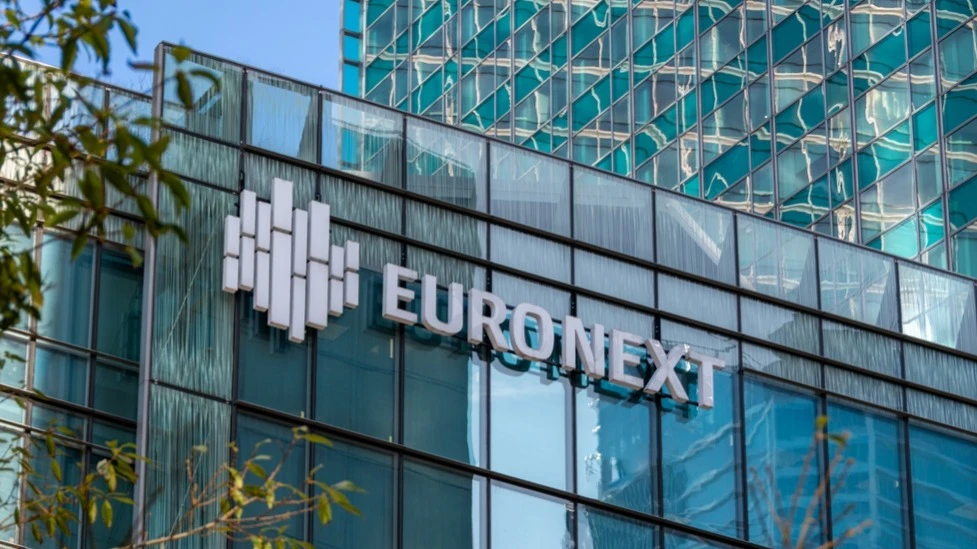
Francesco Bergamini of Freedom24 Italy discusses four interesting European small-cap ideas / Photo: HJBC / Shutterstock.com
The European stock market remains a market of contrasts. While investors’ attention is largely focused on the largest tech, industrial, and defense companies, from ASML to SAP and Rheinmetall, many high-quality second-tier companies continue to fly under the radar.
This is largely due to the structure of today’s stock markets. The main flow of capital goes into funds and ETFs, automatically increasing the weighting of the largest issuers. As a result, the valuations of market leaders are rising, while many small- and mid-cap companies continue to trade at significant discounts, despite improving fundamentals.
The reporting season for the first half of 2026 showed that this trend persists. Several second-tier European companies not only delivered strong financial results but also confirmed or raised their full-year forecasts.
Picks for 2H26
Below we take a look at four stocks that, in our view, deserve attention in the second half of the year. Each is benefiting from a specific long-term structural trend, e.g., the development of AI, the digitization of the automotive sector, the restructuring of supply chains, or the transformation of traditional retail.
Mersen (MRN): Betting on AI infrastructure
When it comes to AI, investors usually think of NVIDIA, AMD, or server equipment manufacturers. However, the development of AI is impossible without a large-scale expansion of energy infrastructure. Modern data centers require significantly more electricity, more complex power distribution systems, and new solutions for power electronics.
This is precisely where the French company Mersen comes in. The company manufactures components for power distribution, electrical circuit protection, power electronics, and the semiconductor industry. Its products are used in data centers, railway infrastructure, electric transport, industrial automation, and the aerospace sector.
The latest financial results confirm that demand in these sectors remains high. For the first half of 2026, the company’s revenue reached EUR611.5 million, with organic growth of 3.9% year over year; EBITDA stood at EUR97.4 million, representing a margin of 15.9%; and net profit increased approximately 5%. The Electrical Power segment showed a particularly strong performance, with organic growth of 11.1%, driven by developments in electrical infrastructure, data centers, power electronics, and silicon semiconductors. Against this backdrop, the management has raised its forecast for the full-year 2026, expecting organic sales growth of 4-6% and a further improvement in profitability.
The qualitative factor is no less important. The management expects that as early as this year, data centers will generate over EUR40 million in revenue for the company, almost double the figure from 2025. This suggests that AI is no longer merely a long-term concept for Mersen but is gradually becoming a source of real cash flows.
The main risks remain the ongoing weakness of the Advanced Materials division, pressure from the solar energy market, and a relatively high debt burden following a large-scale investment program. An additional source of uncertainty is the change of CEO that took place in spring 2026. Nevertheless, the combination of strong financial results, an upward revision of the full-year guidance, and direct exposure to the development of AI infrastructure makes Mersen one of the most interesting stories in European industrials.
Mersen stock has risen around 69% year to date. According to MarketScreener data, it has four “buy” calls versus one “hold” rating. The average target price is EUR47.20 per share, implying 17% upside from Wednesday’s closing price.
Elmos Semiconductor (ELG): How cars are becoming computers
Over the last decade, the automotive industry has changed far more than it did over the preceding several decades. Whereas competition used to center on engines and mechanics, manufacturers now compete in the fields of software, autonomous driving, and electronic driver-assistance systems. This is precisely why the number of semiconductors in every new car continues to rise rapidly.
The German company Elmos Semiconductor specializes in analog and mixed-signal integrated circuits used in ADAS systems, intelligent lighting, sensor platforms, climate control systems, and numerous electronic modules in modern cars. Following several challenging years owing to inventory adjustments by car manufacturers, the company is once again demonstrating strong growth.
In the first quarter of 2026, revenue rose 20.2% year over year to EUR152.5 million, EBIT increased 41%, and the operating margin reached 23.8%, versus 20.2% a year earlier. Cash flow dynamics are particularly impressive: adjusted free cash flow reached 26.7% of revenue, which is significantly higher than last year’s level. Following the quarterly results, the management has raised its guidance and now expects sales growth of approximately 12%, plus or minus 2 percentage points, amid an operating margin of 23-26%.
Elmos’ investment appeal lies not only in the current recovery of the automotive market. The key factor is the long-term growth of the electronic component of vehicles. The expansion of ADAS functionality, the transition to software-defined vehicles, and the ongoing digitalization of vehicles are driving demand for precisely the components that the company manufactures.
That said, investors should also bear the risks in mind. The automotive industry remains cyclical, and following significant gains in the stock, some of the positive expectations are already reflected in the share price. Furthermore, the management has warned of possible supply constraints for 8-inch wafers against a backdrop of high global demand for production capacity linked to the development of AI.
Elmos stock is up around 50% year to date. The stock has three “buy” ratings versus two “hold” recommendations. The average target price is EUR185 per share, implying around 25% upside from the Wednesday close.
Scanfil (SCANFL): A hidden beneficiary of European reindustrialization
The investment case for Finland’s Scanfil centers on the transformation of global supply chains. In the wake of the pandemic, the energy crisis, and rising geopolitical risks, many European manufacturers have begun to diversify their production more actively, reducing their dependence on specific regions and moving part of their capacity closer to end markets, a process known as reshoring or nearshoring.
Scanfil holds a strong position as a contract manufacturer of electronics for the industrial, energy, medical equipment, telecommunications, and aerospace sectors. This diversification enables the company to remain resilient even when individual sectors experience downturns. The results for the first half of the year confirm the effectiveness of the firm's strategy. Revenue rose to EUR488 million in the first half, which is 23.6% higher than the same period last year; organic growth stood at 5.6%; and comparable EBITA increased almost 28%. The second quarter proved particularly strong, with sales rising by more than 28%.
The management has maintained its guidance for the full year, eyeing revenue of EUR0.94-1.06 billion and EBITA of EUR64-78 million. The main drivers are new contracts in the Energy & Cleantech segment, the expansion of the company’s presence in North America, and strong demand from the aerospace and defense industries. Meanwhile, the company has increased its dividends for the 13th consecutive year, which is rare among European industrial companies of this scale.
The main risk relates to the integration of recent acquisitions, rising debt levels following M&A deals, and ongoing uncertainty in global supply chains. However, it is precisely this combination of sustainable profitability, a diversified business, and the long-term trend toward the restructuring of industrial production that makes Scanfil one of the highest-quality companies in Europe’s second tier.
Scanfil stock has risen 14% year to date. The stock has one “buy” call, while two other analysts cover the company without assigning a rating. The average target price is EUR12.03 per share, implying around 6% upside from the Wednesday close.
Vusion (VU): Digitalization of physical stores is only just the beginning
The French company Vusion is perhaps the most misunderstood company in our selection. To this day, many investors view it solely as a manufacturer of electronic price tags. However, the business has changed significantly over the last few years. Today, Vusion is developing a comprehensive platform for the digitalization of retail, combining electronic price tags, IoT sensors, software, analytics, and computer vision technologies, essentially creating a digital operating system for physical stores.
The financial results confirm the success of this transformation. In the first half of 2026, consolidated revenue rose to EUR820 million, an increase of approximately 34% on the previous year. The Value Added Solutions segment, which includes software and digital services, is growing particularly rapidly, with growth of around 39% in the period.
The management has confirmed its full-year guidance, expecting revenue to increase 15-20%, along with growth in the software business of approximately 40% and a further improvement in profitability. The key drivers remain the large-scale rollout of the company’s solutions across Walmart’s U.S. network and a long-term agreement with Carrefour to digitize its stores in France.
The main risk is that following a record year last year, the pace of new order intake has slowed due to the high-base effect. Furthermore, as its market capitalization grows, Vusion is gradually moving from the small-cap into the lower mid-cap category, which may alter some investors’ perception of the stock.
Vusion shares are off 33% year to date. The name has six ratings, all “buy." The average target price is EUR205 per share, implying approximately 54% upside from the Wednesday close.
Takeaways for investors
Despite the robust recovery of the European stock market, new investment ideas are far from exhausted. Second-tier companies continue to receive significantly less attention than the largest index constituents, even though their fundamentals often look no less convincing. All four companies discussed above operate in different sectors of the economy, but they have one thing in common: each stands to benefit from long-term structural changes. It is precisely these kinds of businesses that often become a source of alpha for investors willing to look beyond the most popular names in the European market.
This text is for informational purposes only and does not constitute personalized investment advice.