CoreWeave's stock rose 14%. The report confirmed strong demand for cloud computing.
CoreWeave's sales doubled last quarter


CoreWeave's backlog at the end of the second quarter stood at $104 billion, compared with $30.1 billion a year earlier / Photo: rblfmr / Shutterstock.com
CoreWeave, a provider of computing power for artificial intelligence systems, exceeded market expectations with its second-quarter revenue and outlook for the current quarter, thanks to the acquisition of new customers. This indicates strong demand for AI computing, according to Bloomberg. CoreWeave’s shares jumped 14% in after-hours trading, and shares of its main competitor, Nebius, also rose.
Details
CoreWeave's revenue grew by nearly 113% year-over-year to $2.58 billion. According to Bloomberg, analysts had expected revenue of $2.56 billion. The company, which continues to invest in data center construction, saw its net loss increase by approximately 116% compared to the same period last year, from $290 million to $626 million, or $1.14 per share. Wall Street, according to LSEG, had expected a loss of $1.2 per share, CNBC reports.
The company also reported that its backlog—a closely watched indicator of future sales—stood at $104 billion at the end of the quarter, compared with $30.1 billion a year earlier. This figure does not include more than $25 billion in new commitments for the third quarter, CNBC notes. In the second quarter, Meta announced that it would pay CoreWeave an additional $21 billion for computing power. The provider also announced a multi-year agreement with Anthropic and secured $6 billion in commitments from the financial firm Jane Street, CNBC notes.
CoreWeave expects third-quarter revenue of $3.4–3.6 billion, while analysts surveyed by LSEG had expected $3.43 billion. CoreWeave has raised its guidance for adjusted operating profit this year: while the forecast in May was in the range of $900 million to $1.1 billion, the lower end of the range is now $960 million and the upper end is $1.15 billion. Annual revenue guidance has also increased, from $12–13 billion to $12.4–13.2 billion. Analysts had expected annual revenue of $12.63 billion. The company also raised its forecast for capital expenditures for the year from $31–35 billion to $35–39 billion. CoreWeave expects to increase its data center capacity from the current 1.5 gigawatts to more than 1.85 gigawatts by the end of the year.
How did the market react?
After the report was released in after-hours trading on August 11, CoreWeave’s stock jumped by more than 14%. During the main trading session prior to the report, the stock gained 2.4%, reaching $90. Since March 2025, when CoreWeave went public, its stock has risen 125%.
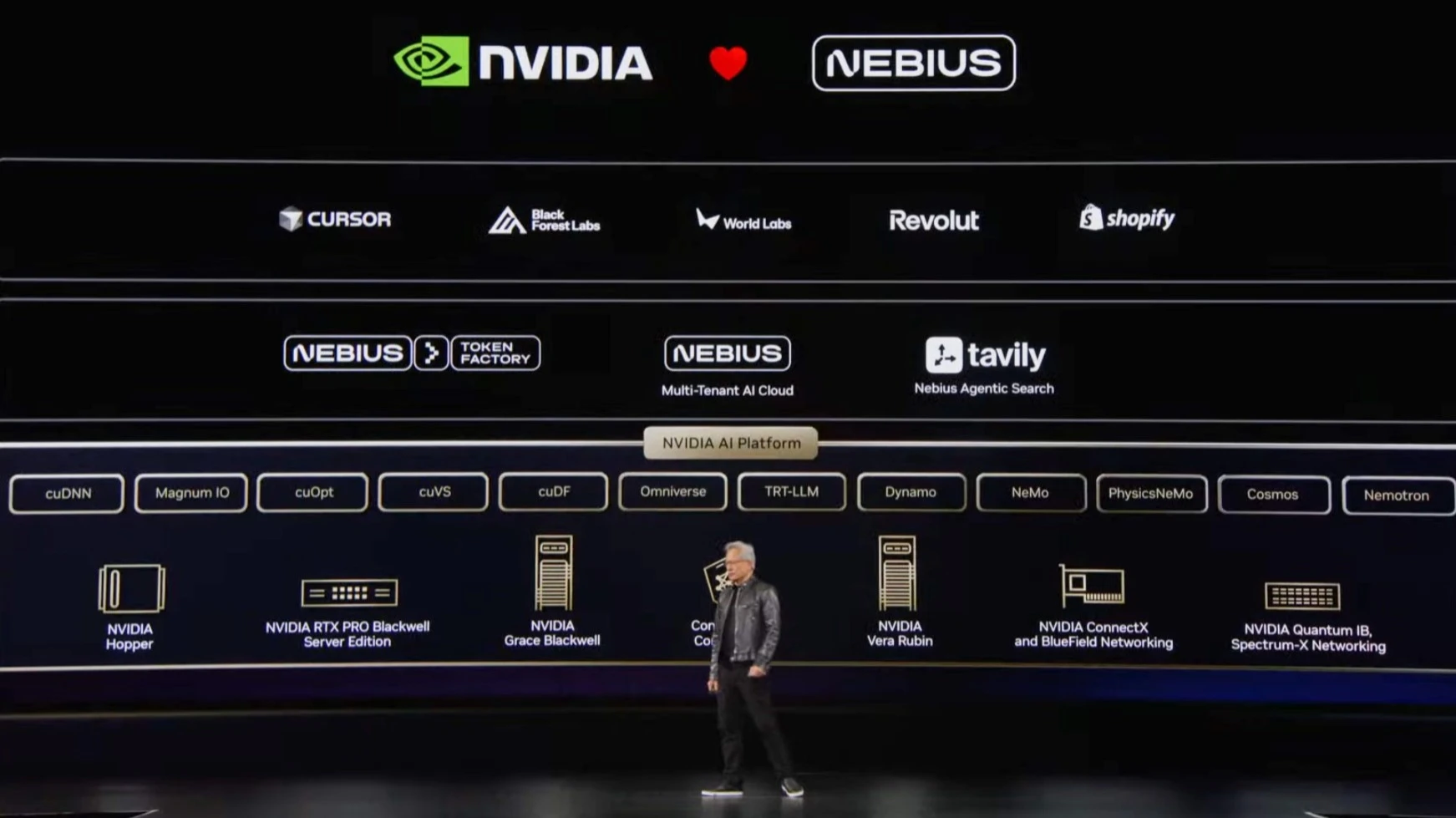
Against the backdrop of CoreWeave’s strong earnings report and outlook, shares of Arkady Volozh’s rival company, Nebius, also rose, gaining 6% in after-hours trading. Nebius is set to release its earnings report for the previous quarter on August 12.
Context
CoreWeave’s revenue has become one of the key indicators of the boom in AI data center construction, according to Bloomberg. Last week, the company announced its entry into the Asian market, where it plans to build three data centers in Indonesia. Wall Street is closely monitoring CoreWeave’s results amid hyperscalers’ heavy spending on AI infrastructure. CoreWeave remains one of the few publicly traded providers of AI computing power among the so-called “neo-clouds,” such as Nebius. Therefore, its results provide some insight into the state of demand for AI computing in general, the agency notes.
"The numbers we're seeing right now look pretty good—in some cases, they're above consensus estimates," Jefferies analyst Brent Till said on CNBC. However, he added that the quarterly results "weren't outstanding."
CoreWeave, whose clients include OpenAI, Meta Platforms, and Microsoft, has raised tens of billions of dollars in debt and is actively investing in AI chips and data centers to meet demand, according to Bloomberg. Over the past two weeks, CoreWeave’s stock has experienced sharp volatility after Situational Awareness, an AI-focused hedge fund, liquidated its positions in public companies, putting pressure on many tech stocks. According to Bloomberg, as of March 31, Situational Awareness held approximately 1.6% of CoreWeave’s shares. A significant portion of the fund’s holdings was acquired by Ken Griffin’s Citadel.
CoreWeave is also trying to lower its borrowing costs by tying financing packages to contracts with larger, more stable customers, according to Bloomberg.
This article was AI-translated and verified by a human editor