The Dow ended its three-week losing streak. Meta and Apple hit record highs.
The drop in oil prices, driven by the resumption of talks between the U.S. and Iran, boosted stock prices

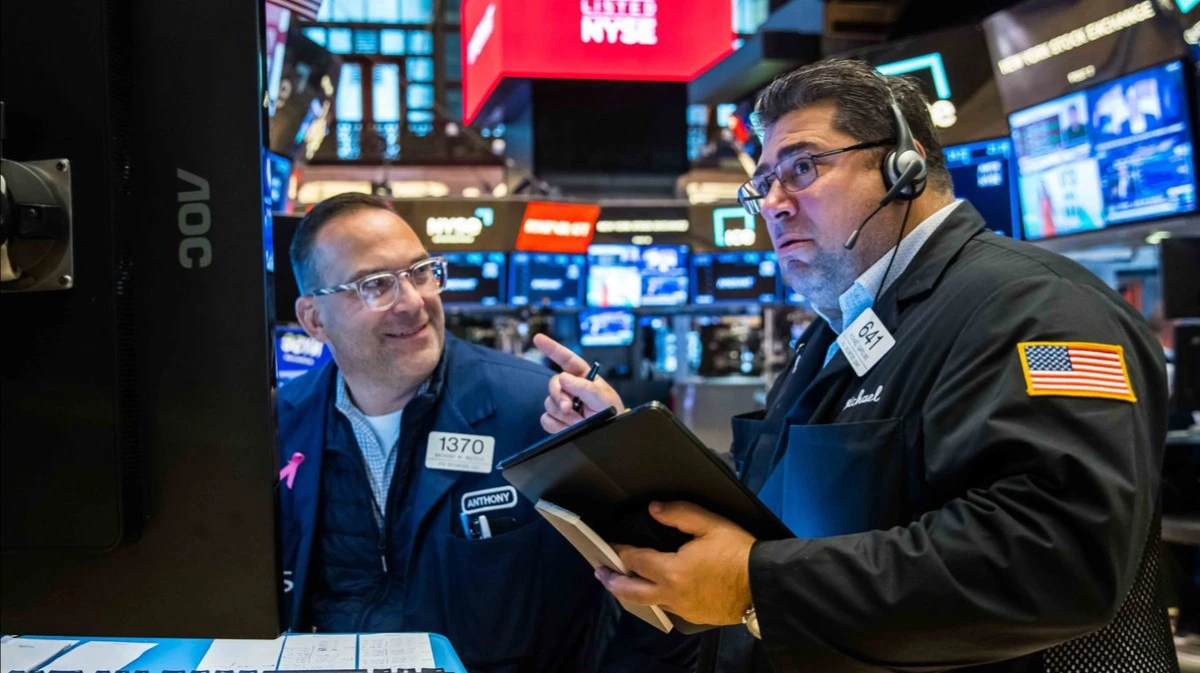
The Dow rose 0.3% over the week / Photo: X / NYSE
The Dow Jones Industrial Average, a "blue-chip" index, rose 0.3% for the week, ending a three-week losing streak. Two other major U.S. stock market indices also ended the five-day trading period in positive territory: the S&P 500 rose 1.2%, and the Nasdaq Composite rose 2%.
On Friday, September 25, the Dow jumped 0.93% right away, while the S&P 500 rose 0.51% to 7,743.41 points, and the Nasdaq rose 0.48% to 27,068.72 points.
It was a strong week for tech stocks. Meta Platforms shares rose 12.9% during this period. Overall, in September, shares of the owner of Instagram and Facebook posted their best monthly performance in 13 years thanks to the launch of the new AI assistant Muse: since September 1, they have risen by more than 31%. The AI agent Muse, which the company launched on September 8, rose to the top spot among free apps in U.S. app stores for iOS (Apple) and Android (Google) within a few weeks.

On Friday, Apple shares hit a new closing high for the first time since July 28, rising 1.5% to $341. The stock is now just 1% shy of its all-time high.
Hopes for a diplomatic breakthrough in the war with Iran led to a drop in oil prices and supported the stock market’s recovery, according to Bloomberg. Brent crude closed at $104.4 per barrel on Friday after Iran proposed a plan to end the conflict. Under this proposal, the Strait of Hormuz would be reopened to shipping, and negotiations on the nuclear program would resume. U.S. President Donald Trump said he discussed the war in Iran with Chinese President Xi Jinping, who was on an official visit to the United States this week. “I think everything will work out great for us,” Bloomberg quoted Trump as saying.

Investors closely followed Xi Jinping’s visit to the U.S. U.S. Trade Representative Jamison Greer told CNBC on Friday that “much more detailed information” on the negotiations between the U.S. and China would be released on Monday. U.S. Treasury Secretary Scott Bessent announced this week that the two countries had agreed to extend the trade truce—which was set to expire on November 10—for another two months. This was, in fact, the most important takeaway for investors, according to Barron’s. The short duration of the extension underscores the lingering mistrust and disagreements between the two countries, despite the friendly tone displayed by their leaders, the publication notes.
Tensions persist in the U.S. bond market. On Thursday, the yield on 10-year U.S. Treasury bonds rose to its highest level since 2007, while the yield on 30-year bonds reached its highest level since 2004. On Friday, yields rose slightly further, to 5.163% and 5.488%, respectively. This makes bonds more attractive than stocks, which could slow the growth of the S&P 500.

This week’s rise in yields was driven by hawkish comments from Federal Reserve Board member Michael Barr, persistently high energy prices due to the war with Iran, and strong PMI data. The market estimates the probability of a Fed rate hike in October at approximately 64%, according to the CME FedWatch tool.
“Investors have to navigate three powerful, conflicting factors: steady demand and strong corporate earnings, geopolitical risks, and uncertainty surrounding monetary policy, — Bloomberg quotes Kyle Roddu, senior financial markets analyst at Capital.com. — “Corporate profitability creates a floor for the market that supports prices, while geopolitical and political uncertainty sets a ceiling on their growth.”
“Sustained economic growth and strong corporate earnings should help markets weather a moderate cycle of [Fed] policy tightening, while higher bond yields create opportunities to boost the interest income of portfolios, ” Ulrike Hoffmann-Burchardi, Chief Investment Officer for the Americas and Global Head of Equities at UBS Global Wealth Management, told Bloomberg. “We continue to recommend taking positions in anticipation of further equity gains, while diversifying portfolios and managing the risk of excessive concentration.”
This article was AI-translated and verified by a human editor