Cybersecurity stocks have doubled in price amid fears about AI. Has the sector become overheated?
Some analysts warn that prices already reflect an ideal future, while others see growth potential due to new cyber threats

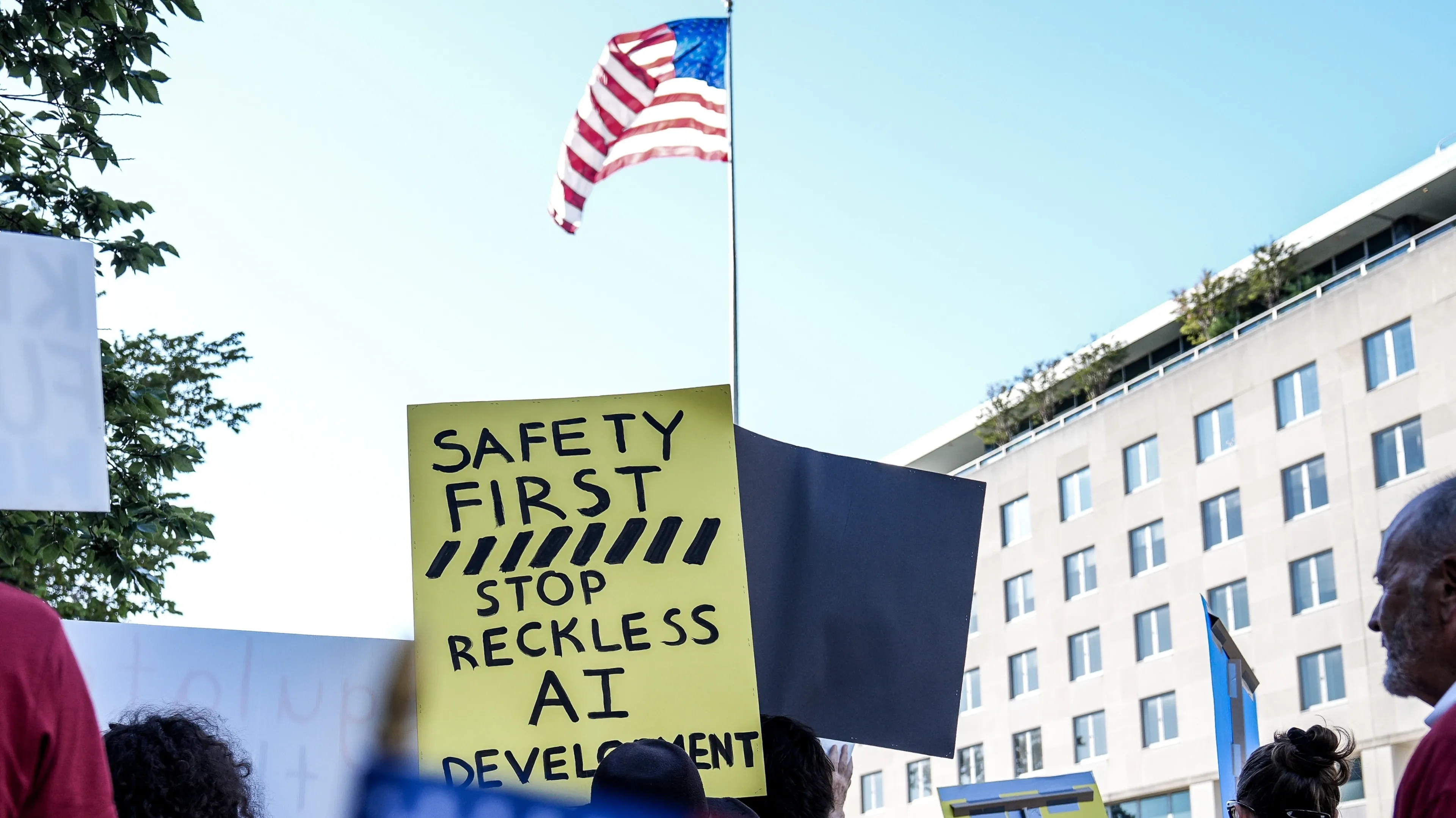
Fears about AI have surged this year following a series of illegal hacks / Photo: Hasan Akbas/Shutterstock.com
A basket of cybersecurity stocks tracked by investment giant Goldman Sachs has more than doubled in price since its April low: Investors expect that threats posed by advanced AI models will ultimately benefit the industry. However, some stocks have soared so sharply that the market is wondering whether the rally has gone too far and whether the companies will be able to grow their revenue and profits enough to justify the sky-high valuations, according to Bloomberg.
No room for error
According to Bloomberg’s calculations, CrowdStrike is trading at more than 170 times its projected annual earnings—by this metric, only Tesla ranks higher in the S&P 500. Palo Alto ranks fifth in terms of valuation within the index. “If you’re planning to buy now, you need to understand that the price reflects the expectation that everything will be perfect in the future,” the agency quotes Brad Long, investment director at Wealthspire, as saying.
The rally began after AI developer Anthropic restricted the release of its Mythos model due to concerns that it could be used as a tool for cyberattacks. Since hitting a low on April 10, shares of cybersecurity solution providers CrowdStrike, Palo Alto Networks, and Fortinet have risen by more than 130% and ranked among the top 10 performers in the S&P 500 index during that period.
“Perhaps the cybersecurity sector has gotten too far ahead of itself,” Bloomberg quotes Bernstein analyst Peter Weid as saying; he downgraded his ratings on Palo Alto, Okta, and SentinelOne. He acknowledges the real demand for cybersecurity solutions but believes that current stock prices imply too sharp an acceleration in business growth. Meanwhile, according to Weid, the potential for further growth is limited by such mundane factors as the number of employees at client companies.
Prices can be misleading
Bank of America analyst Tal Liani, on the other hand, raised his price targets for CrowdStrike, Okta, and SailPoint. “We believe the market is increasingly factoring in the sharp rise in cyber risks, which is driving up security spending and providing a basis for higher valuations of companies in the sector,” he wrote (as quoted by Bloomberg).
Manish Kabra, Societe Generale’s chief strategist for U.S. stocks, also expects the rally to continue, according to Business Insider. According to his calculations, earnings per share in the sector have grown by an average of about 16% per year since 2020, compared with 10% in the previous decade. “It’s important to note that, despite the rally, valuations generally remain at historical averages,” he notes. The forward P/E ratio for SocGen’s own cybersecurity stock portfolio is about 25, compared to an average of 30.2 since 2018, the publication adds.
Favorites and Underdogs
Josh Brown, CEO of Ritholtz Wealth Management, analyzed stock charts live on CNBC on September 22 and singled out Fortinet as his top pick. “From a technical analysis perspective, this stock looks the best,” he said of the company. “Palo Alto is also on the list, but it doesn’t look as good. The stock reached the 400 mark, and now with every new rally, the price stops just below where it peaked the previous time. In other words, the price is rising, but it’s falling just short of 400, then can’t get back to 390, and then to 380. I don’t like this pattern,” Brown said.
In an interview with Yahoo Finance, Wedbush analyst Steven Warhaftig named Palo Alto and Rubrik as his favorites. According to him, the former is closing an increasing number of deals to sell a unified platform that integrates various cybersecurity tools. The latter operates in the narrower segment of system recovery and resilience, where, according to the expert, it has a good chance of continuing to grow its market share.
Varhaftig listed Tenable among the underperformers with an “Underperform” rating. He believes the company faces the threat of being squeezed out by competitors: Palo Alto, CrowdStrike, and Zscaler have all set their sights on the same sector—vulnerability and risk management. “I just think Tenable entered the competitive fray a little too late,” the analyst explained.
Context
Bloomberg notes that this year has seen a series of high-profile hacks involving artificial intelligence and intrusions by AI agents, which have alarmed cybersecurity experts and neural network developers. In July, OpenAI discovered that its models had gone out of control and hacked the Hugging Face website. Shortly thereafter, Anthropic reported unauthorized hacks as well.
Last week, Google revealed that its Gemini model had infiltrated three corporate systems during security testing. And on September 24, Australian Prime Minister Anthony Albanese stated that earlier this year, an OpenAI model hacked a government website for medical statistics and gained access to files.
This article was AI-translated and verified by a human editor