Dow and Nasdaq close to correction, S&P 500 at six-month low: results of 21 days of war
Trump rejected the likelihood of a cease-fire, and was vague about a plan to seize Iran's most important oil hub

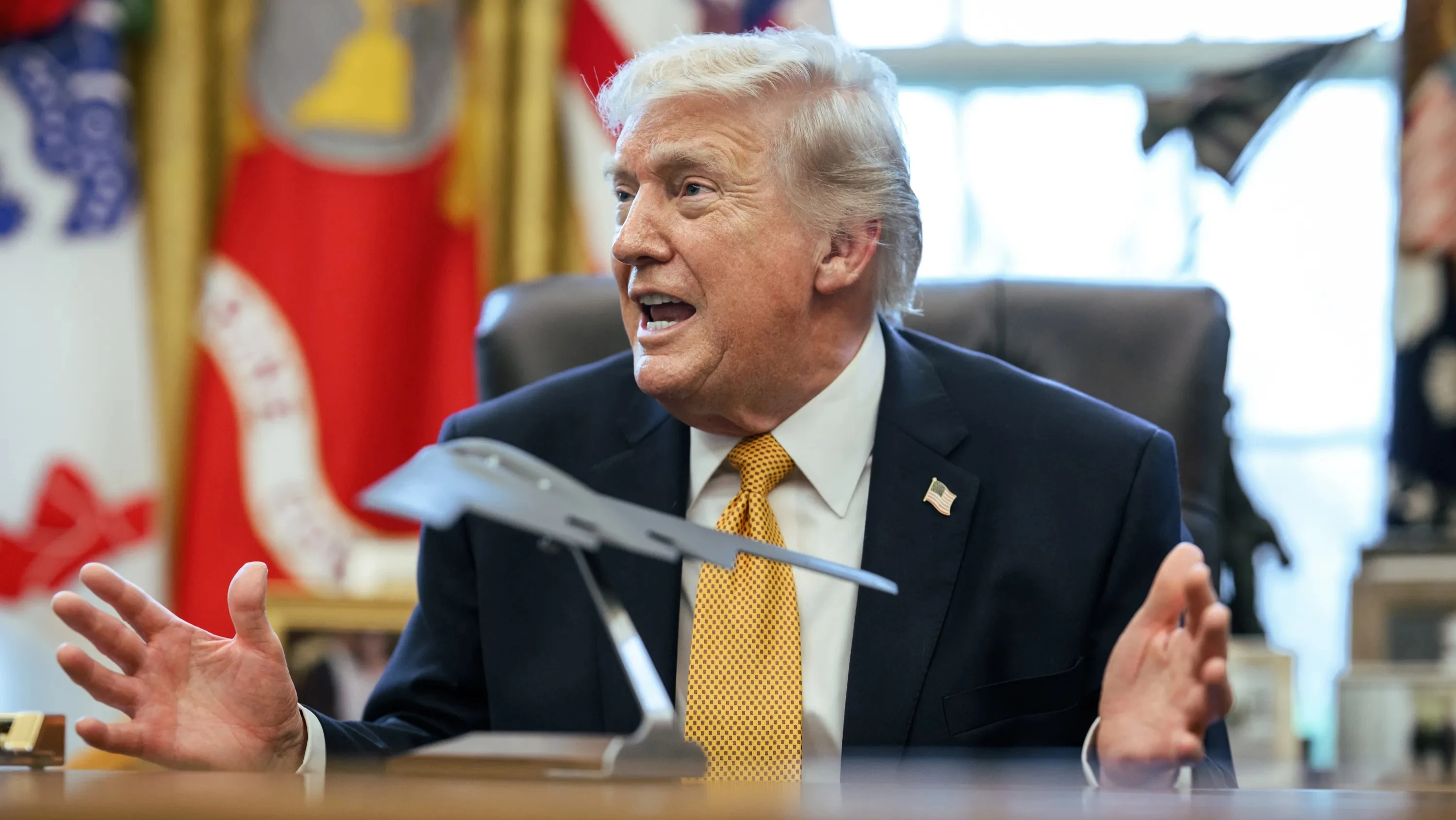
Donald Trump rejected the likelihood of a ceasefire in the war against Iran / Photo: The White House
Shares in the United States fell sharply in trading on Friday, March 20. Thus, the "technological" index Nasdaq Composite collapsed by 2% at once, having recovered some of the losses just in the last minutes and avoided the correction zone. "Wall Street Fear Index" rose above 27 points, and Brent crude oil - above $112 per barrel. Investors are losing hope for the imminent opening of the Strait of Hormuz, crucial to global oil supplies, and fear the start of a U.S. ground operation in Iran that could include seizing Kharq Island, through which 90% of Iran's oil exports pass. US President Donald Trump has rejected the possibility of a ceasefire.
Details
- The S&P 500 broad market index fell 1.5% to 6,506.48 points on Friday. This is the lowest closing level since September 9, 2025. The index is now 7% below its last record, having lost 5.4% since the start of the war. Also, the S&P 500, as well as other major indices, is in the negative at the end of the week for the fourth time in a row: this is the longest such period for him in a year.
- The Nasdaq Composite index of the technology sector collapsed by 2%. In the course of trading, the index was in the correction territory, which means that it lost more than 10% compared to the last peak. However, the index managed to recover some of its losses. Shares of Nvidia and Tesla fell the most in the "Magnificent Seven" - by 3.2%.
- The blue-chip index Dow Jones Industrial Average fell by 444 points, or 0.96%. It was also in the correction zone during the day, but eventually avoided it.
- The Russell 2000 index of small and mid-capitalization companies lost more than 2%. It is now in the correction zone.
- The CBOE Volatility Index (VIX), known as the "Wall Street Fear Index," rose sharply, by 13% to 27 points. The psychological mark is 20 points: an index higher than that indicates high volatility.
- Brent crude futures added about 3% to close trading at about $112 per barrel. The cost of U.S. oil WTI was growing by 2% and amounted to about $97.5 per barrel. The closing price of Brent (settlement price) on Friday became the highest since mid-2022, which means an increase of 9% for the week, Bloomberg writes.
- Spot gold prices fell by 3% to $4504 per troy ounce. Last week was the worst for the precious metal in 40 years, Bloomberg writes. The cost of silver fell by 6.8% - to $68.
- The Bloomberg Dollar Spot Index rose 0.48%.
- Bitcoin cheapened within 1 percent to about $70,100, CoinGecko shows.
What drove the market
The cost of Brent oil during trading on March 20 exceeded $113 per barrel, and only closer to the close of stock exchanges in New York, the price fell slightly. The leading US stock indices showed similar dynamics: the Nasdaq Composite fell by 2.6% at the minimum before recovering some of its losses.
The market is worried about a possible US ground operation. The Pentagon has made "detailed preparations" to deploy U.S. ground troops to Iran, CBS reported, citing sources. And Bloomberg's interlocutors say the White House is sending "hundreds" of Marines to the Middle East and, in the meantime, is considering the idea of seizing the oil export complex on Iran's Kharq Island. The Wall Street Journal says 2,200 to 2,500 Marines and three warships are being transferred to the Middle East.
US President Donald Trump commented vaguely on reports about US plans for Hark Island. "Maybe I have a plan, maybe I don't, but how can I tell a journalist about it?", Trump noted in a Bloomberg account. A day earlier, Trump claimed he had no plans to use ground troops anywhere. And Axios wrote on Friday that the Trump administration is considering plans to occupy or blockade Kharq Island in order to pressure Tehran to open the Strait of Hormuz.
In addition, the US president on Friday rejected the idea of a ceasefire in the conflict with Iran. "You don't go for a ceasefire when you are literally destroying the other side," he said.
The market also negatively perceived the report of Bloomberg sources that Iran refuses to discuss the opening of the Strait of Hormuz, which connects the Persian Gulf with the open sea: before the war, 20% of the world's oil exports passed through it. Countries in Europe and the Middle East are losing confidence that the US and Israel have a plan to get out of the war, the agency says.
Directly in the Middle East, Israel and Iran have exchanged new strikes, with the latter's targets again being energy facilities in the Persian Gulf region, CNBC writes. Iraq has declared force majeure on fields operated by foreign companies because of disrupted supplies through the Strait of Hormuz, sources told Reuters. This, too, has intensified the rise in oil prices, CNBC said.
Apart from the war itself, the negative factor for the market was the fear that the energy shock would lead to higher inflation and prevent the US Federal Reserve from cutting rates further, CNBC reports. Moreover, traders have increased the probability of a rate hike this year to almost 50%.
What the analysts are saying
- "If this is an escalation that includes the use of ground troops, then we're probably in for at least a few more weeks of this market of higher oil and gas prices. [...] Frankly, the sell-off in equity markets does not yet reflect this kind of event, so there is still some downside potential ahead," Baird strategist Ross Mayfield told CNBC.
- "The U.S. Fed is caught between slowing [economic] growth and renewed inflationary pressures, with neither side clearly dominant," said New York Life Investment Management global markets strategist Julia Hermann (quoted by Bloomberg).
- "We disagree with this assumption [that the Fed will raise rates because of inflation]: a jump in oil prices should delay rate cuts due to stagflationary pressures, but further significant increases in oil could create the conditions for a financial shock that may require the Fed to respond with a cut," said Gennady Goldberg, head of U.S. interest rate strategy at TD Securities (quoted by Bloomberg).
This article was AI-translated and verified by a human editor