Eli Lilly's stock hit a new record high. How did the company impress investors?

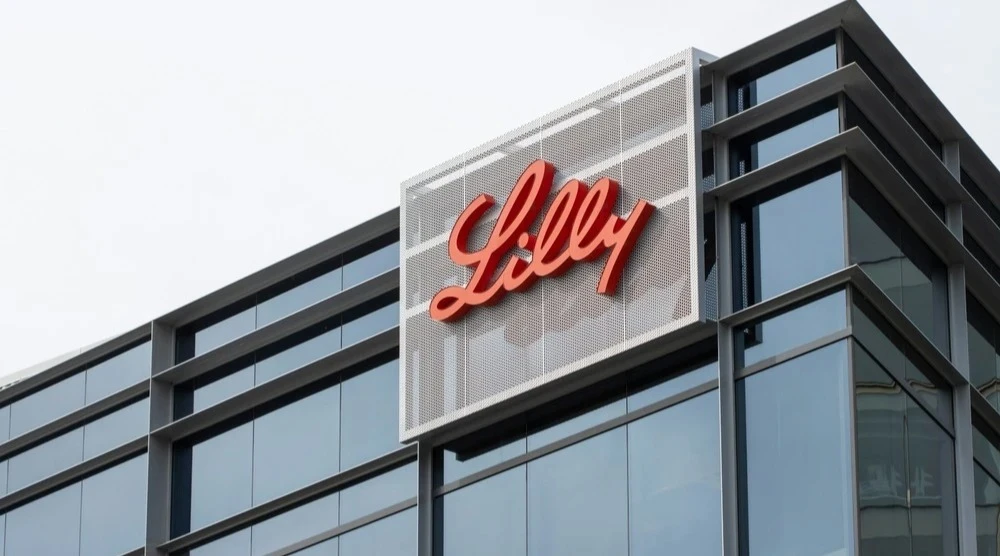
Eli Lilly, a pharmaceutical company, reported its third-quarter earnings and revenue. Photo: Tada Images/Shutterstock.com
Eli Lilly reported better-than-expected third-quarter earnings and revenue and raised its full-year sales forecast for the third time in 2026. Despite intensifying competition in the market, demand for its weight-loss drugs continues to grow. Following the release of its earnings report, the company’s stock hit a new all-time high during trading in New York.
Eli Lilly's Earnings Report
Eli Lilly's third-quarter revenue totaled $24.4 billion, and adjusted earnings per share reached $7.48. Analysts surveyed by LSEG had forecast revenue of $22.61 billion and earnings of $6.26 per share, according to CNBC.
Amid strong demand, the pharmaceutical giant raised its revenue forecast for all of 2026 to $91–92 billion from the previously announced $85–87 billion. According to Bloomberg, this is the third upward revision to the forecast this year.
The forecast for adjusted annual earnings has been lowered from $35.50–36.50 to $35.00–36.00 per share. This is due to the accounting treatment of the company’s recent acquisitions: underlying operating earnings per share increased by $4.07 due to strong sales, but this increase was entirely offset by a one-time charge of $4.57 per share. These funds were allocated to research and development (IPR&D) in the third quarter as part of recent mergers and acquisitions.
Eli Lilly's Success Factors
Eli Lilly’s revenue from diabetes and obesity drugs continues to grow, widening the gap with its main competitor, the European company Novo Nordisk, according to CNBC. These profits are enabling the company to actively expand into new markets: Lilly is using them to acquire biotech startups focused on autoimmune diseases, as well as to fund research in women’s health and the study of psychedelics, Bloomberg reports.
Revenue from the diabetes drug Mounjaro rose 65% for the quarter, to $10.7 billion. Zepbound, a weight-loss drug launched about three years ago, generated $5.35 billion in revenue in the third quarter—a 49% increase from a year earlier. Both figures exceeded market expectations.
At the same time, Foundayo, a new obesity drug approved in the U.S. in April, generated only $184 million in revenue in the third quarter, falling short of forecasts. Eli Lilly is currently developing an experimental next-generation weight-loss drug—retatrutide—which promises an even more potent weight-loss effect. Demand for it has been so high that illegal versions have already appeared on the black market, even though the company does not expect to file for approval until early 2027, according to Bloomberg.
Should I buy stocks?
During trading in New York on October 29, Eli Lilly shares rose more than 9%. At their peak, the price reached an all-time high, climbing above $1,408.
Since the beginning of the year, the company's shares have risen by more than 25%. Nevertheless, of the 33 analysts tracking the stock, 28 still recommend buying it. Three analysts advise holding the stock, while two others recommend selling it.
This article was AI-translated and verified by a human editor