EU stocks are experiencing their longest streak of gains since 2013. Is it too late to buy them?
European stocks have risen for eight consecutive months

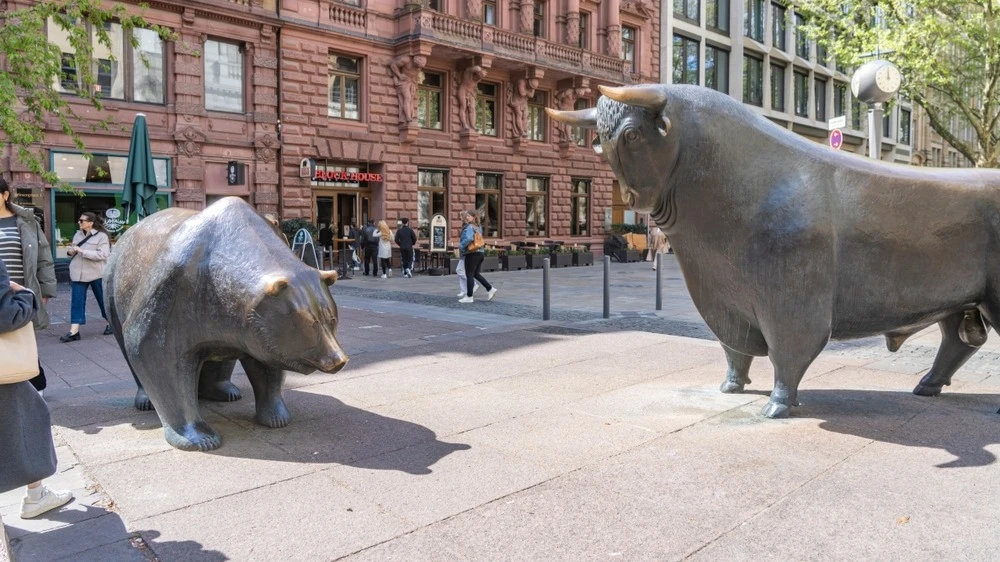
The European Stoxx 600 hit an all-time high in the last session of February / Photo: Andrea Chiozzi / Shutterstock
European stocks are showing the longest series of monthly growth since 2013, Bloomberg writes - EU markets have been growing for eight months in a row. The Stoxx Europe 600 index, which includes 600 of Europe's largest companies, has reached an all-time high, and the inflow of funds into EU equity funds amid investors' search for alternatives to the U.S. market continues for the fourth week in a row, the agency points out.
Details
The Stoxx Europe 600 index at the moment added almost 0.5% in the last trading session of February and thus reached a new all-time high of 636.16 points. The trades on February 27, he ended in plus by 0.1%. In general, since the beginning of the month, the Stoxx Europe 600 has grown by almost 4% - thus, February has become the eighth consecutive month in the plus for it, notes Bloomberg. As the agency points out, the telecommunications sector and mining companies looked best in the index at the trading on Friday, February 27, while the tourism sector was the outsider.
Since the start of the year, the Stoxx 600 index has added 7%, while America's broad equity index, the S&P 500, has added just 0.18% over the same time.
In addition, for the week ended Wednesday, February 25, in the funds of European stocks received $3.2 billion, follows from the data of analytical company EPFR Global, referring to the strategists of Bank of America - this is the fourth week of inflow in a row, notes Bloomberg. Since the beginning of the year, according to the agency, investors sent $18 billion to European funds, while U.S. equity funds attracted $36.8 billion.
Why is the European market growing?
European shares continue to grow on the background of reallocation of investors' funds from expensive shares of American technology companies and concerns about excessive spending on artificial intelligence, notes Bloomberg. In these conditions, the market structure plays into Europe's hands, Bloomberg points out: since the beginning of the year, the "traditional" sectors of the European market - extraction of raw materials, energy, telecommunications and utilities - show double-digit returns of about 25%, while the Stoxx 600 index as a whole grew by only 7%.
In addition, the February rally in the EU "was supported by strong corporate reporting," noted Ulrich Urban, head of multi-asset strategies and research at Berenberg. "We maintain an elevated exposure to European and emerging equities in portfolios as we believe new investments will mainly be directed to these regions to reduce the still high concentration [of assets] in the U.S. for many investors," he added.
Investors are too focused on artificial intelligence, said HSBC Holdings Plc strategist Max Kettner, who this week also increased the share of European stocks in his portfolio. "We're probably missing the point that the real economy is already starting a full-fledged cyclical recovery," he said on Bloomberg Television. - Smaller, industry-oriented economies have shown a marked acceleration in growth over the past two months."
What else could support European equities?
Investors looking for arguments to buy European stocks or choose them over U.S. stocks can add record buyback programs to the list, Bloomberg writes. Since the start of the year, companies in the Stoxx Europe 600 Index have announced €85.7 billion ($101 billion) in buybacks, the highest January-February total on record, according to data from tracker Barclays Plc, the agency reports.
Technology, financial and industrial companies in Europe were the leaders in buybacks - and the volume of capital returned to shareholders as the reporting season comes to a close is likely to continue to rise, Bloomberg notes, although the pace of buyback programs is already above average, says Barclays strategist Emmanuel Makonga.
According to its data, the basket of issuers formed by Barclays that have announced buybacks has outperformed the Stoxx 600 index in terms of total return by more than five percentage points over the past six months. These securities have also outperformed the benchmark of so-called "dividend aristocrats" - companies with a consistent history of high payouts. "We are seeing a marked acceleration in corporate activity," the strategist said, highlighting that some 76% of shareholder-approved buyback programs in Europe are still pending, which "leaves a significant reserve to support inflows in the second quarter."
This article was AI-translated and verified by a human editor