Ford Raises Profit Forecast for the Second Time This Year: Are the Aluminum Problems Behind It?
Ford is investing $2 billion in a new energy storage venture, but it won't turn a profit until at least 2028

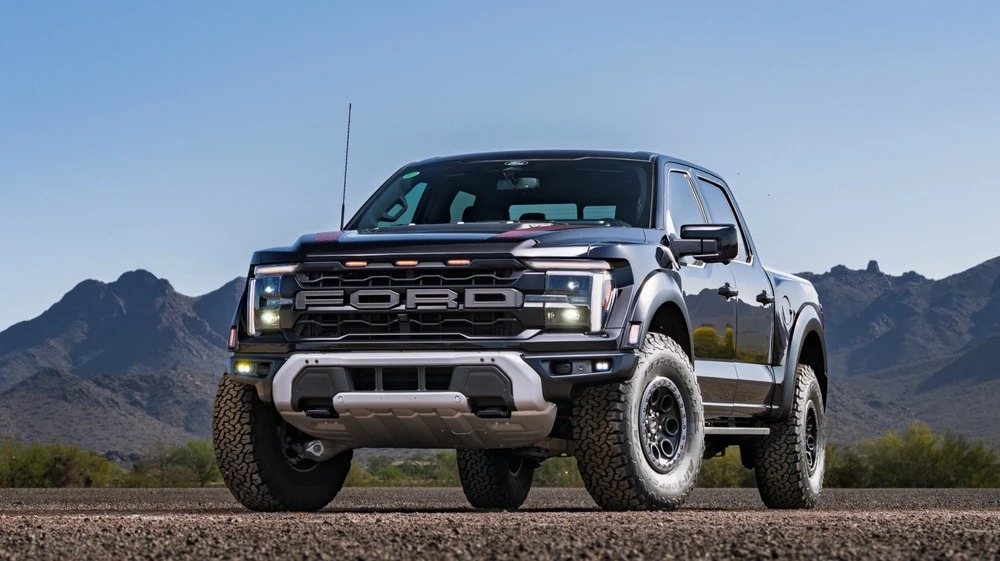
Ford has raised its full-year profit forecast thanks to strong sales of the Bronco and Explorer SUVs / Photo: JoshBryan / Shutterstock.com
Ford Motor has raised its full-year profit forecast for the second time this year, thanks to rising prices and strong SUV sales. This suggests that the aluminum supply issues are now behind the company, according to Bloomberg. The company also beat Wall Street’s earnings expectations for the second quarter. However, Ford’s revenue fell slightly short of analysts’ forecasts. The automaker’s stock rose more than 5% in after-hours trading.
Details
Ford Motor has raised its profit forecast for the second time this year—from a range of $8.5 billion to $10.5 billion to $10–11 billion. The company also raised its adjusted free cash flow forecast from $5–6 billion to $6–7 billion. One reason for the upward revision to the free cash flow forecast is that Ford expects to receive $500 million earlier than planned from the expected $1.3 billion in duty rebates, CNBC reported.
Strong sales of the Bronco and Explorer SUVs—particularly the higher-end versions with off-road packages—helped improve the outlook, according to Bloomberg. This offset the decline in sales of the popular F-Series pickup trucks. Deliveries of these trucks were reduced due to fires at the Novelis aluminum supplier’s plant last year. The plant resumed operations in the second quarter. Ford now expects to resume F-Series production in the second half of the year and recoup about $2.5 billion in revenue.
Ford CFO Sherry House said during a conference call that a significant portion of the company’s tariff costs—which it estimates at more than $1 billion this year—is related to aluminum imports due to fires at the Novelis plant. “Currently, our tariff costs are primarily related to aluminum, steel, and imported vehicles,” she said.
In the second quarter, revenue from Ford’s automotive business fell 4% year-over-year to $44.89 billion, compared with LSEG’s forecast of $45.86 billion, according to CNBC. Adjusted earnings per share were $0.42. Wall Street had forecast $0.35. Ford’s total revenue also fell 4% to $48.3 billion.
“We delivered another strong quarter and raised our full-year outlook, but what’s more important is this: there is growing evidence that Ford is becoming a more profitable, more disciplined, and truly different company,” Ford CEO Jim Farley said in a press release.
The company's shares jumped 5% to $15.8 in after-hours trading following the release of its financial results. During regular trading hours, they rose 1.9% to nearly $15.
Electric Vehicles and Energy Storage
Ford reported a net loss of $1.3 billion in the second quarter, primarily due to one-time expenses related to its previously announced reduction in electric vehicle production plans.
Sales of Ford electric vehicles plummeted 41% in the second quarter after the company decided to discontinue production of the electric version of the F-150 Lightning pickup truck as part of $19.5 billion in write-downs related to unprofitable assets in the electric vehicle segment. In the same quarter, Ford recorded a $3.6 billion non-cash write-down related to the previously announced winding down of its joint venture with South Korea’s SK On to produce electric vehicle batteries. The company is now repurposing its Kentucky plant to manufacture batteries for energy storage systems.
Ford is investing $2 billion in a new energy storage venture, but according to House, profits from this venture will not appear in the financial statements until at least 2028. The company is already receiving inquiries from potential customers in the power generation and data center sectors, she noted.
This article was AI-translated and verified by a human editor