The iPhone Reboot, the AGI Era, and Silicon Valley's Right Turn
This Week's Highlights on Oninvest

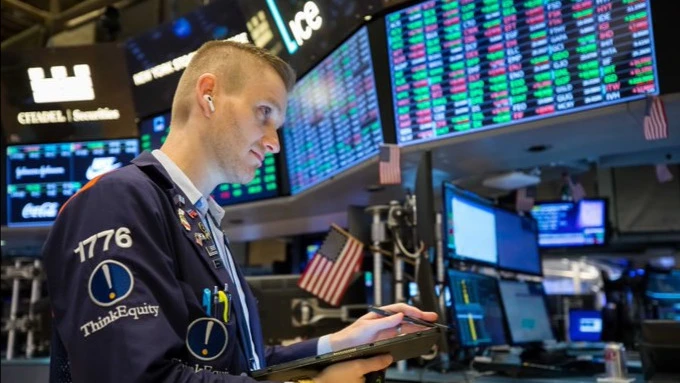
Following the chipmaker boom, capital is shifting toward other bottlenecks in AI infrastructure: energy, data centers, and cloud computing. Photo: Shutterstock.com
The headline story of the week is, of course, Apple.
At the traditional fall presentation, the company’s new CEO, John Turnus, unveiled what is perhaps the most talked-about smartphone—the first foldable iPhone, dubbed the Duo. While users were expecting a truly radical reimagining of this gadget, many analysts noted that this premium new model would allow Apple to set a high price. The iPhone Duo will indeed be the most expensive model in the lineup. We ’ve compiled the first market reactions—ranging from enthusiasm to predictions that the device will remain a niche product.
Thanks to Apple, the language-learning platform Duolingo unexpectedly got its moment in the spotlight: the Duo smartphone turned out to be named after the famous owl. The service responded with a series of “panicked” joke posts that quickly went viral. Samsung, which has been making “foldables” for seven years now, chimed in to offer its sympathy: “I’m so sorry, Duolingo. They copied us, too.” The South Korean giant spent the entire evening trolling Apple live on stream. Will this help it maintain its leadership in the foldable smartphone market?
Is AGI here yet?
Another major release that sent shockwaves through the markets this week was OpenAI’s new GPT-6 Astra model. The company has called it “the smartest in the world”—essentially, this is the much-discussed AGI, or artificial general intelligence, capable of solving virtually any problem at a human level. However, there is still no single definition of AGI, and some researchers consider such claims to be premature.
Investors didn't wait for the final verdict. Astra reignited fears of a “software apocalypse”: Salesforce, Intuit, and ServiceNow came under pressure, while shares of cloud company CoreWeave and AI infrastructure hardware providers surged. Morningstar identified another potential beneficiary—Oracle, whose order book includes a five-year, $300 billion contract with OpenAI.
Stepan Gershuni, a venture capital investor, believes that the new model is more than enough to solve 99% of the world’s business challenges. In a column for Oninvest, he speculated on the breakthroughs Astra might achieve—from medicine to robotics—and, of course, outlined the risks.
On the subject of risks: we continue to monitor how artificial intelligence is spiraling out of control. What is the probability that it could destroy humanity? A leading researcher at Anthropic estimates it to be more than 10%.
Next bet
Where Is Money from Billionaire Investors Flowing After the Chipmaker Boom? We analyzed the portfolios of the largest asset managers and found that capital is increasingly shifting toward other bottlenecks in AI infrastructure: energy, data centers, and cloud computing. Among the new bets are even Bitcoin miners: their facilities, which are connected to the power grid, can be repurposed as data centers for AI.
This dual role is already helping their stocks take on a life of their own: in the first half of the year, Bitcoin’s price fell, whilethe Oninvest index—which tracks miners’ stock prices, —rose significantly. Our analyst Aldiyar Anuarbekov has examined why these companies may continue to outperform the cryptocurrency itself.
What Tech Billionaires Believe In
Just a few years ago, the Silicon Valley elite were called “tech optimists,” then “tech feudalists” and “tech extremists.” Now the term “fascists” has come into use. In August, a book by journalist and former communications director for Kamala Harris, Jila Duran—*The Nerd Reich: Silicon Valley Fascism and the War on Democracy*—was published in the U.S. It quickly made it onto The New York Times bestseller list, and its main thesis is right there in the title: the tech elite has taken a turn to the right and become a threat to democracy.
Maksim Semelyak read the book and provided an in-depth analysis: why Durand considers Peter Thiel more dangerous than Elon Musk, who the “Captains of the Dark Enlightenment” are, and what’s wrong with the author’s argument about techno-fascism in Silicon Valley.
Next week, all eyes will be on the Fed meeting: for the first time in a long while, the market overwhelmingly expects a rate hike. Following the release of key inflation data, the probability of the Fed tightening policy is now estimated at 90%. Michael Burry, by the way, promises everyone an interesting fall. That said, this is hardly a cause for optimism.
This article was AI-translated and verified by a human editor