From PDFs to drone defense: How Finland’s newest billionaire built his business


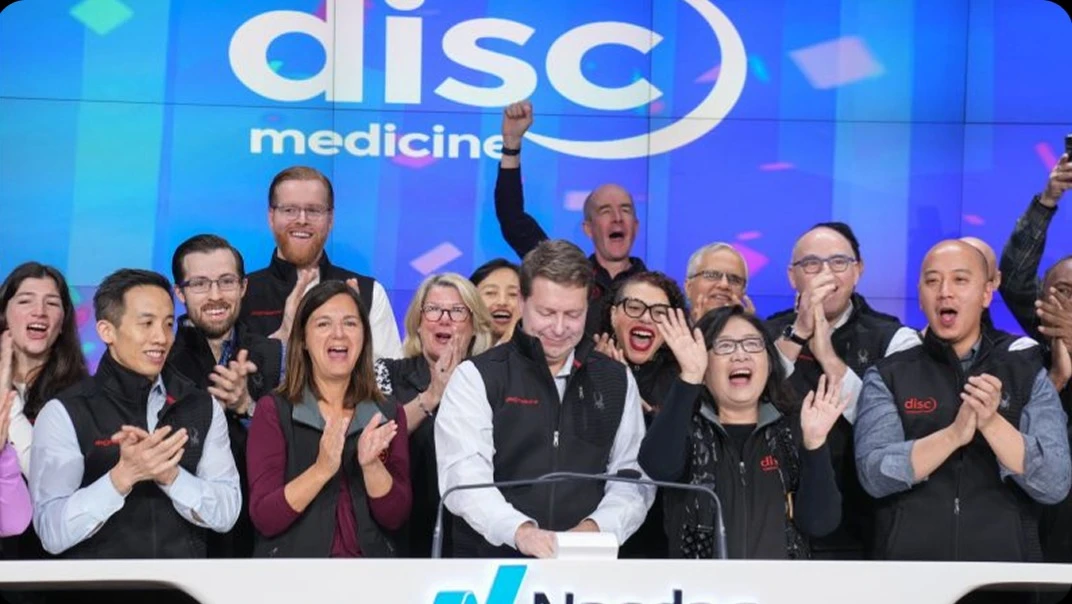
Defense tech Sensofusion began trading on the Nasdaq in early October, its IPO having been several times oversubscribed, according to the firm / Photo: LinkedIn / Sensofusion
Finnish security systems manufacturer Sensofusion has gone public, making its founder, entrepreneur Tuomas Rasila, a billionaire. As recently as 2020, he was using his own money to save the company from collapse. Now, the small company finds itself at the heart of the defense boom. What could make it an attractive investment?
Finland’s newest billionaire
Sensofusion began trading on Nasdaq Helsinki’s prelist on October 9, before moving to the main market on October 13. The company states that its IPO was several times oversubscribed. The offering price was EUR16.41 per share, translating into around EUR259 million in gross proceeds, excluding the overallotment option, or EUR300 million including it.
Sensofusion was the most actively traded stock on the Helsinki exchange on its first day, October 9, Finnish newspaper Iltalehti reported. It ended the session up almost 12.8% at EUR18.50 per share, for a market capitalization of EUR1.8 billion. On Monday, it closed at EUR18.09 per share, just over 10% above the offering price.
The IPO made Rasila, the company’s founder and CEO, a billionaire. He had owned 81.6% of Sensofusion through his holding company Haave Oy. Rasila sold part of his stake, while Sensofusion also issued new shares in the IPO. Assuming the overallotment option is exercised, his stake will amount to 65.66%. It was worth around EUR1.16 billion as of Monday’s close.
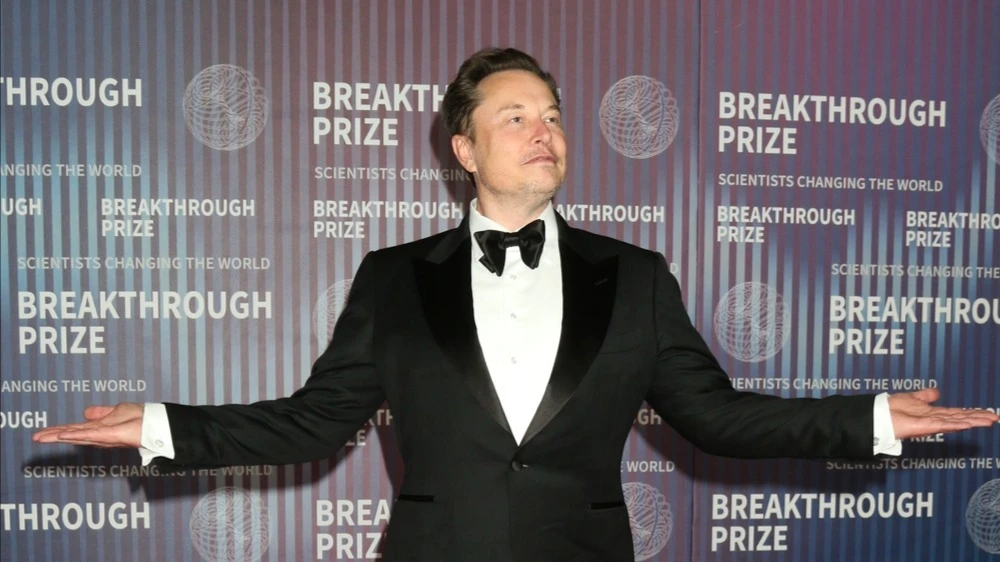
Rasila does not appear on Forbes’ global billionaires list, which includes seven Finns. According to Forbes Real-Time Billionaires, the country’s richest person is Antti Herlin, the largest shareholder and chair of elevator manufacturer Kone. His fortune is estimated at $4.1 billion.
Oninvest estimates that Rasila’s net worth may be only slightly higher than the market value of his Sensofusion stake. He owns Haave Oy, a holding company comprising software development businesses. Rasila also holds executive positions at tech companies RND Works Oy and Stealth Black Oy, as well as at property management company Shekel Oy. Publicly available sources could not establish the extent or value of his real estate holdings and other assets.
About the business
Rasila founded his first tech business, Norfello, in 2006. The company develops software for mobile devices, the web, and desktop computers. Its most popular product is DocScanner, an app for iPhone, Mac, Android, and Symbian. It turns smartphone photographs of paper documents into PDF files and can recognize text. In 2014, he cofounded Vainu, a business data analytics platform, and became its CTO.
Previously, Rasila worked for the Finnish Defence Forces, developing radio technology and conducting R&D on command and control systems. He also took part in a project with the Finnish military and NATO exploring military applications for consumer electronics, Finnish national broadcaster Yle reported.
He founded Sensofusion in 2016. As commercial drones proliferated in the 2010s, Rasila recognized the security threat they posed and developed a way to identify their radio signals and determine their location. That technology became the foundation for Sensofusion’s current flagship counter-drone systems, Airfence.
What sets the company apart?
Sensofusion develops and manufactures systems that detect and neutralize drones, from small commercial devices to military aircraft. The product on which the business was built is Airfence. Its main distinguishing feature is that it can detect a drone’s radio signals and establish the location of the aircraft and, in some cases, its operator. According to Sensofusion, a single sensor can detect drones up to 10 kilometers away.
Another key feature is the system’s detect-to-defeat extensions. While Airfence itself can locate and identify a drone and its operator, the extensions, which include electronic jamming equipment and kinetic interceptor drones, can assess and neutralize threats.
“I want more and more people to think in the future that they don’t need to look for the best technology in the U.S. or Israel. We can do it ourselves, here in Finland,” Rasila said late last year.
Ups and downs
Airfence supply contracts awarded since 2022 total around EUR3.2 million, Oninvest estimates based on publicly available sources. The company does not disclose some international defense deliveries by customer or contract.
Demand for Sensofusion’s technology took time to materialize. In 2020, the company ran into financial difficulties as revenue fell during the pandemic. Rasila put his own money into the business to keep it going. “The company would have collapsed if I had not lent it money myself,” he recalled in an interview with Yle. He has not publicly disclosed the exact amount or terms of the lending. Sensofusion’s financial statements show that in 2024, it repaid EUR342,000 in interest-free loans from companies connected to Rasila.
Chance played a large part in Sensofusion’s success: It was in the right place at the right time, Rasila said in an interview with Business Finland. Its first commercially significant contract was with the U.S. Marine Corps, Rasila said, without providing details on its value or timing.
According to Business Finland, the company’s solutions are now used by organizations like NASA and the U.S. Federal Aviation Administration, as well as the Aviation Support Center of the National Police of Ukraine and Ukrtransnafta, a Ukrainian state company that transports oil. In August, Sensofusion obtained export licenses to supply drone detection and countermeasure systems to the U.S. Secret Service. It has similar contracts with the armed forces of the UK, Israel, and India. Its customers have also included airport security services, prisons, and units responsible for protecting heads of state.
How the company secured contracts with major organizations, including military customers, could not be established. Rasila declined to answer questions from Oninvest.
His defense industry background and experience working in Silicon Valley may have helped. He recalled his time in the U.S. in a 2025 interview: he lived and worked there until 2014 but has not disclosed further details about that period of his life.
Valuing the company
Sensofusion’s revenue increased almost fivefold, from EUR7.2 million in the year ended December 31, 2023, to EUR35.1 million in 2025. Meanwhile, in the last 12 months ended June 30, 2026, revenue totaled EUR49.4 million and operating profit EUR30.1 million. In the first half of 2026, operating profit rose to EUR13.5 million from EUR6.7 million a year earlier. The operating margin, however, declined from 57.2% to 51.9%.
The company reported an impressive return on capital employed of 277.8% in its prospectus.
Based on estimates by New York University finance professor Aswath Damodaran, normalized return on invested capital is around 23% in the U.S. systems and application software sector and 12.7% in aerospace and defense. Sensofusion attributes its high return on capital to a business model in which software and AI generate a substantial share of the value added. This allows it to scale production rapidly in response to demand without a corresponding increase in capex.
Its ROCE is highly volatile, however. It came in at 333.3% in 2023, 417.5% in 2024, and 65.8% in 2025. The metric depends on the amount of capital employed: a relatively small capital base combined with high operating profit can produce a very large percentage return.
As of June 30, the company had EUR71.7 million in net cash on its balance sheet. It estimates net IPO proceeds after fees at around EUR255 million, excluding the overallotment option. According to calculations by Oninvest analyst Aldiyar Anuarbekov, Sensofusion’s cash totals around EUR325-365 million.
Is the company's growth sustainable?
Sensofusion’s high top-line growth partly reflects the proliferation of military conflicts around the world, together with a broader trend toward higher defense spending in major countries. According to SIPRI estimates, global military expenditures reached $2.9 trillion in 2025, up 2.9% from 2024. Spending rose 14% in Europe and 8.1% in Asia and Oceania. In the U.S., by contrast, it fell 7.5%.
Military spending by European NATO members increased last year at the fastest pace since 1953. EMEA, encompassing Europe, the Middle East, and Africa, accounted for 87.2% of Sensofusion’s revenue in 2025.
The company no longer needs to pursue sales actively, Rasila said in an interview published on November 17 last year. The industry is small, the market is limited, and Sensofusion’s field-proven systems speak for itself.
The market’s limited size, however, is also a weakness in the company’s business model. Lower government defense spending could slow demand for its equipment and technology, Sensofusion cautioned in its prospectus. The IPO documents cite a third-party forecast that the global market for counter-drone products will expand from around EUR4.4 billion in 2025 to EUR23 billion in 2035. The projected compound annual growth rate is around 29% in 2025-2030, before slowing sharply to 8% in 2030-2035.
Another risk is its dependence on a single type of customer. Defense and security agencies generated 98.5% of revenue in 2025. Losing a major customer or seeing one reduce purchases could materially affect Sensofusion’s financial results.
The company intends to diversify its business and customer base, but apparently has no plans to expand outside of the defense sector. Its prospectus points to anticipated growth in demand for European defense solutions and local manufacturing. Rasila has previously said that Sensofusion is eager to expand in North America, where it already has an office and manufacturing operations in Canada.
In May, Sensofusion acquired Finnish aircraft manufacturer Scandinavian Seaplanes, which makes the Atol Aurora light aircraft. It is upgrading that model into the Sensofusion Swift, with integrated drone detection and jamming systems. Both unmanned and piloted versions are planned.
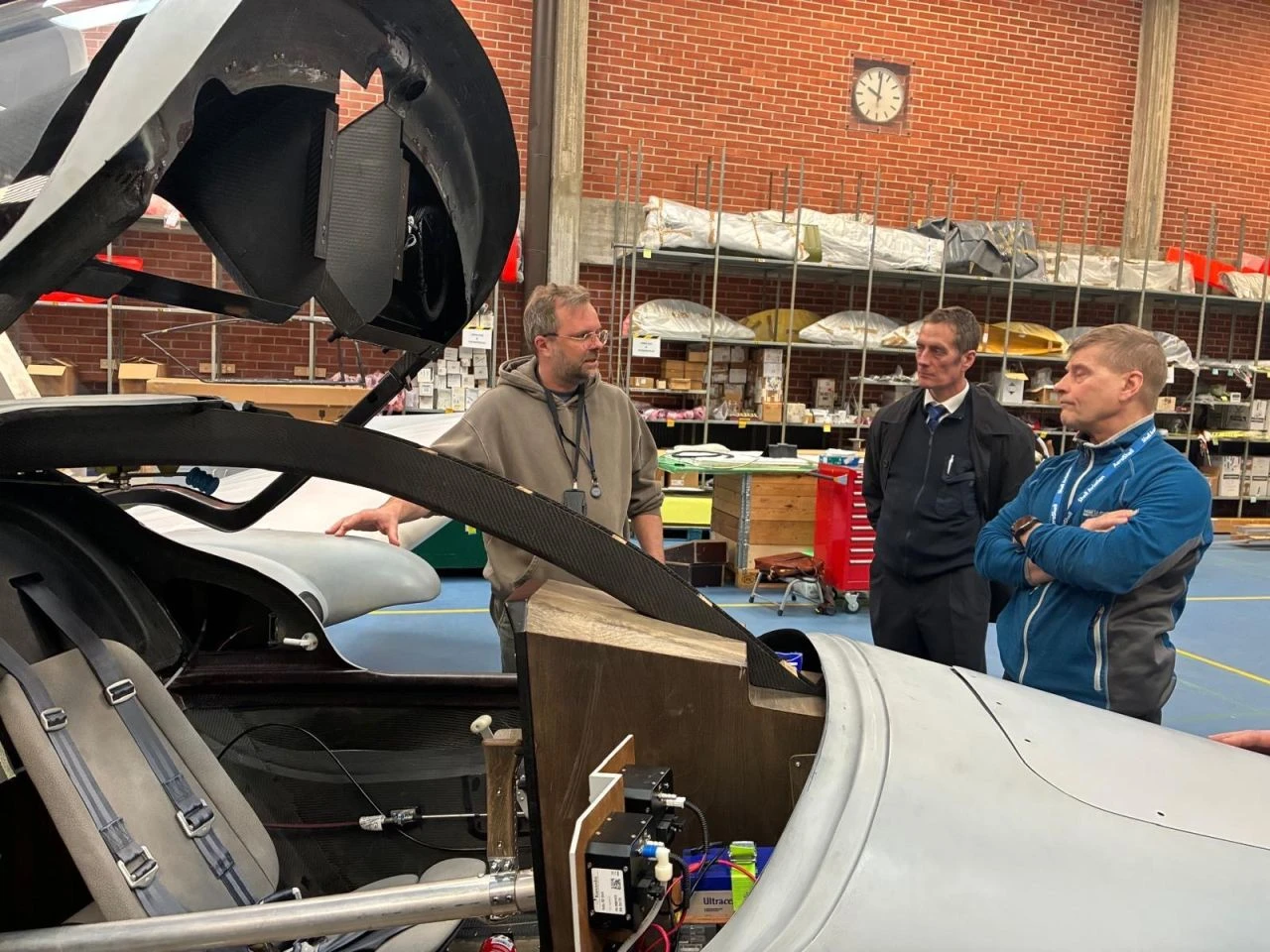
Tuomas Rasila (left) and an aircraft from Atol Aviation. Photo: LinkedIn / Tuomas Rasila
A second area of expansion is satellite technology and spacecraft. The management aims to launch its first satellite, Fennec-1, into sun-synchronous orbit by the end of 2027. The goal is to gather intelligence from orbit and use it to detect drones. The company itself acknowledges challenges with the project. Fennec requires extensive software development and numerous approvals, meaning the timetable could slip.
Other plans include launching and developing the next-generation Airfence Live cloud platform, introducing new drone detectors using sensor, acoustic, and radar signals, and launching a range of noncontact drone interceptors, with serial production beginning as early as this year. Sensofusion highlights the risks of entering new business areas: these are all capital-intensive projects that could divert funding from its core business.
Sensofusion has also faced cybersecurity issues. In its prospectus, it disclosed that trade secrets had been compromised in an incident in spring 2025. It defines such information as including customer data, its drone detection library, source code, R&D materials, electronic circuit diagrams, and instructions for assembling counter-drone equipment. Sensofusion withheld specific details for security reasons, stating only that authorities were investigating the incident. It warned the breach could affect its reputation and customer relationships.
Sensofusion as an investment
Supported by rapidly rising military spending worldwide, the S&P 500 Aerospace & Defense index, which tracks U.S. aerospace and defense companies, has gained 62% since the start of 2022. Rheinmetall has been one of the defense sector’s biggest beneficiaries, with its stock having risen more than tenfold since February 2022. The Financial Times has identified Saab, Leonardo, and BAE Systems as other companies buoyed by the trends.
Sensofusion lists these companies among its competitors, alongside Germany’s Hensoldt and Israel’s Rafael Advanced Defense Systems. Anuarbekov of Oninvest considers Australia’s DroneShield its closest competitor. DroneShield trades at around five times annual revenue, versus 30 times for Sensofusion.
At its current stock price, Sensofusion could deliver annual revenue growth of around 35-45% for five years while maintaining high margins, on Anuarbekov's numbers. However, he adds, the current valuation already prices in around 2.5 years of growth. Sensofusion’s latest results do not yet provide sufficient confidence that it can sustain that pace for an extended period.
Its EBITDA margin fell from 72% in the second half of 2025 to 54% in the first half of 2026. Personnel costs and other operating expenses rose almost 50% year over year in the first six months of 2026, from EUR5.2 million to EUR7.7 million, as the workforce more than doubled. Personnel and materials costs grew faster than revenue, the company notes.
The biggest drag on margins was the increase in materials and services expenses in the first half of 2026 versus the same period a year earlier: from 10% to 16% of revenue, or from EUR2.3 million to EUR4.2 million.
The biggest drag on margins was the year-over-year increase in materials and services expenses in the first half of 2026: from 10% to 16% of revenue, or from EUR2.3 million to EUR4.2 million.
None of this means the company is overvalued, but its valuation leaves little room for error.

At current levels, the stock is suitable for a small speculative position tied to the defense theme. For a more substantial investment, waiting for second-half results and the start of analyst coverage would be more prudent, Anuarbekov concludes.
This text is for informational purposes only and does not constitute personalized investment advice.