"A Roller-Coaster Ride for Stocks": What Wall Street Is Saying Ahead of SpaceX's Earnings Report

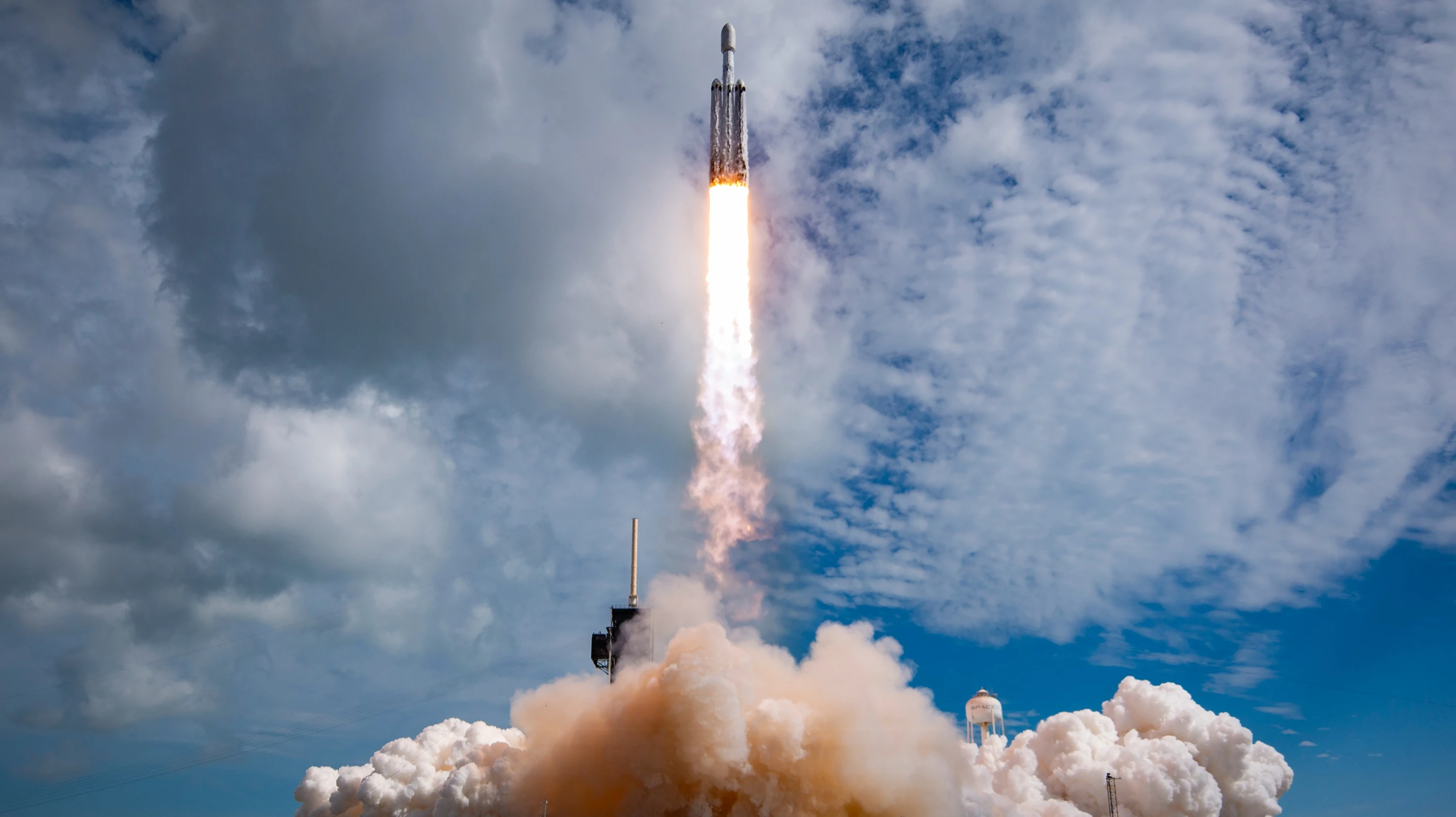
The main topic will most likely be AI, according to MarketWatch / Photo: X/SpaceX
Elon Musk’s SpaceX is set to release its second financial report as a public company after U.S. markets close on October 20. Investors’ attention will likely be focused on the division related to artificial intelligence, according to MarketWatch.
SpaceX shares were virtually unchanged in Tuesday's trading, falling a negligible 0.46%.
What Lies Ahead for Wall Street
Financial Results
— From a financial standpoint, SpaceX is expected to return to profitability in the third quarter: net income per share is projected to be $0.13, compared with a loss of $0.9 per share in the second quarter, according to FactSet. Quarterly revenue is projected to reach $12.8 billion, up 64% from the same period last year. This growth will be partly driven by the company’s work in the field of AI, specifically the sale of access to the computing resources necessary for its operation, the publication reports. As for capital expenditures, FactSet estimates they will reach $67 billion by the end of the year.
Artificial Intelligence
— SpaceX’s revenue from artificial intelligence will nearly triple compared to the second quarter and reach approximately $6 billion, according to Deutsche Bank analyst Edison Yu. Contracts with several clients who purchase AI computing power from SpaceX will, according to his calculations, provide the company with an annualized revenue (run-rate) of $54.5 billion. This metric is used to estimate a company’s projected annual revenue based on results over a short period. This amount accounts for more than half of SpaceX’s annual recurring revenue (ARR) target of $100 billion, notes MarketWatch. At the end of 2025, SpaceX’s revenue totaled $18.67 billion.
“<...> [SpaceX]’s stock is increasingly moving in tandem with AI companies’ stocks rather than those of the space industry,” Barron’s quotes Y. as saying. Looking ahead, SpaceX intends to deploy AI data centers in space, counting on lower electricity costs than those of ground-based data centers, the publication notes, emphasizing that this may not yet be reflected in the stock price.
Additional Funding and Capital Expenditures
— Funding the ambitious plans of the company’s CEO, Elon Musk, will cost significantly more than the $67 billion in capital expenditures for SpaceX in 2026 projected by analysts. According to estimates by an unnamed expert cited by MarketWatch, SpaceX’s expenses could reach as much as $336 billion in 2027. In early October, it was reported that SpaceX intends to raise $40 billion to purchase Nvidia chips used in data centers. Just a few months ago, the company had already raised $25 billion in debt financing.
— “The need for additional financing remains a key factor weighing on market sentiment, especially given the recent debt issues involving non-cloud companies,” wrote Morgan Stanley analyst Adam Jonas. The expert, who is bullish on SpaceX stock, expects the company to issue another $80 billion in debt next year. “This is the biggest risk to our model, and we don’t want to downplay it, although if we imagine that SpaceX is unable to raise funding, the consequences would likely extend far beyond the company itself and affect the broader economy and the rest of an investor’s portfolio,” Jonas added.
Space Launches
— Investors are also interested in when the next Starship flight will take place. According to experts, this rocket plays a key role in the development of all of SpaceX’s business lines. The most recent Starship launch took place in September: at that time, the rocket briefly entered orbit for the first time and deployed 26 new SpaceX satellites into orbit. “We believe that SpaceX’s unrivaled launch capabilities are a fundamental competitive advantage upon which all of its other business segments are built,” said Citi analysts led by John Godin.
Transactions, Mergers, and Acquisitions
— In addition, analysts are also discussing the possibility of a merger between Elon Musk’s two companies—SpaceX and Tesla—which, according to some forecasts, could be announced by the end of 2027. “We see almost no obstacles to completing the merger and creating ‘Elon Inc.,’ which, in our view, has long been part of Musk’s master plan,” — wrote CFRA analyst Garrett Nelson following last week’s unveiling of the next-generation Tesla Roadster, a flying electric sports car.
— RBC analyst Ken Herbert has given Musk’s aerospace and AI company a “buy” rating and set a price target of $225, according to Barron’s. This estimate implies a 52% increase from the most recent closing price. “We view [SpaceX’s] recent acquisition of radio frequencies as a positive factor, and the pace of the Starship program’s implementation shows no signs of slowing down,” he wrote. In October, SpaceX acquired low-band frequencies, advancing its plans to transform its Starlink satellite business into a full-fledged mobile network operator in the U.S.
— Strong demand for AI computing should help boost earnings forecasts for 2027, according to Wells Fargo analyst Ken Gavrelski. He cites the expanding use of Grok and Cursor products, the development of the Starship project, and the end of the lock-up period following the IPO as growth drivers for Musk’s company’s stock. Gavrelski recommends buying the company’s stock and has set a price target of $214. This target implies a 44.6% increase from the latest closing price.
How might the stock prices react?
Investors are in for “quite a roller-coaster ride,” writes Barron’s. “[The dynamics of] investor sentiment [following the IPO] were so emotionally volatile that it was difficult for us to gauge them. “We believe investors are viewing the earnings reports with optimism,” said Morgan Stanley analyst Adam Jonas.
The options market is pricing in a roughly 7% fluctuation in SpaceX’s stock price following the release of its earnings report, according to Barron’s. Shortly after SpaceX’s initial public offering in late June at $135 per share, the stock surged above $225, but by early August it had fallen below $105. The stock price recovered to around $125 ahead of the release of the company’s first quarterly earnings report as a public company in August—and then plummeted 14%, to $108 per share, after the results were released. As of the trading session on October 20, SpaceX shares are trading at around $147.
According to FactSet, a total of 76% of analysts covering the company’s stocks recommend buying them. By comparison, the average buy rating for stocks in the S&P 500 index typically ranges from 55% to 60%, notes Barron’s. Analysts’ average price target for SpaceX shares is around $228. That is 54% higher than the most recent closing price.
This article was AI-translated and verified by a human editor