Google unveiled the biggest search update in 25 years: it's now a chatbot
Google has redesigned its iconic search bar by incorporating AI into it

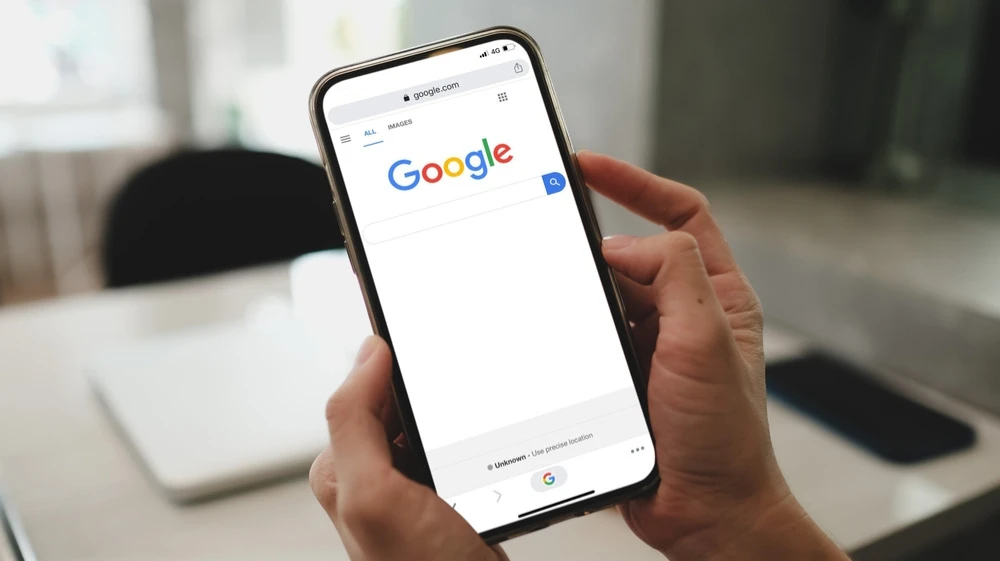
Google search now allows you to ask additional questions and upload audio / Photo: Thaspol Sangsee / Shutterstock.com
Google has redesigned its iconic search bar: it now has more artificial intelligence-based features. This is the biggest change to Google Search in 25 years. The company's shares fell 2% after the presentation.
Details
Google Search has the largest update of the search bar since its introduction 25 years ago, said the head of Google's search business Liz Reed, speaking at the Google I/O developer conference, Bloomberg writes. By updating the search, the company is trying to show that the product redesign, which began after the launch of ChatGPT from OpenAI, is complete, the agency notes.
Google has redesigned its iconic search bar to better handle the longer, more complex queries that chatbots typically ask. In the dialog box that opens after the first query, users can now ask additional questions while chatting with the AI: voice messages, photos, and documents can be sent to it. The in-line chatbot is able to take into account nuances that are not available to standard autocomplete, Google claims. The company also plans to update the search engine with agents that will help users track topics of interest, make reservations, and keep track of their health.
Investors' reaction to the announcements looks restrained. Alphabet's shares lost 2.3% on May 19, falling to $387.7.
What else did the company show
Google has unveiled the Gemini 3.5 Flash, the lighter AI model in its lineup. It will cost users half, if not three times cheaper to use compared to competitors' models, claims Google CEO Sundar Pichai. The company said that 3.5 Flash will now become the default model for the Gemini app and AI Mode in search worldwide.
Google said the Gemini 3.5 Pro, a heavier version of the model, is already in use at the company, but the world won't see it until next month, CNBC writes. The company is also preparing an agent-based AI called Gemini Spark, which is capable of reasoning based on information from connected apps. Gemini Spark can run agent tasks on behalf of a user in the background, even when their laptop is closed, the company said. Google said it wants to help users navigate their digital lives by performing "actions on your behalf, but under your control." Gemini Spark is in beta and will be available to testers and Google AI Ultra subscribers starting next week.
Google also revealed the first audio-enabled smartglasses based on Android XR, they won't have a display but will have a built-in camera. The model will be co-produced with Samsung, and the design will be handled by Warby Parker and Gentle Monster. The first glasses should go on sale this fall. Thus, the company is entering the market of wearable devices, where it will begin to compete with Ray-Ban Meta glasses.
Context
During the presentation, Google showed that it can personalize AI responses based on what it already knows about users. This could be one of the tech giant's biggest advantages in competing with rivals such as OpenAI and Anthropic, Bloomberg notes.
Google is reshaping its business for the AI era in an effort to appeal to both regular users and enterprise customers, Bloomberg writes. Changes related to a more active bet on AI have helped increase the use of Google Search, Pichai said. He also said the popularity of chatbot Gemini has more than doubled in a year: the app now has 900 million monthly users. The focus on AI is "revitalizing every part of the company," Pichai emphasized.
This article was AI-translated and verified by a human editor