Hot Dogs vs. Squid. Will Netflix Save Its Business With a New Strategy?

Netflix changed the business model of television by getting viewers hooked on binge-watching TV shows. But in the end, this strategy backfired on the streaming service. Photo: Thibault Penin / Unsplash
On October 20, the streaming service Netflix released its third-quarter earnings report . The company’s earnings exceeded Wall Street’s forecasts, while revenue met market expectations. However, its growth rate was the slowest in three years. The forecast for the fourth quarter and all of 2026 also fell short of analysts’ expectations: the service expects to generate $13.4 billion and $51.1 billion in revenue, respectively.
The company attributed the slowdown in growth to a decline in advertising revenue, which is estimated to be $300 million lower than the previous forecast in 2026.
The average price target for Netflix shares is $84.73, meaning the market expects the company's stock to rise by more than 28% from current levels. Of the 51 analysts, more than half—33—recommend buying the company’s stock, and only two recommend selling.
As a result, Netflix shares plummeted following the earnings report. They have already lost more than 40% over the past year. Investors are concerned about the streaming service’s future. In particular, they are concerned about its slowing growth, a catalog lacking obvious new hits, declining advertising metrics, and falling user engagement—all of which pose a potential risk of subscriber churn.
A particularly alarming development was the failed attempt to acquire Warner Bros. Discovery (whose portfolio includes, among other things, the Harry Potter films, “Game of Thrones,” and “The Sopranos”). In February, Netflix pulled out of the deal because it couldn’t match the price offered by Paramount Skydance.
Journalists in a satirical newsletter from the American website Pirate Wires report that Netflix, with its once-innovative all-you-can-watch model, is now outdated (while Disney is still going strong and will continue to do so). They predict that Netflix will meet the fate of a house of cards (alluding to the 2013 series of the same name, which marked the beginning of the service’s rise) and advise management to heed the advice of the series’ protagonist, Frank Underwood: “Money is a luxurious mansion in Sarasota that starts to fall apart after 10 years. Power is an ancient stone building that stands for centuries.”
It is unclear whether Netflix executives heeded Anderwood’s advice, but decisive measures were taken. In October, company executives announced the layoff of about 1,000 people—6% of the total workforce—and replaced the chief content officer: replacing the abruptly fired Bela Badjari (under whose leadership “Squid Game,” “Stranger Things,” “Teenage Years,” and other hits) was replaced by Peter Rice, a media executive from Disney.
This is less about financial optimization and more about a reassessment of priorities. Netflix is changing its content strategy in an effort to find a new formula for success. For example, Dan Lin, head of the film division, said when discussing plans for 2026 that Netflix should go in one direction and traditional studios in another; however, he was also fired on October 19.
Netflix plans to follow the principle of “less is more” by scaling back its streaming production of TV series in favor of a few carefully curated, high-impact hits with original storylines that will hold the audience’s attention longer and have franchise potential. It sounds pretty abstract, but we’ll see.
Be that as it may, in the current situation with Netflix, we are faced with both a confirmation and a refutation of the“long tail” theory, which was popular in the 2000s. According to this theory, proposed by journalist Chris Anderson, a multitude of small and niche products, by virtue of their sheer abundance, can ultimately overshadow any bestseller. On the one hand, this is exactly what we’re seeing—countless TikTok and YouTube creators are crowding out Netflix’s expensive, high-quality productions. However, the paradox is that effectively countering this trend requires an even bigger and more ambitious blockbuster. And the streaming service is currently facing certain challenges in this regard (if we don’t count the upcoming “Narnia”).
What Netflix Did and Why It Started Working Less Well
Netflix revolutionized the television business model by getting audiences hooked on binge-watching—watching TV series all at once, without having to follow a broadcast schedule. The subscription model guaranteed access to the entire catalog, and new series were released in their entirety all at once.
Iggy Pop, recalling the time he lived with David Bowie in a Berlin apartment in the second half of the 1970s, he singled out the moment when, after yet another endless night of partying, the survivors would crawl their way to the couch on Thursdays to watch the latest episode of the American TV series “Starsky & Hutch.” Thanks to Netflix, viewers no longer had to wait until Thursday, and it’s still unclear how things would have turned out for Bowie and Pop had they been able to watch all the episodes of “Starsky & Hutch” at once.
In addition, Netflix has become the leader in content investment among streaming platforms—over the past 10 years, it has invested approximately $135 billion in film production and has significantly expanded the geographic reach of its film offerings (as best evidenced by “Squid Game”). Furthermore, Netflix has actively ventured into major auteur cinema—for example, Martin Scorsese’s *The Irishman* was released in a limited theatrical run in the U.S. on November 1, 2019, and became available on Netflix on the 27th.
Binge-watching, however, also had the opposite effect. TV series watched this way generate a huge buzz and quickly gain popularity, but they aren’t able to maintain it for very long. By comparison, the HBO series *Pitt’s Hospital*, which aired weekly in the traditional manner, stayed in the U.S. ratings charts longer. The speed at which viewers gain access to the entire series turned out to be proportional to the speed at which they forget it, moving on to something new.
Netflix has always been exceptionally good at producing this “something new”—in 2016 alone, the company released 126 original series and movies, setting a record for a streaming or cable channel.
As a result, Netflix seems to have overfed its audience, not to mention the costs. By getting viewers used to quick access to expensive content, it has created its own competitors that operate on a different model: YouTube, TikTok, and other platforms are able to respond even faster, offering an unlimited amount of mostly free content. It’s somewhat reminiscent of a war between expensive missiles and cheap drones—a multimillion-dollar production featuring top screenwriters might fare worse than a silly viral TikTok video.
Thank you for being alive
This year’s studies by Deloitte and Ampere Analysis, in turn, showed that viewers are increasingly turning to live content: the focus is indeed shifting from traditional scripted cinema (VOD—Video on Demand) to live events and user-generated content (UGC). In the industry, this is referred to as the transition from “Peak TV” to the era of synchronous presence (FOMO & Co-presence).
Accordingly, streaming platforms’ budget allocations will be based on a trade-off between sports broadcasting rights and production costs for scripted series. This is all the more important given that Netflix does not yet have sufficient in-house infrastructure to produce sports content; therefore, for example, World Wrestling Entertainment (WWE) handles the entire process, and the NFL’s Christmas games for Netflix were filmed by CBS.
Viewers’ attention will increasingly focus on unscripted formats—on a kind of limitless, spectacular entertainment, whether it’s sports, reality shows, or video podcasts. What matters is a kind of immediate, action-packed content that doesn’t require too much polishing through storytelling. It’s no coincidence that there has been serious talk lately about broadcasting public executions.
Credit is due to Netflix's executives; the company sensed this shift in the industry before anyone else did. Even under the previous leadership, they turned their attention to live broadcasts of high-profile sporting events and major occasions.
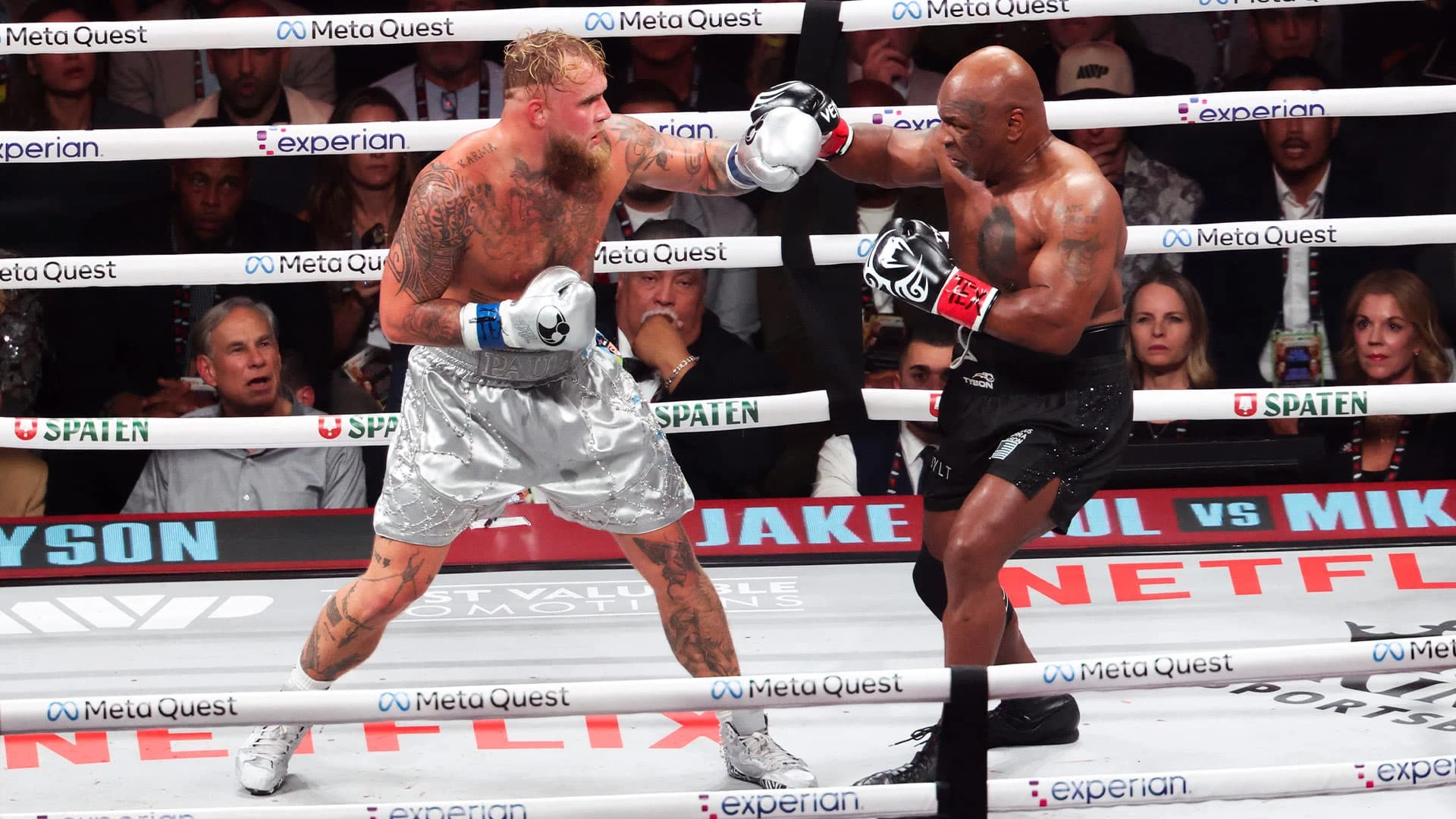
On the one hand, these kinds of live streams attract a large number of viewers at a specific time; on the other hand, they are extremely appealing to advertisers (ads cannot be skipped, and major sponsors are willing to pay to have their logos integrated directly into the broadcast). While Netflix relied on subscription revenue until 2023, it eventually had to introduce a lower-priced plan with ads.
Netflix, in particular, signed a 10-year, $5 billion deal with WWE to broadcast the weekly show “Raw” worldwide (at one point, it became more popular than the second season of “Squid Game”). In October of this year, Netflix acquired the exclusive rights to broadcast all 104 matches of the 2030 FIFA World Cup in Spain and Andorra. In 2027, WWE’s WrestleMania will take place outside North America for the first time in history—in Saudi Arabia—and Netflix will broadcast it.
Hot dog eating contests were also included among the sporting events, which Netflix broadcast.
Furthermore, the focus on the live experience is bringing people back to movie theaters, with their unique shared experience—one that can’t be replaced by watching a movie at home on the couch (unless, of course, that couch belongs to David Bowie and transports you straight back to the ’70s). In light of this, Netflix’s upcoming high-profile releases—Greta Gerwig’s *Narnia*, mentioned above, and David Fincher’s *The New Adventures of Cliff Booth*—will premiere in IMAX theaters.
No rules
Netflix is no stranger to changing formats; its strategy has largely been built on playing by its own rules. After all, the company started out as a DVD rental service—and where are those DVDs now?
When relying on third-party content was no longer a panacea, Netflix launched its own original programming. In his book *No Rules*, company founder Reed Hastings wrote about the core principle: people are more important than process.
In essence, the growing popularity of various live shows stems, in one way or another, from this principle, taking it to the point of absurdity.
If we imagine what the future holds for Netflix, we can assume that its content will follow a similar path to what’s currently happening with video games—we’re seeing a boom in the wildest mashups, where old games are combined, allowing you to play “Spider-Man” in Batman’s universe.
Netflix, by the way, is actively expanding into mobile gaming, including games based on its own TV series. Perhaps something similar awaits us here as well: a reality show about hot dog eating in a general format will transition into a ceremonial game of squid. Especially since the reality around us is quite conducive to such scenarios.
This article was AI-translated and verified by a human editor