After Paramount-Warner merger, why are Disney and Netflix seen as better sector bets?

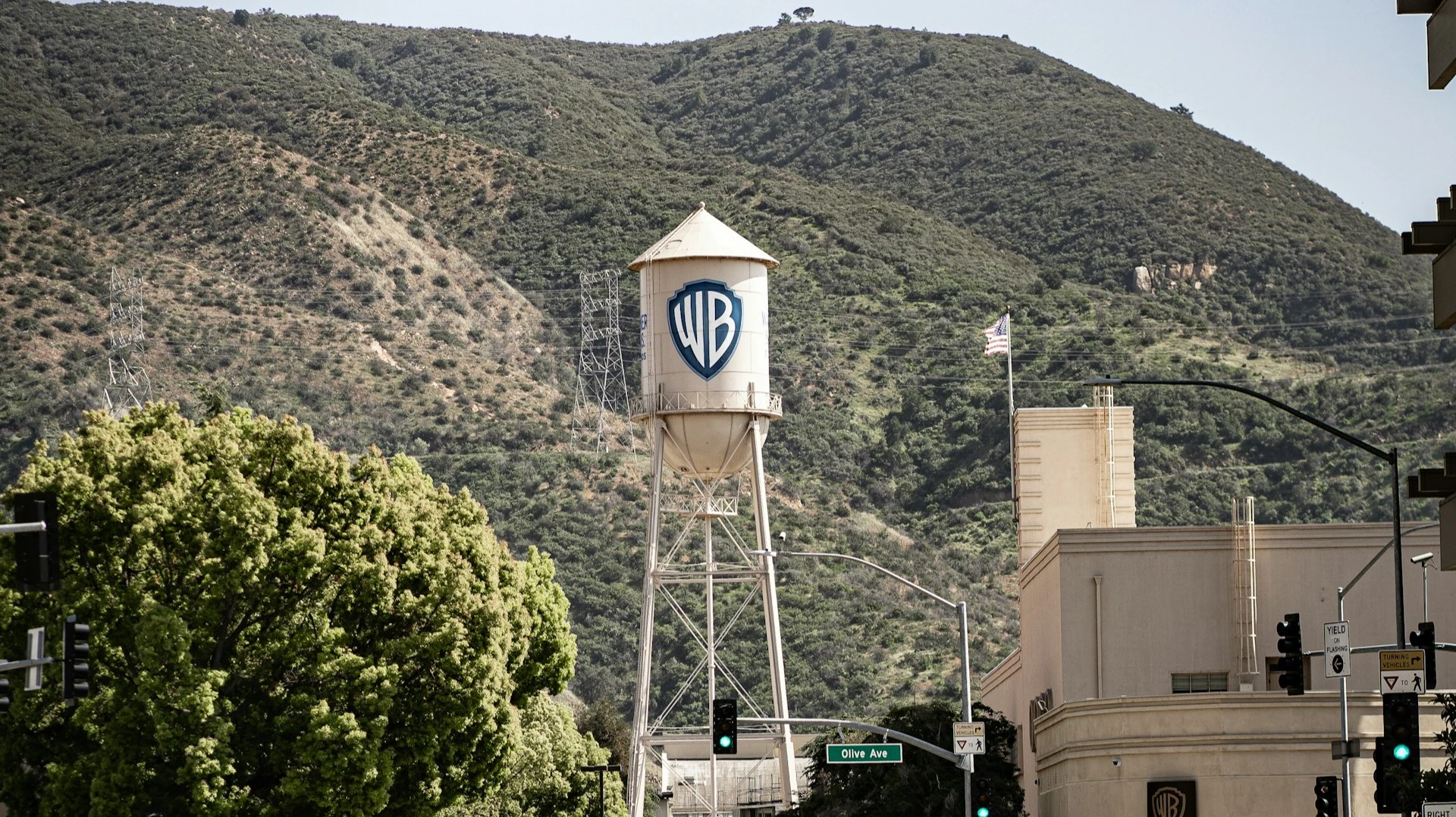
Paramount has completed its merger with Warner Bros., with the combined company to be called Skydance / Photo: Unsplash.com / Clement Proust
Paramount has completed its acquisition of Warner Bros. Discovery, creating one of the largest players in media and entertainment, to be called Skydance. The deal was worth around $111 billion, notes the Financial Times. Still, given their stronger business prospects and balance sheets, Barron’s recommends looking instead at shares of the new mega-player’s rivals, Disney and Netflix.
The new Skydance, led by David Ellison, the son of one of the world’s richest people, must now integrate a vast portfolio of media businesses, find a way to deliver the promised $6 billion in annual cost savings, and contend with a debt load that will total around $80 billion following the merger, both Barron’s and the FT point out.
Paramount shares ended Monday up 3% at $9.78 apiece. Still, they have lost 26% year to date and are now much closer to their 52-week low of below $8 than their high of $20, Barron’s notes. Warner Bros., meanwhile, closed Monday at $30.95 per share, just below the all-cash merger consideration of around $31.02 per share that shareholders will receive under the agreement with Paramount. Netflix has advanced 1% in trading on Tuesday, while Disney is up 0.2% as of this writing.
About the Paramount-Warner deal
Paramount has completed its acquisition of Warner Bros. Discovery, as outlined in a company release. The combined entity, Skydance, will be a new entertainment leader. Its assets include the HBO, CBS, CNN, and MTV television networks; the Harry Potter, Game of Thrones, Batman, and Star Trek franchises; and the Warner and Paramount film studios.
The businesses now controlled by Skydance generated a combined $65 billion in revenue over the last year and had more than 200 million streaming subscribers, the FT reports, citing documents shared with lenders. According to the combined company’s preliminary pro forma estimates, it spent more than $30 billion on content production over the last 12 months, the press release states. Skydance describes itself as “one of the largest media and entertainment companies in the world.”
Despite the management’s promise to deliver $6 billion in annual cost savings, the combined company is carrying a massive $80 billion debt load resulting from the transaction, the BBC points out. S&P Global analysts estimate that the debt will amount to around 7.6 times Skydance’s annual earnings and remain near that level through the end of 2027. By comparison, investment-grade blue-chip companies typically carry debt equal to around twice their annual earnings.
What analysts say
Skydance’s main challenge is that it must simultaneously integrate a much larger company, deliver massive cost savings, and reduce debt while its television business is in structural decline, Barron’s argues. Wall Street is not particularly upbeat on Paramount stock. According to MarketWatch data, only five of the 25 analysts covering the name rate it a "buy," while nine have it at "sell."
Paramount faces “an uphill climb,” Wolfe Research analyst Peter Supino reckons. He cited the company’s high leverage, declining sales, moribund studio results in 2026, leadership uncertainty, the possibility of a large-scale additional share offering, and an apparently shaky macroeconomic backdrop. Supino has an “underperform” rating on the combined company’s shares.
“The most important point is to get the debt down,” Needham & Co senior media analyst Laura Martin told the FT. “They are overleveraged and because they were delayed [in closing the deal], they raised capital at a three-year interest rate high. They are stuck with it [the debt].”
Meanwhile, the company’s new head, David Ellison, will be unable to cut film spending significantly. Under a settlement with the attorneys general of 12 states that had sought to block the deal, Skydance committed to releasing at least 30 films in theaters annually over the next five years. The company must also spend an additional $1.5 billion on U.S. film and television production over that period. Martin therefore expects a significant portion of the savings to come from streamlining the teams that distribute and sell Warner’s film and television content.
Ultimately, consumers may end up bearing the financial burden of the $111 billion deal, Forrester Research research director Mike Proulx thinks. With streaming services continually raising subscription prices to boost profitability and Skydance saddled with massive debt, further price increases appear inevitable. “There's no way that a combined Paramount+ and HBO Max streaming service won't end up costing more for those who subscribe to only one of the services,” Proulx told the BBC.
Disney and Netflix as alternatives
For investors looking for exposure to the entertainment sector, Disney and Netflix may now be more attractive options, Barron’s writes. Although both stocks trade at higher valuations, analysts believe they have better outlooks and stronger balance sheets. Netflix shares are off 27% year to date and trade at around 20 times projected 2026 earnings.
Last week, Deutsche Bank analyst Bryan Kraft upgraded Netflix from “hold” to “buy” while cutting his target price from $100 to $95 per share. That TP is still around 40% above Netflix’s last close. Kraft believes investors are too focused on weaker engagement among U.S. viewers and are failing to give the company credit for its strength abroad. “We believe the current growth outlook is being undervalued,” he wrote. Barron’s also notes that billionaire Bill Ackman’s Pershing Square bought Netflix shares earlier this year at around their current price.
As for Disney, it is down more than 8% year to date. It trades at 15 times projected earnings for the fiscal year ended in September and around 14 times expected earnings (of more than $8 per share) for the current fiscal year ending September 2027, Barron’s notes. Wolfe’s Supino sees a “very good risk/reward” in Disney stock, although he acknowledges the risks associated with intense competition in streaming and rising capex for its theme parks. Disney has one of the industry’s best asset portfolios, he argues, led by its theme parks, streaming and other direct-to-consumer businesses, and television, including ESPN.
Supino notes that Disney trades at around nine times projected EBITDA over the next 12 months. That is not much higher than Paramount’s multiple of around seven times, which incorporates its ambitious synergy targets. Excluding those synergies, Paramount trades at around 10 times projected EBITDA, on the analyst's numbers.