"I've been through hell": July could be the worst month in history for Korean stocks
Fitch warned that the risk of a decline in AI stocks has become one of the most serious threats to the global economy

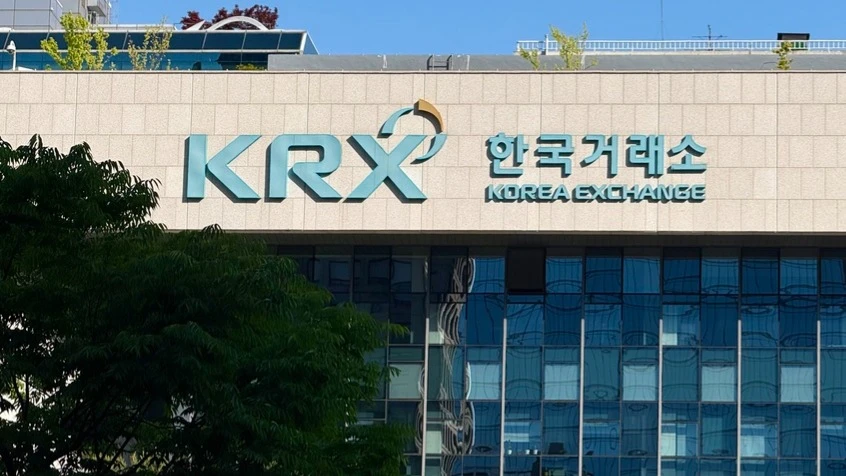
The drop in prices "left us speechless," say market participants / Photo: yllyso/Shutterstock.com
Despair is growing among investors in South Korea: On July 29, the stock market plummeted for the second day in a row, and the Kospi, the Korean stock exchange’s benchmark index, has fallen by a record 33% over the past month, according to Bloomberg. “I’ve just been through hell,” the agency quotes Kim Bom-jin, a retail investor from Seoul who invested in shares of Samsung Electronics and other local companies. His acquaintances, who used to discuss the stock market daily, now avoid the topic altogether: the market crash “has left us speechless,” Kim added.
Korean authorities have decided to hold an emergency meeting this evening to address the market situation: the sell-off has already wiped out billions of dollars from investment portfolios. Lawmakers attribute the crash to the launch in May of leveraged exchange-traded products in South Korea targeting the stocks of specific companies. “The country has turned into a casino,” said Representative Lee Jeong-wook at a parliamentary hearing. “Such products should never have been allowed on the market.”
Market professionals note that SK Hynix’s quarterly report, which disappointed investors, intensified the sell-off but does not, on its own, explain its magnitude. What would have been a normal correction turned into a crash due to the forced liquidation of numerous leveraged positions, although experts do not yet see any clear signs of a sharp decline in demand for chips.
What People Are Saying in the Market
“SK Hynix reported strong results, but in today’s AI market, strong results alone are no longer enough,” said Gary Tan, portfolio manager at Allspring Global Investments. Investors had expected greater clarity from the company regarding long-term contracts and shareholder payouts, but did not receive it. As long as there are no such signals, volatility in Asian tech stocks will persist: leveraged positions will continue to be closed out, and the market will continue to reassess its expectations, the expert warned.
— “The sell-off is not driven by a deterioration in fundamentals. It is driven by a lack of liquidity and [negative] sentiment, and the decline is exacerbating forced liquidations of leveraged exchange-traded funds tied to individual stocks. The scale of the accumulated leverage means that this process will not end in one or two weeks,” said Peter Kim, senior managing director at KB Securities. At the same time, the decline in prices is generating new alarming news and prompting investors to sell further, he added.
“The core investment thesis remains valid, so there is an ‘irrational, near-panic’ element to the current sell-off,” said Gina Kim, emerging markets equity portfolio manager at Nordea Asset Management. The sell-off can be partly explained by rational factors—investors unwinding margin positions, their concerns about the growing debt of the largest cloud companies, and China’s technological advances, the financial expert noted.
“We wouldn’t call what’s happening a panic—it’s more of a rotation of capital into other sectors,” countered BNY investment strategist Vi Khun Chong. According to data from BNY’s custody business, selling is concentrated in the IT sector, while demand remains steady in most other sectors. At the same time, the volume of short positions in Korean stocks remains high, so further unwinding of these positions is likely, the expert believes.
— SK Hynix’s shortfall in its quarterly financial results relative to forecasts (for revenue and operating profit) was expected and was due to the sales mix rather than a weakening of demand, said S. K. Kim, an analyst at Daiwa Capital Markets, in an interview on Bloomberg TV. According to him, investors were more disappointed by the lack of additional shareholder returns, such as a share buyback. “From a fundamental perspective, the AI supercycle (an anticipated multi-year period of accelerated growth in demand for chips, servers, and other infrastructure for artificial intelligence — Oninvest) has not come to an end,” Kim emphasized (quoted by Business Insider).
A Global-Scale Risk
The AI boom and the sell-off of shares in AI-related companies are becoming a serious credit risk for the global economy, Fitch warned. “The scale of investment in AI is such that a potential correction would significantly affect the economy and the entire capital market,” the rating agency stated. According to Reuters, this is the most direct warning yet from a major rating agency about the dangers of the AI boom.
This article was AI-translated and verified by a human editor