Investors have reduced their portfolio hedges to a one-year low out of fear of missing out on the rally

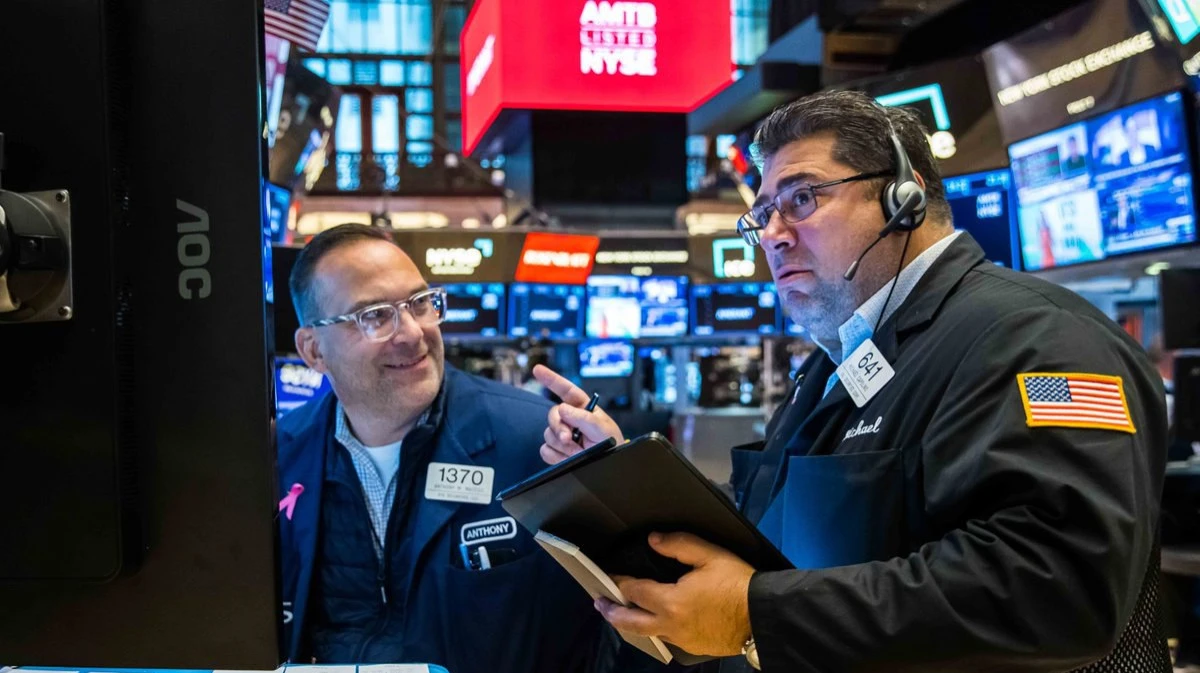
The monthly average daily call-to-put ratio for the S&P 500 rose to 0.9, one of the most bullish levels in at least four years / Photo: X / NYSE
Demand for protection against a stock market decline has fallen to its lowest level since last year, when U.S. President Donald Trump softened his stance on trade tariffs, according to Bloomberg. Easing tensions in the Middle East, falling oil prices, and strong corporate earnings have supported the market’s rise to new highs. Some indicators from the options market suggest that FOMO—the fear of missing out on gains—has itself become a significant driver of the rally, Reuters notes.
Details
Demand for hedging positions in the S&P 500 can be gauged through the options market by comparing the implied volatility of put options, which protect against declines, with the volatility of call options, which are designed to profit from an uptrend, according to Bloomberg. This metric is known as skew: for the S&P 500, it has fallen to its lowest level since April 2025, the agency reports.
In addition, the monthly average daily call-to-put ratio for the S&P 500 rose to 0.9—one of the most “bullish” levels in at least four years, according to a Reuters analysis based on data from Trade Alert. The data suggests that traders are more concerned about missing out on further market gains and are no longer as eager to hedge their portfolios against a decline, Bloomberg explains.
"At the beginning of the month, after prices surged, 'investors exited their hedging positions and shifted into call options betting on a rise so as not to miss out on the rally,'" wrote Mandy Xu, head of derivatives market analysis at Cboe Global Markets, in a note to clients on Monday. The pattern is repeating this week, according to data compiled by Bloomberg.
Reuters points out that traders' behavior shows just how heavily the market has recently been driven by momentum and speculative enthusiasm rather than by fundamental factors.
Increased volatility
Volatility indicators have become one of the signs of strong bets on a rally: typically, they decline during a rally, but on certain days they are now rising alongside stocks, Reuters notes. For example, on August 4, when the S&P 500 jumped nearly 2%, the Cboe VIX volatility index rose by nearly one point.
"With such strong demand for call options, the VIX could rise even as the market rises," Garrett DeSimone, head of quantitative research at OptionMetrics, told Reuters.
The high demand for call options—which give investors the right to buy shares at a fixed price by a certain date— may indicate that some investors are trying to hastily catch up with the rally they missed, rather than systematically positioning themselves for further growth, according to analysts surveyed by Reuters.
What They're Saying on Wall Street
— “Skew has shifted quite significantly over the past week: investors have moved away from put options, which protect against declines, toward call options, which are designed to profit from gains,” — Bloomberg quotes Christopher Jacobson, co-head of derivatives strategy at Susquehanna International Group. Investors who may have had an insufficient allocation to stocks in their portfolios last week turned to call options to “regain the opportunity to profit from a rally,” he noted.
— “There are several factors, but FOMO is one of them,” Mark Hackett, chief market strategist at Nationwide, told Reuters. — “Most of the key arguments for the ‘bear’ scenario have ceased to hold water, and maintaining short positions—both in absolute terms and relative to the market—has become a risk that many are unwilling to take.”
— “FOMO hasn’t gone away. It just wasn’t the focus of the market before,” Steve Sosnik, chief strategist at Interactive Brokers, told Reuters. — “There are quite a few institutional investors who are more concerned about missing out on a rally than about a market decline.”
— “The combination of rising volatility and a simultaneous increase in call skew indicates that investors were generally underweight in stocks and therefore risked being left behind by the market in the event of further gains. Hence the need to aggressively buy call options positioned for an uptrend,” Reuters quotes Susquehanna strategist Christopher Jacobson as saying.
This article was AI-translated and verified by a human editor