"Iran blinked first": what the opening of the Strait of Hormuz means in terms of politics

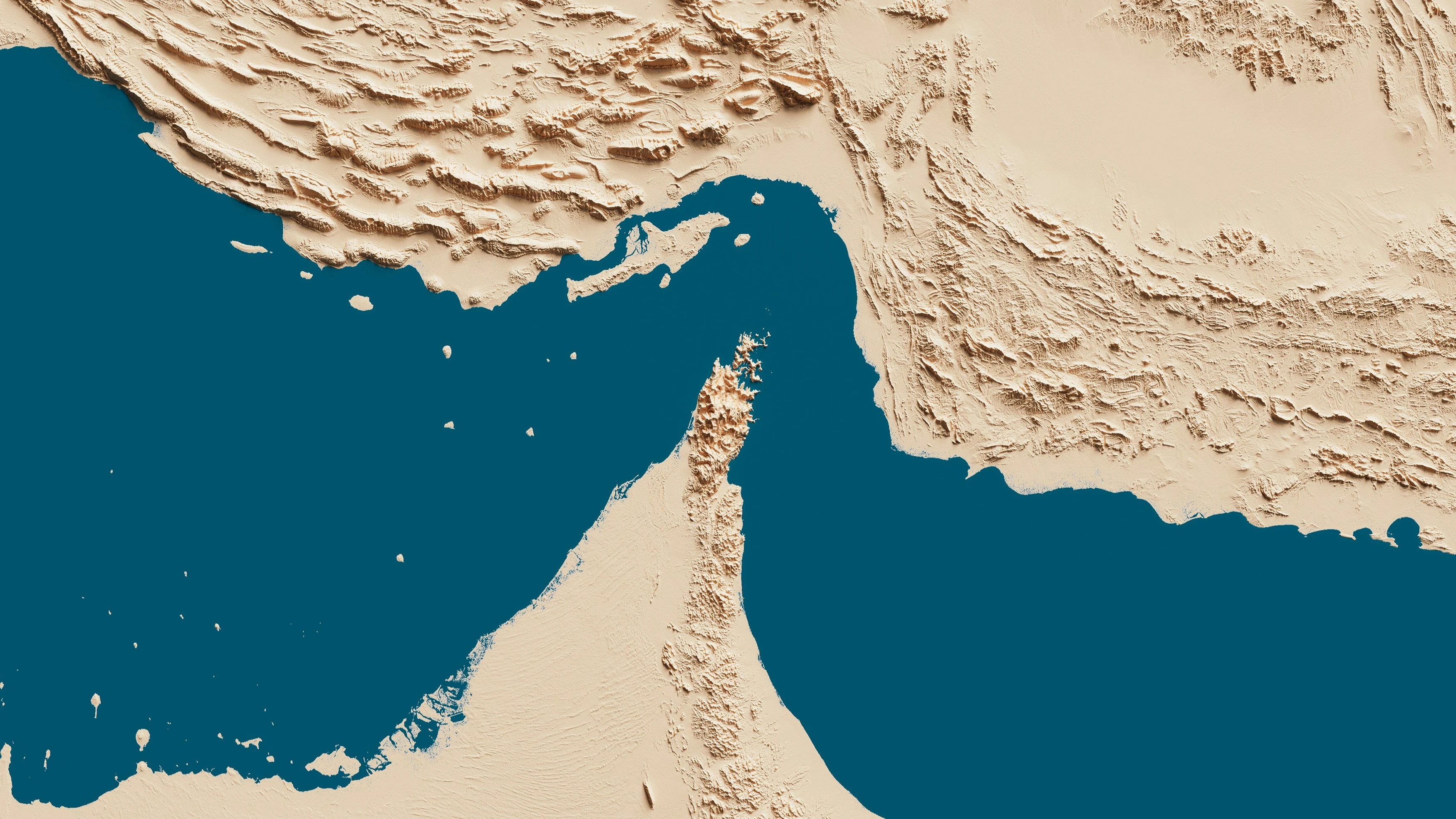
Iran announced the opening of the Strait of Hormuz for the duration of the ceasefire agreement between Israel and Lebanon. Photo: Planet Volumes / Unsplash.com
On Friday, April 17, Iranian Foreign Minister Abbas Arkakchi announced that the Strait of Hormuz has fully opened to commercial shipping. This came after Israel and Lebanon agreed to a 10-day cease-fire a day earlier. Araqchi noted that ships could travel through the strait along an "agreed route" during the period of the agreement.
Iran effectively blocked the Strait of Hormuz, through which a fifth of the world's oil and LNG supplies pass, at the very beginning of March.
Gershon Kogan, an Israeli Iranian Orientalist and journalist, wrote about how to view the discovery of Hormuz from the point of view of the confrontation between the United States and the Islamic Republic in his Telegram channel "About Iran from Israel". Oninvest publishes his opinion in full:
Trump has sold Iran on a temporary concession
Iran has announced that it is opening the Strait of Hormuz to commercial ships - but not permanently, but only for the remainder of the ceasefire. Foreign Minister Abbas Araghchi wrote. Passage is allowed along the "agreed route," meaning Tehran has not given up its claim to control, but has only temporarily loosened its grip.
For Trump, this looks like a tangible result of pressure. Not so long ago, Washington demanded the immediate opening of Hormuz, and now Iran is doing just that, albeit in its favorite manner: not "we conceded," but "we generously allowed.
At the same time, the United States separately emphasizes that Iran's naval blockade remains in force until a full-fledged deal is reached. In other words, the scheme is simple: Tehran has slightly loosened the stranglehold on world trade, but Washington has kept the stranglehold on Iran itself.
This is not an Iranian capitulation or a restoration of the old norm. It is a temporary concession under pressure. And the concession is very revealing: if the regime opens Hormuz not after victory but after a series of strikes, blockade and hard negotiations, it means that the price of its previous posture has become too high. In other words, Tehran saved face in words, but retreated in substance.
The main indicator here is not even diplomacy, but the market. After Araghchi's statement, oil went down sharply: Brent fell by more than 10% during the day, and investors perceived it as a weakening of the risk to global supplies. The market, as usual, did not get sentimental: it heard one simple message - Iran can no longer hold the global energy industry by the throat with the same confidence.
But it's too early to fall into Trumpist ecstasy. The Hormuz is not open at all, but for the period of the ceasefire. Moreover, Europe is already assembling a separate international coalition to ensure freedom of navigation in the strait. In other words, no one seriously considers the problem closed. It's just that now Iran has blinked first. And this is already quite humiliating for the regime, which tried to sell control over Hormuz as a geopolitical miracle weapon.
In a nutshell: yes, Trump has sold Iran - but so far only a temporary concession, not a strategic capitulation.
And this is already quite a lot. Especially for the regime, which yesterday pretended to be the master of the Strait and today has to explain why "temporarily open" is supposedly also a sign of strength.
This article was AI-translated and verified by a human editor