Meta has begun competing with OpenAI and Anthropic in the market for programming agents
The company has launched a beta version of a model that will be the first paid one in its history, opening up a new source of revenue

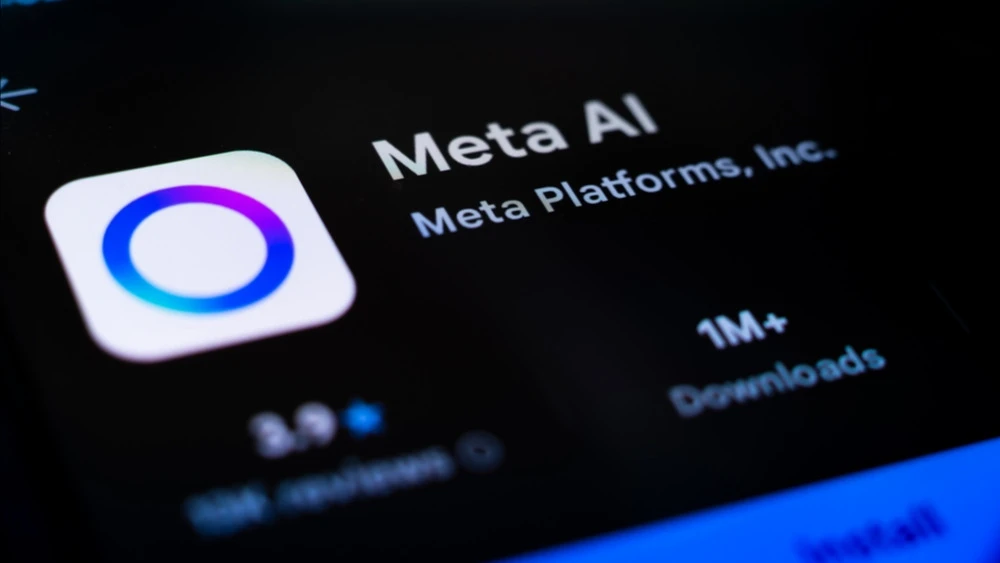
Meta plans to sell subscriptions to Muse Spark 1.1, just as OpenAI, Anthropic, and Google do / Photo: PJ McDonnell / Shutterstock.com
Meta Platforms, which owns the social media platforms Facebook and Instagram, has unveiled an AI model capable of programming and performing agent-based tasks. This will allow the company to compete with AI giants OpenAI and Anthropic in key market segments, according to CNBC. And this will provide it with a major new source of revenue, Business Insider notes. In addition, the hyperscaler plans to begin production of a new AI chip to improve AI performance on its social media platforms, Reuters has learned.
Details
Three months after unveiling its first AI model under the leadership of its new head of the division, Alexander Wang, Meta released a major update—Muse Spark 1.1. "This is the company's most powerful model to date for agent-based tasks and programming," Wang said in an interview with CNBC.
The previous version of Muse Spark was available only to “select partners,” who could access the technology through a “closed beta,” the senior executive said. Now, Meta is launching a public beta test of the new model through its developer portal: developers will be able to sign up and receive integration instructions.
This is the second major release in the Muse family this week. On Tuesday, Meta released Muse Image, a model for generating images.
Meta shares jumped 4.7% during Thursday's trading session, buoyed by a rebound across the entire technology sector.
What Makes the New AI Model Interesting
This is Meta's first model with a paid subscription plan, and, according to company CEO Mark Zuckerberg, the offering will be one of the most affordable on the market.
In an interview with CNBC, Wang described the pricing for the updated Muse Spark as “very aggressive and attractive” compared to similar offerings from Anthropic and OpenAI. According to him, every new user will receive $20 worth of free queries. After that, the company will charge $1.25 per 1 million input tokens and $4.25 per 1 million output tokens. “The goal is to offer truly attractive prices that scale with massive consumption,” Wang said.
According to him, Muse Spark 1.1 outperformed competing models in specific tasks related to its ability to interact with various third-party programming products and services. “In a sense, we have to develop the programming capabilities of [new models] as part of our overall work on agent capabilities,” Wang explained.
He added that he himself had been actively testing the latest version of Muse Spark in his daily work. The agent can be used to improve health: it can search the internet for information, read scientific articles, and access the user’s medical data. “This is one of those use cases that, in my opinion, truly reflects the need for such agent-based systems,” Wang said.
He also said that Meta is currently training a more powerful AI model codenamed Watermelon, but did not specify when it would be released.
Why Is This Important for Investors?
The market expects Meta to demonstrate a return on its massive and growing investments in AI infrastructure and development, CNBC explains. Although the company is spending at a rate comparable to other hyperscalers, the revenue it generates from these expenditures is significantly lower than that of Google or Amazon and is limited primarily to advertising revenue. The company only recently announced that it will begin generating profits from leasing its data centers. At the same time, Meta has not yet managed to catch up with OpenAI, Anthropic, and Google in the development of popular models and AI applications, the network notes.

The tech industry’s interest in AI agents surged sharply in the first half of 2026, partly due to the sudden popularity of OpenClaw—a bot that developers could use to manage the AI models underlying powerful digital assistants. Wang noted that Meta had trained Muse Spark 1.1 “to work well with all the most popular clients for interacting with AI agents.”
Although Meta’s previous AI strategy focused on releasing the earlier Llama family of models to the open-source community, the company has now shifted its focus to selling access to its own AI models. Wang stated that Meta remains “committed to open source” and that his division is working on a version of Muse Spark that will be released as open source. However, he did not say when the release would take place.
New AI Chip
Meta plans to begin production of its new Iris AI chip in September as part of a plan to increase computing power to 14 gigawatts next year, according to an internal memo reviewed by Reuters. The agency reports that the custom-designed chip is expected to help improve the AI powering Facebook and Instagram.
Broadcom has been brought on board to develop Iris Meta, and Taiwan Semiconductor Manufacturing Co. will manufacture it, according to Reuters. This approach is likely to help reduce the enormous costs of computing power and increase independence from chip suppliers such as Nvidia and Advanced Micro Devices, the agency notes.
This article was AI-translated and verified by a human editor