Morning in New York: Chipmakers Have Restored Investors' Appetite for Risk


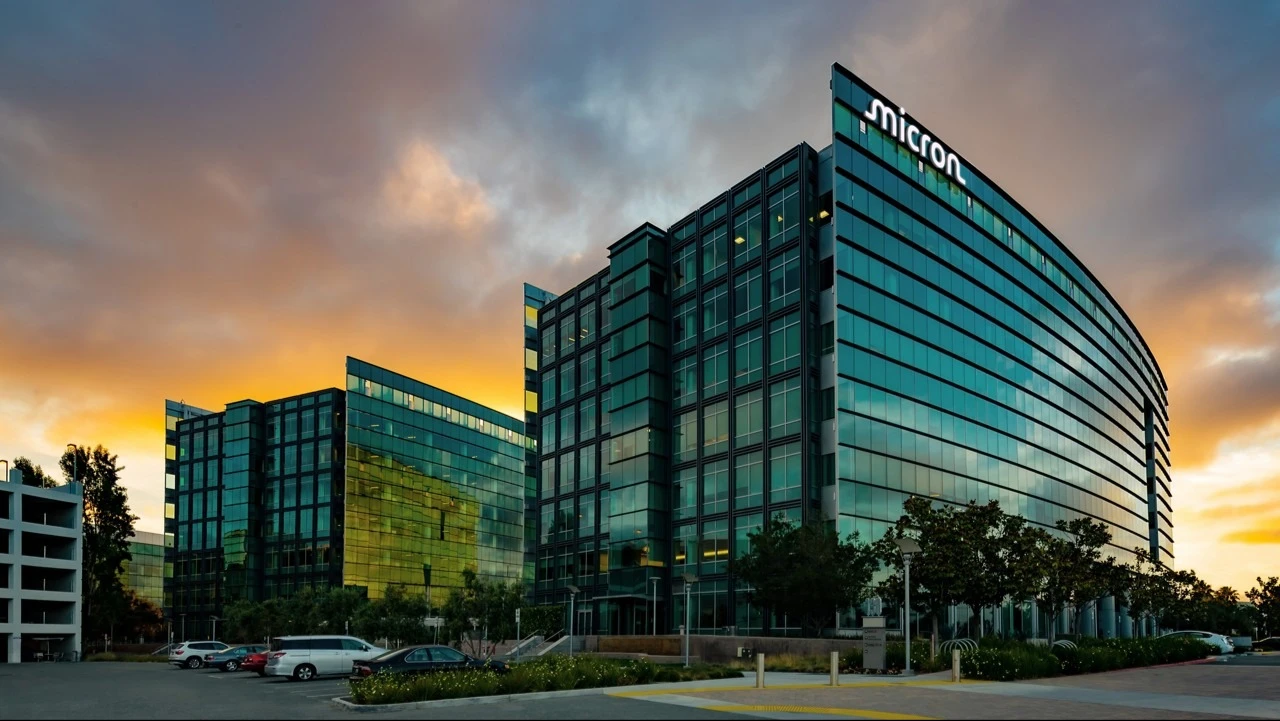
Micron Technology's earnings report has revived demand for semiconductor manufacturers' stocks / Photo: X / NYSE
A daily review and forecast of events in the U.S. stock market by Mikhail Denislamov, Deputy Director of Capital Markets Research at Freedom Broker.
We expect
The upcoming session will be influenced by two opposing factors. First, the release of May’s PCE data, which is the Federal Reserve’s primary inflation indicator. Second, there has been a strong upward reversal in the technology sector following Micron Technology’s (MU) stellar earnings report, which has revived demand for stocks of semiconductor manufacturers, including memory chip makers.
Qualcomm (QCOM), SanDisk (SNDK), Western Digital (WDC), Lam Research (LRCX), KLA (KLAC), and Applied Materials (AMAT) provided an additional boost to the sector.
The consensus forecast for the overall May PCE calls for a 0.5% month-over-month increase (April: +0.4%), while the core PCE is expected to rise by 0.3% month-over-month and 3.4% year-over-year (April: +0.2% and +3.3%). Freedom Broker’s forecast projects growth in these indicators of 0.37% and 0.26% MoM, respectively, with the core deflator expected to stabilize around 0.2% MoM starting in June. Sustained upward deviations from this level would give the Fed grounds to raise rates, as they could be interpreted as an end to disinflation. Results in line with or below our forecast would mitigate the risks associated with the regulator’s “hawkish” stance.
In addition, data on household income and spending for May will be released today (consensus: +0.4% and +0.6% MoM; April: 0% and +0.5% MoM, respectively). Freedom Broker’s forecast aligns with market expectations in both cases. Weaker income growth will be seen as a factor holding back inflation. At the same time, any deviation of actual expenditures from the forecast is unlikely to have a significant impact on inflation expectations, as one-off spikes in nominal spending are already reflected in the current report.
Also this Thursday, data on durable goods orders for May (consensus: −5%, April: +8%), the final estimate of first-quarter GDP (consensus: +1.6%), and weekly initial jobless claims (consensus: 225,000, following 226,000 in the previous period). The market’s reaction to this week’s largest block of macroeconomic data will depend primarily on whether the PCE confirms the risk of a resumption of monetary tightening, a view expressed by half of the FOMC members following the June meeting.
Before the market opens, BlackBerry (BB), McCormick & Co (MKC), Commercial Metals (CMC), Acuity (AYI), TD Synnex (SNX), Darden Restaurants (DRI), and Nano X Imaging (NNOX). After the close of the main trading session, FedEx Freight Holding Company (FDXF) and WiseGroup (WSE) will release their results.
U.S. index futures are showing steady gains. We assess the risk balance for the upcoming session as positive, with elevated volatility. The upward reversal in chipmaker stocks, coupled with falling oil prices and Treasury yields, is fueling risk appetite. The release of the PCE data could act as a dampening factor, given the Fed’s “hawkish” stance.
What to Watch for in the Pre-Market
— Micron Technology (MU) shares are rising by more than 15% following the release of quarterly results and guidance that significantly exceeded market expectations. The company’s revenue and adjusted EPS came in at $41.46 billion and $25.11, respectively, compared to consensus estimates of $35.85 billion and $20.78. Management announced the signing of 16 contracts with terms ranging from three to five years and a total value of approximately $22 billion. Management expects revenue from these contracts to account for at least half of total revenue. This has bolstered investor confidence in the stability of demand and the predictability of the business.
— Qualcomm (QCOM) shares are up about 12% following the company’s improved long-term outlook, announced at an investor day. The company doubled its revenue target for the non-smartphone segment to $40 billion by fiscal year 2029, including more than $15 billion from data center solutions. Partnerships with Meta Platforms (META) and Microsoft (MSFT) have bolstered investor confidence in Qualcomm’s ability to diversify its business beyond mobile processors. The company also announced that it is developing a specialized chip for the Chinese market.
— Trip.com Group (TCOM) shares are down more than 10% following the release of its first-quarter earnings report. The main pressure on the stock price came from the company’s cautious outlook: in the second quarter, the company expects revenue growth to slow to 3–8%, with a corresponding decline in margins and net income.
— The results of the Fed’s annual stress test provided a boost to the financial sector. All 32 major banks that participated in the test maintained capital levels above the minimum requirements, despite nearly $708 billion in simulated losses under a deep recession scenario. The aggregate Common Equity Tier 1 (CET1) ratio fell from 12.8% to 11.2%, marking the smallest decline in recent years. Some of the largest banks have already announced dividend increases and new share buyback programs, which is creating a moderately positive backdrop for the sector.
— ARS Pharmaceuticals (SPRY) shares are down about 24% following the announcement that no new decisions have been made regarding the inclusion of the drug neffy in commercial insurance formularies effective July 1. Negotiations with insurers will continue, but the company has already lowered its 2026 cash operating expense forecast to $248 million, although it reaffirmed its ability to achieve cash flow breakeven in 2027. The delay in expanding insurance coverage has heightened concerns about the drug’s commercialization timeline.
The Market on the Eve of...
Trading on June 24 on U.S. stock markets ended with mixed results. The S&P 500 fell 0.1%, the Nasdaq 100 dropped 0.43%, the Dow Jones rose 0.35%, and the Russell 2000 gained 0.37%.
The key driver of trading was the shift of capital from overheated tech stocks to cyclical companies and sectors benefiting from the economic recovery. Against this backdrop, stocks of the “Magnificent Seven” mostly closed the session in the red. The industrial sector (XLI: +1.16%) and consumer cyclicals (XLY: +1.15%), supported by demand for shares of machinery manufacturers, retailers, and airlines. Energy stocks (XLE: −1.63%) were the underperformers due to a sharp drop in hydrocarbon prices.
New home sales in the U.S. in May totaled 580,000, the lowest level since January, compared with a consensus estimate of 640,000.
Yields on Treasury bonds at the long end of the curve fell by 8–9 basis points, although the auction to place $70 billion in five-year notes saw weak demand (spread: 0.7 basis points). Futures are pricing in a Fed rate hike of approximately 33 basis points by the end of this year, which continues to put pressure on the markets.
WTI crude oil prices fell 3.4%, breaking below the $70 support level, as the coordinated evacuation of tankers from the Strait of Hormuz reduced the geopolitical risk premium. Gold fell 3.4%, remaining just above $4,000 per ounce, while silver plummeted 6.4%.
Company News
— Steve Tsirulis, a former top executive at Potbelly, has been named the new CFO of the fast-food chain Wendy's (WEN: +25.7%). In addition, the company’s stock was buoyed by a surge of speculative interest from retail investors on the popular WallStreetBets forum.
— Sunrun (RUN: +12.5%) has entered into a strategic partnership agreement with Tesla (TSLA) and Renew Home (RNW) to supply more than 16 gigawatts of flexible energy capacity to hyperscalers and utilities. This will allow Sunrun to capitalize on the growing demand from data centers for AI infrastructure.
— Hertz Global (HTZ: −41%) lowered its adjusted EBITDA guidance for the second quarter to $50–80 million due to an unexpected decline in demand for used cars, and also announced a $100 million secondary offering of common stock.
— KB Home (KBH: +16.7%) reported quarterly earnings below consensus and a decline in new orders. At the same time, analysts remain optimistic about the potential for margin growth by 2027, thanks to a flexible build-to-order (BTO) strategy and strong demand in the San Francisco Bay Area.
— Qualcomm (QCOM: −3.3%) shares reacted negatively during trading on June 24 to the announcement of the $3.9 billion acquisition of the software startup Modular, aimed at expanding its AI ecosystem. The deal, which is expected to close in the second half of the year, involves the issuance of 19.2 million new QCOM shares, posing a risk of dilution for current shareholders.
This article was AI-translated and verified by a human editor