Morning in New York: Nvidia's Earnings Report Will Support a Rebound in the AI Sector

NVIDIA's first earnings report following the resignation of its CEO, Jensen Huang, exceeded expectations. Photo: Samuel Boivin / Shutterstock
A daily review and forecast of events in the U.S. stock market by Mikhail Denislamov, Deputy Director of Capital Markets Research at Freedom Broker.
We expect
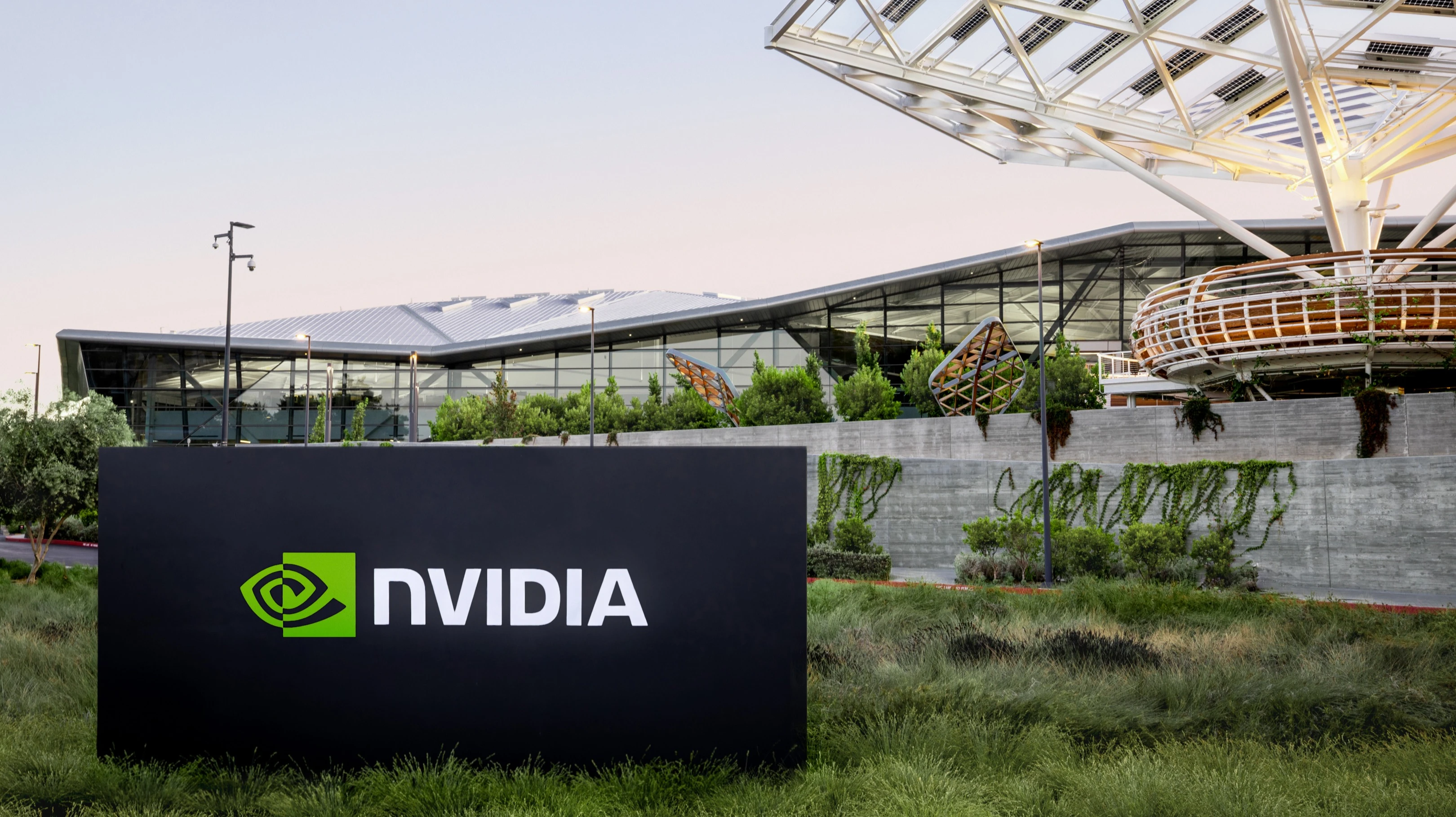
NVIDIA’s first earnings report since CEO Jensen Huang stepped down beat expectations. The revenue forecast for the current quarter exceeded the consensus by nearly $5 billion. We expect the rebound in chipmakers’ stock prices to support the market at the opening bell. Ahead of the earnings report, options priced in an 8–9% move in NVIDIA shares; the stock rose 4–5% in after-hours trading. In the coming days, we expect high volatility in these stocks to persist and demand for safe-haven assets to weaken. The VIX “fear index” has risen from 19 to over 25 points over the past two sessions.
At 8:30 a.m. Eastern Time (ET), data on new home starts for October will be released (consensus: 1.23–1.25 million; September: -5.2%, to 1.221 million). We expect a moderate rebound, although mortgage rates above 7% will limit its magnitude. In our view, market participants will take weaker results in stride, as this will ease pressure on bond yields.
At 10:00 a.m. ET, the October pending home sales index will be released; in September, it reached a record low of 7.3%. At 2:00 p.m. ET, the minutes from the Fed’s October meeting will be released; at that meeting, the federal funds rate was kept in the 3.75–4% range. Board member Lisa Cook and Cleveland Fed President Beth Hammack spoke in favor of a rate hike. The market will be looking for signals in the release regarding the regulator’s decisions in December. Federal Reserve Board member Michael Barr will speak on the topic of investments in local communities.
Anthropic will set its IPO price: 825 million of its shares are being offered at $70–78. According to CNBC, the final price could exceed this range due to strong demand. We believe that the $58–64 billion offering (and more if the price exceeds the range) has already drawn liquidity away from the technology sector, and the actual start of trading may be accompanied by a reverse inflow of capital.

Before the market opens, Lowe's (LOW), Target (TGT), and TJX (TJX) will report their earnings. After the market closes, Palo Alto Networks (PANW) will report its earnings.
S&P 500 futures are trading higher. We assess the risk-reward balance as positive amid heightened volatility. Buyers are being supported by NVIDIA’s strong earnings report and investors’ moderate positioning in the IT sector. Risk appetite is being limited by the rise in 10-year Treasury yields above 5% and the Fed’s “hawkish” rhetoric. The key question is whether the positive momentum in chipmaker stocks can hold and extend to non-cloud providers CoreWeave (CRWV) and Nebius (NBIS), which are up 7–8% ahead of the market open.
What to Watch for in the Pre-Market
— NVIDIA (NVDA) shares are up about 3–5% following the third-quarter earnings report. The company’s revenue rose 103% year-over-year to $115.8 billion (consensus: about $109 billion), and adjusted EPS came in at $2.68 (consensus: $2.47–2.49). Data center revenue doubled, reaching $107.6 billion. Fourth-quarter guidance calls for $130 billion (+/- 3%), compared to a consensus of $125.1–125.3 billion, with the gross margin expected to decline to 71–72%. Chairman of the Board of Directors Harvey Jones confirmed that there are no plans to reinstate Jensen Huang as CEO. In our assessment, his departure has not yet affected demand. The company’s liabilities to suppliers rose from $279 billion to $390 billion, primarily due to long-term memory chip purchases. The value of contracts for cloud services and data center rentals rose from $74 billion to $102 billion. The buyback amount under the current program totaled $227.3 billion.
— Take-Two Interactive (TTWO) has received further confirmation of strong demand for Grand Theft Auto VI ahead of its November 19 release. Sensor Tower estimated pre-sales at 15.88 million copies, which have already generated $1.54 billion in revenue.
— Credo Technology (CRDO) shares are up 5% following the resolution of a patent dispute with Marvell Technology (MRVL) over active electrical cables (AEC) for AI clusters. The parties will also settle Marvell’s claims regarding Credo’s patents. Credo has already resolved disputes with TE Connectivity, Molex, and Amphenol.
— Dolby Laboratories (DLB) shares are down by about 3%. The company’s revenue for the fourth fiscal quarter rose 22% year-over-year to $374 million, with adjusted EPS of $1.25 versus a consensus estimate of $1.14–1.20. However, the revenue guidance for the current quarter ($285–305 million) fell well short of average market expectations ($358–359 million). For fiscal year 2027, Dolby forecasts revenue at the same level as in 2026.
— Applied Optoelectronics (AAOI) shares plummeted 10% following the signing of an agreement to sell them at market price (ATM) for up to $550 million. A similar transaction worth $250 million took place in February, followed by one worth $500 million in March, and sales totaling $600 million each in May and August. We believe that the supply overhang will continue to weigh on the stock price.
The Market on the Eve of...
Trading on U.S. stock markets closed lower on November 17. The S&P 500 fell 1.03% to its lowest level since late July. The Nasdaq-100 dropped 0.72%, the Dow Jones fell 1.64%, and the Russell 2000 fell 1.5%. Treasury yields fell by 2–4 basis points as the yield curve steepened, with the 10-year yield approaching 5.1%. The dollar index lost 0.1%, while gold rose 0.3%.
The number of stocks in the S&P 500 that were down exceeded the number of gainers by nearly six times (the third-worst reading of the year). All sectors traded in the red. Even excluding Microsoft (MSFT: -2.27%), which dragged the index down by 14 basis points and stood out as the weakest performer among the “Magnificent Seven,” the index would have lost about 0.9%. The financial sector (XLF: -1.91%) underperformed the market amid falling shares of banks and payment companies; the utilities sector (XLU: -1.59%) and real estate (XLRE: -1.49%), the telecommunications sector (XLC: -1.46%), and the healthcare sector (XLV: -1.41%). The energy (XLE: -0.52%) and industrial (XLI: -0.55%) sectors saw the smallest losses, with engineering and aerospace companies standing out.
J.P. Morgan (JPM: -2.44%), which announced the replacement of its CFO, and UnitedHealth (UNH: -5.42%) following a proposal by the Centers for Medicare & Medicaid Services to step up the fight against fraud in government programs, and Alphabet (GOOGL: -1.24%). Broadcom (AVGO: +2.46%) provided support for the S&P 500, adding 6 basis points to the index.
The AI sector failed to rebound ahead of NVIDIA’s (NVDA: -0.44%) earnings report. California Attorney General Rob Bonta has launched an investigation into the company’s affairs.
Home Depot’s (HD: -2.5%) comparable sales rose 2.2%, which was 50 basis points above the consensus, but its gross margin and outlook for the current quarter fell short of expectations. Nike (NKE: −6.3%) set its adjusted EPS guidance for fiscal year 2031 at $3–3.5, compared to a consensus estimate of $2.95. At the same time, the company does not expect earnings to begin recovering until 2029. Bill Holdings (BILL: +12.6%) surged on a report by the FT that TPG is close to finalizing a deal to acquire the company.
Retail sales in October were in line with the consensus estimate, but the figures excluding autos and gasoline—as well as those for the GDP reference group—exceeded expectations. Industrial production unexpectedly declined. The NAHB Housing Market Index fell to a 14-year low. St. Louis Fed President Alberto Musalem acknowledged that “several” rate hikes may be needed before spring. New York Fed President John Williams noted that, although the central bank still has work to do on inflation, “drastic” measures will not be necessary.
This article was AI-translated and verified by a human editor