Shares of Nvidia and cloud computing companies surged following the chipmaker's earnings report. Have market concerns been allayed?

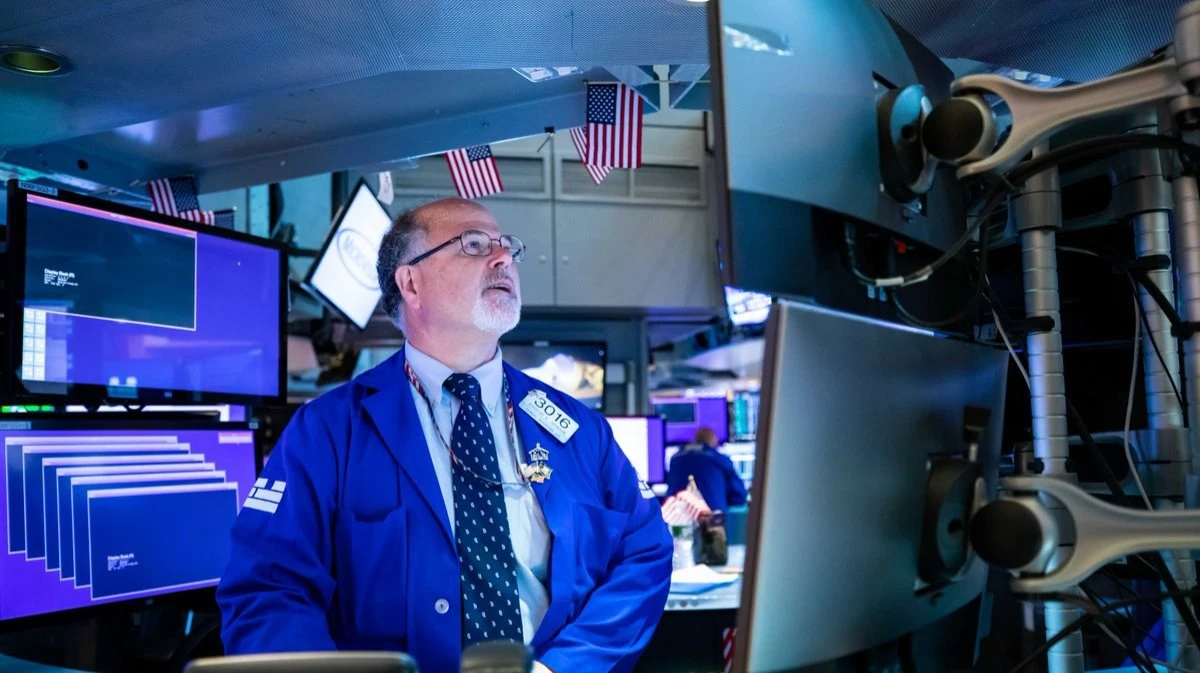
Photo: X / NYSE
Nvidia shares rose 3.8% in premarket trading on Wednesday, November 18, after the company once again reported results that beat market expectations and raised its sales growth forecast for next year from 70% to 75%. Prior to the earnings release, analysts had noted that the company would only need to confirm this forecast to reassure the market.
Nvidia's results also boosted non-cloud providers: CoreWeave's stock price jumped 6.6%, Nebius's rose 8.2%, and Iren's climbed 7.4%.
Futures on the broad-market S&P 500 index rose 0.7%, while futures on the tech-heavy Nasdaq 100 index jumped 1.2%. Dow Jones futures rose 0.3%.
Nvidia's third-quarter revenue totaled $115.84 billion, exceeding analysts' expectations by more than $6 billion. Its fourth-quarter forecast of $130 billion also beat the consensus, according to LSEG.
What Analysts Are Saying
— “I don’t think results that beat expectations and an improved outlook are enough to turn sentiment toward Nvidia around right now. Any company would give anything for that kind of revenue, profit, and order backlog, but the bad vibe surrounding Nvidia hasn’t gone away yet,” Reuters quotes Jamie Cox, managing partner at Harris Financial Group, as saying.
— “If we were to go solely by the numbers [in the report], Nvidia’s stock should have risen by more than 10%. However, the whole situation with Jensen casts serious doubt on future forecasts, given how the company was structured,” — ATFX Chief Market Analyst Nick Twidale told the agency. “It seems that, from a practical standpoint, the company needs not only a new CEO but probably a new management style as well,” he added.
— Nvidia’s results should go some way toward allaying the concerns sparked by the change in its leadership, according to Brian Colello, a senior equity analyst at Morningstar. He described the results as strong and as confirmation that “the development of AI infrastructure is a reality.” Colello noted that the company’s shipments remained stable in the third quarter. Among the long-term risks, Colello cited regulatory policy, overseas sales, and hyperscalers’ development of their own chips. However, in his view, as the market expands, Nvidia should remain one of the key players. “We are at a point of maximum uncertainty, as investors still do not know who will lead Nvidia in the long term,” the analyst added.
— No sharp downturn in Nvidia’s business is expected in the near future, and the company’s outlook remains “quite positive,” noted Michael Wilson, chief investment officer and chief U.S. equity strategist at Morgan Stanley. In his view, AI remains “an attractive investment opportunity.” Neither hyperscalers nor certain non-cloud providers focused on AI computing are cutting back on spending, and no slowdown is expected. However, he added that investment may not grow at the pace investors had anticipated six months ago.
— “This team is moving full steam ahead, not just trying to keep the ship afloat. This is a clear signal that management is confident the company will do just fine next year even without Jensen Huang at the helm,” — CNBC quotes Josh Gilbert, eToro’s lead analyst for the Asia-Pacific region and the Middle East.
The results, which he called “simply stunning,” do not resolve all the questions, but after several weeks of bated breath, the AI market can now “breathe a slight sigh of relief,” Gilbert added. Before Huang’s departure, Nvidia was “running at full capacity,” and its fundamentals remained intact, he believes.
This article was AI-translated and verified by a human editor