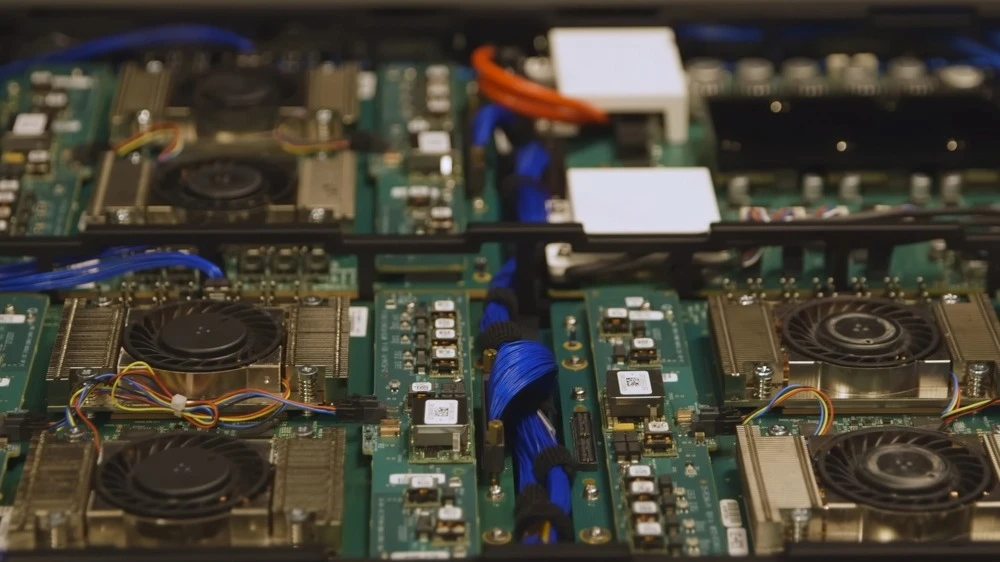
Nebius is among Burry’s top three short positions. What about the company’s deals reminded him of the dot-com crash?

According to Burry, Nebius is a prime example of what the market looks like at the peak of a boom / Photo: frank333 / Shutterstock
Renowned short seller Michael Burry, whose successful strategy during the 2008 mortgage crisis was chronicled in *The Big Short*, is stepping up his bets against the AI boom. One of his latest targets is Nebius—in the company’s report, the investor saw signs that reminded him of the dot-com crash.
Nebius as an Indicator of a Market Top
On August 12, on his blog Cassandra Unchained, Burry wrote that he had increased his bet against Nebius by opening an additional short position at $247. He had already been shorting the cloud provider’s stock—he wrote about the position on his blog in early August, a few days before the company’s earnings report. Burry has now reported that Nebius is among the top three largest short positions in his portfolio—behind the iShares Semiconductor ETF (SOXX) and Micron.
According to Burry, Nebius is a prime example of what the market looks like at the peak of a boom. During Nebius Group’s conference call on its second-quarter 2026 results, company founder Arkady Volozh reported that contracts signed for the provision of computing power with terms of one to three years generate $20–25 million in revenue per megawatt for the company. For short-term contracts lasting up to six months, Nebius is already negotiating on the basis of $40–50 million per megawatt and higher. It was precisely this discrepancy that raised Burry’s suspicions: in his view, urgency and the fear of losing access to scarce capacity alone are insufficient to explain such a premium.
Burry sees this as a more significant signal: buyers place a much higher value on computing power that is available in the near term than on the same capacity in the future. Nebius takes this into account, which is why it does not sell all of its capacity in advance, reserving a portion of it for higher-priced short-term transactions. According to Burry, this pricing structure is typical of a market where the commodity itself may depreciate in value.
Electricity doesn't lose value, says Burry. Therefore, in his view, either the chips themselves, or the customers who purchase computing power, or both, must become cheaper. He draws a parallel with the dot-com crash of the 2000s: back then, the crash dragged on because customers’ financial situations deteriorated gradually.
This year, Nebius extended its server depreciation schedule from four to five years, according to Burry. He sees this as a contradiction: the company has begun to depreciate the value of its servers more slowly, even though, in his estimation, their economic value is declining very rapidly. At the same time, the longer depreciation period reduces the company’s annual expenses and improves its current financial metrics—another factor that Burry takes into account in his bet against Nebius.
This article was AI-translated and verified by a human editor