Agent-Based AI Could Help Micron Overtake Nvidia: What Analysts Expect from the Company's Report
Wall Street sees Micron as a barometer of the resilience of AI infrastructure deployment

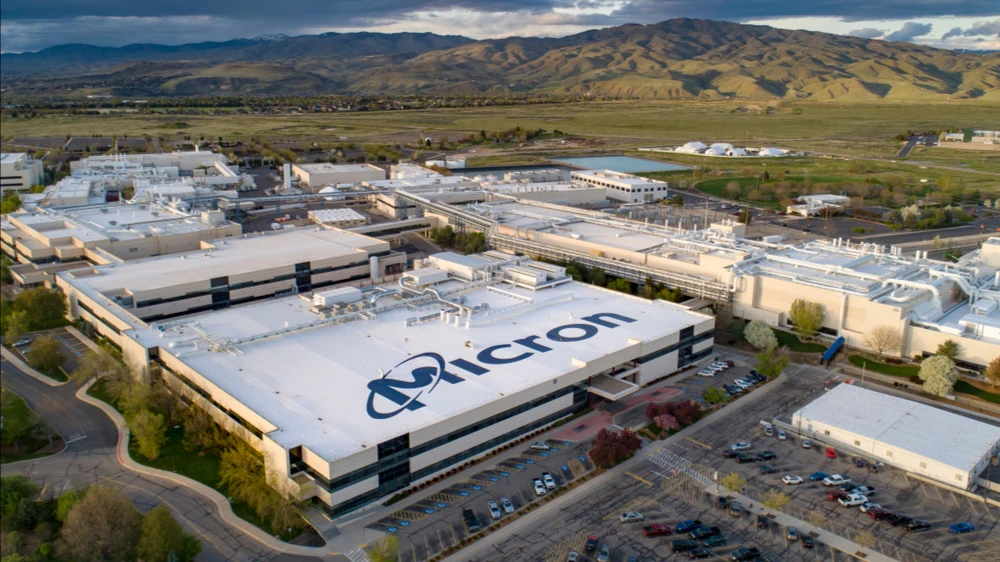
Wall Street predicts that Micron will report a more than 10-fold increase in earnings per share in its third-quarter earnings report / Photo: Glen Hush / Shutterstock.com
Wall Street expects Micron's earnings for the last quarter to rise by 940%, according to MarketWatch, citing FactSet. The memory chip manufacturer—whose products have become scarce due to the AI boom—will release its earnings report on September 30. And if analysts’ forecasts prove accurate, the company will, for the first time in at least 2.5 years, outpace Nvidia and other tech giants in terms of its contribution to the growth of the S&P 500’s aggregate earnings, becoming the main driver of that growth, according to data from Seaport Research Partners.
Micron’s influence on the S&P 500 has grown over the past year as the memory shortage has deepened. By the end of 2025, the company had risen to sixth place among the index’s largest sources of earnings growth, and by the first half of 2026, it had climbed to third place.
Since the beginning of the year, Micron’s stock has soared 270%, although its performance has been volatile over the past three months. The chipmaker’s market capitalization stands at $1.2 trillion, and its performance is closely monitored as an indicator of demand for AI, MarketWatch notes.
What Analysts Are Saying
Micron sits at the intersection of two major investment themes: the sustainability of AI spending and the recent intensification of market growth centered around a small group of companies, Jake Behan, head of capital markets at Direxion, told MarketWatch. The rally in Micron’s stock was one of the factors that helped the Nasdaq Composite reach new all-time highs, the publication notes.
“When market leadership becomes so narrow, what’s happening is no longer just the story of one company, and its earnings report becomes a market-wide event,” Behan explained. According to him, Micron’s stock “has become a sort of referendum on the state of the AI boom.”
"Micron's results 'should provide insight into whether growth is extending beyond AI infrastructure,'" Jacob Born, a technology analyst at eMarketer, told MarketWatch.
Baird believes that growing demand for agent-based artificial intelligence will drive Micron’s stock to unprecedented levels. The investment firm reaffirmed its “buy” rating on the memory chip maker’s stock and raised its price target from $1,280 to $1,520, according to CNBC. The new target implies growth potential of approximately 40%.
"We have become even more positive about Micron's short- and medium-term outlook due to the recent sharp increase in demand for agent-based AI. In particular, it is driving demand for central processing units, and we expect it to continue doing so next year,” wrote Baird analyst Tristan Guerra. He also noted that an additional growth driver for the company is the expected industry-wide decline in DRAM supply and improved profitability in the production of high-speed HBM memory for AI chips next year.
Gil Luria, Managing Director and Head of Technology Research at D.A. Davidson, has reaffirmed his $2,000 price target for Micron shares—one of the highest on Wall Street, according to Yahoo Finance. This target implies that the analyst expects the company’s stock price to double.
“Memory is a critically important component for the operation of AI models, and that’s unlikely to change,” Luria noted. “More memory means higher-quality models, faster computations, and longer context windows in agent chats.” Market participants consistently and universally report that they don’t even come close to having the amount of memory they need. Demand continues to grow rapidly, and sufficient supply won’t be available for at least another year.”
As the analyst noted, current multiples suggest that the growth cycle for memory demand has already ended, but demand for AI computing power continues to grow. “The latest surge has been driven by the popularity of Meta’s Muse —a successful leap forward in user interface design that has opened up new scenarios for consumers to use AI. While just a few weeks ago we were concerned that Meta’s demand for memory might decline, that now seems unlikely.”

“The total addressable market for memory is growing in terms of both price and volume, and the supply shortage will persist for another two years,” Jay Kwon, executive director of Global Equity Research at JPMorgan, told Yahoo Finance. “Investors appear to have underestimated the growth in demand for memory from systems based on traditional processors, not just AI chips. This remains one of the key factors that could lead to further upward revisions of demand forecasts.”
This article was AI-translated and verified by a human editor