"The bubble could burst sooner": Burry has changed his betting strategy regarding the AI sector
A well-known investor replaced short positions in AI company stocks with put options that expire next year

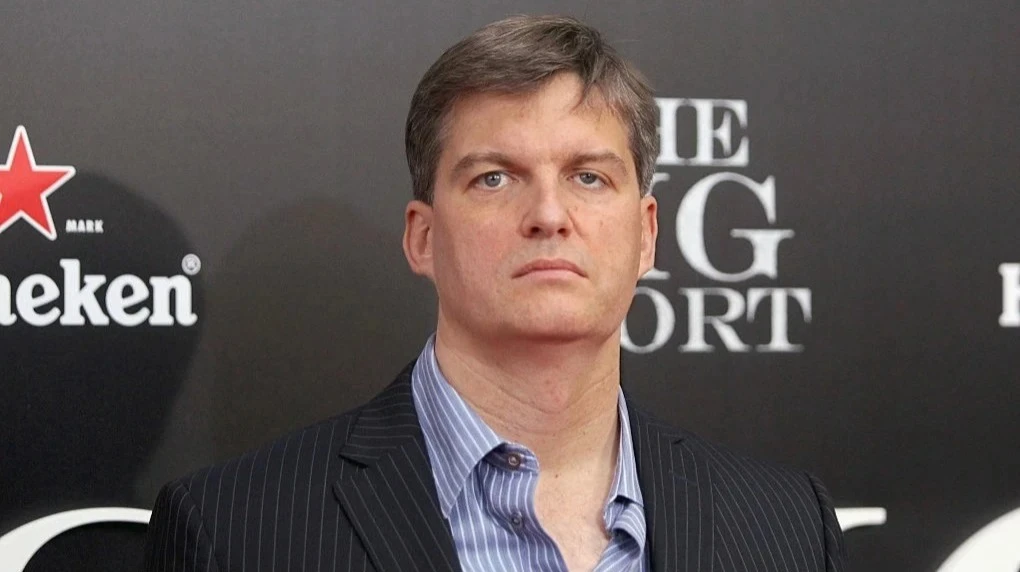
The protagonist of *The Short Game* believes that the bubble in the artificial intelligence sector could burst sooner than expected / Photo: Shutterstock.com
Investor Michael Burry, known as the real-life inspiration for the protagonist in the movie *The Big Short*, has reshuffled his portfolio. He continues to expect a decline in artificial intelligence stocks, but now believes it will happen over a shorter time horizon. Burry wrote about the changes on his Substack blog, Cassandra Unchained, on September 28.
What Happened to Burry's Portfolio?
The investor reported that he had replaced all of his short positions in the AI sector with put options. These instruments grant the right to sell an asset at a predetermined price and are typically used to profit from a decline in price or to hedge against it.
“Fundamentally, I’m shifting the time horizon. Consequently, I need more leverage on my short positions. Shorter time frames make such leverage more acceptable. Nothing provides better leverage than options—in this case, put options, which are currently relatively cheap due to exceptionally low volatility,” the investor wrote.
He replaced his short position in Micron with put options expiring in June 2027 and with strike prices around $500.
The short position in Nebius, which was among Burry's top three short positions, has been replaced with put options with the same expiration date and a strike price "in the double-digit range."
Burry increased his bet against Palantir by combining his short position with his existing put options into a larger position consisting of put options expiring in September 2027 with a strike price just above $100.
A short position in the iShares Semiconductor ETF (SOXX), which focuses on the U.S. semiconductor sector, Burry converted into put options expiring in September 2027 with a strike price just above $400.
Burry also replaced his short positions in Nvidia with put options expiring in September of next year, and his short positions in Caterpillar and Oracle with put options expiring in December 2027. His position in put options on the Invesco QQQ exchange-traded fund, which tracks the Nasdaq 100 Index, Burry converted his position in put options on the Invesco QQQ exchange-traded fund, which tracks the Nasdaq 100 Index, into an increased position in put options on the Nasdaq 100 Index (NDX) itself, expiring in September of next year. The investor closed the short position in CoreWeave but has not yet found replacement put options at an attractive price.

Why did Burry rebalance his portfolio?
“This was partly due to tax optimization considerations related to losses,” the investor explained regarding his recent transactions. “But the main reason was a study that led me to conclude that the AI bubble could burst sooner rather than later.”
He cited a new study by Ares Management, an alternative investment management firm. The study notes that the boom in the AI sector is based on the assumption of sustained growth in capital expenditures on artificial intelligence. If, even for just one season, AI revenue fails to live up to the level of investment made in it, the boards of directors of companies focused on the most promising bet may simply decide that another idea has now become the one to pursue—and legally, they have complete freedom to do so, write Ares analysts in a section titled “The Hangover.”
“From my perspective, more and more people are realizing what’s going on,” Burry writes in his blog. “But don’t forget: in 1999, three books were published about the 1999 bubble. And books were being written about the housing market bubble even before it burst. So the fact that these bubbles are widely discussed or that people write about them in detail over and over again doesn’t mean they aren’t bubbles.”
Context
Burry has maintained a pessimistic outlook on the market for quite some time. In May, the investor compared the current situation to “the final months of the 1999–2000 bubble,” and in August, he warned that the stock market could face a crash comparable to “Black Monday” in 1987, when the Dow Jones Index plummeted 22.6% in a single day.
Despite his gloomy forecasts, the market continued to rise: last week, the Nasdaq Composite Index reached a new all-time high. Nevertheless, some of the stocks that Burry is betting against remain below their own peaks, CNBC notes. For example, Micron shares are trading 16% below their record high, and Palantir shares are trading about 10% below their all-time high.
This article was AI-translated and verified by a human editor