Nvidia Finds Itself in the Unfamiliar Role of an Undervalued Growth Stock — Morningstar
The agency believes that the fair value of the stock is currently nearly one and a half times higher than the market price

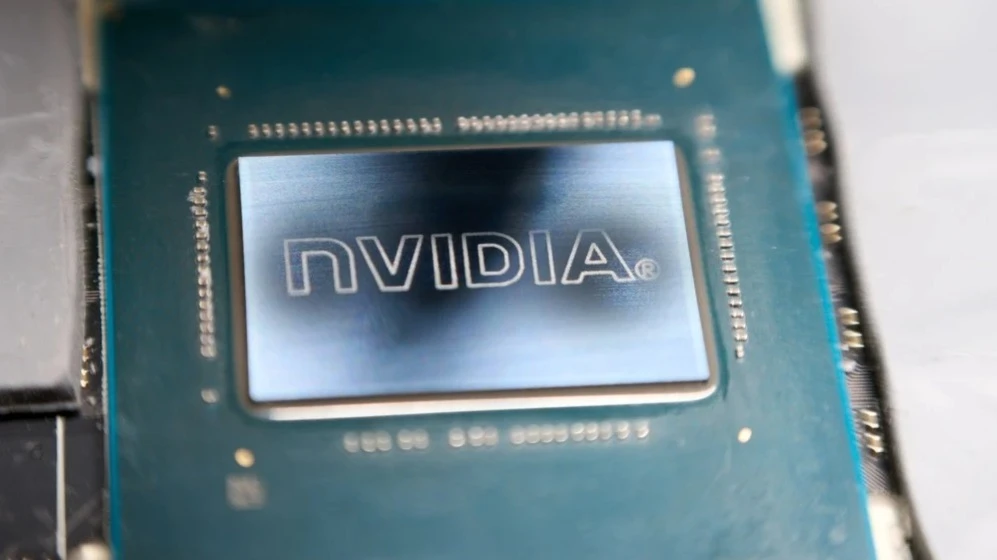
Nvidia chips, originally designed for gamers, proved to be ideal for AI applications / Photo: alexgo.photography/Shutterstock.com
The investment and rating agency Morningstar identified a rare combination of rapid business growth and a moderate market valuation in Nvidia. It is precisely these types of stocks that form the basis of the GARP (Growth at a Reasonable Price) strategy: it involves selecting fast-growing companies whose stocks do not appear to be overly expensive. Morningstar Senior Analyst Brian Colello estimated the fair value of Nvidia shares at $280 each (the target implies growth of more than 40% relative to the latest closing price). He also noted the company’s sustainable advantages over its competitors but cautioned about a “very high” level of uncertainty.
Nvidia's stock has been in negative territory over the past three months. Despite the company's dominant position in the artificial intelligence chip market, its stock has risen by only 5% since the beginning of the year, while the iShares Semiconductor ETF has gained 67% over the same period.
Why It's Hard to Give Up on Nvidia
Colello attributes one of Nvidia’s main advantages—which Morningstar refers to as “economic moats”—to the architecture of its graphics processing units (GPUs). They are capable of performing multiple computations simultaneously and therefore effectively handle the matrix algorithms on which neural networks are based. This feature, which was previously in demand mainly in video games, has become the foundation of Nvidia’s dominance in the field of AI, explains Colello.
Another protective barrier is the Nvidia CUDA software platform. It hosts libraries, compilers, frameworks, and development tools for building AI models, but it runs only on Nvidia GPUs, which makes it difficult for customers to switch to competitors. Morningstar acknowledges that the largest technology companies will develop their own chips and seek out other suppliers. However, according to Colello’s assessment, these efforts will, at best, merely weaken Nvidia’s dominance.
Where did the $280 come from?
The valuation of $280 per share—nearly 44% above the market price—corresponds to a projected P/E ratio — the ratio of market value per share to Nvidia’s adjusted annual earnings — of 30 for fiscal year 2027 and 20 for fiscal year 2028, the report states. Given the acceleration in industry investment in AI that Colello expects in calendar year 2026, he projects the company’s total revenue to grow by 80% in fiscal year 2027. This will mark the peak: as the customer base expands, maintaining such growth rates will become more difficult.
What Risks Does an Investor Face?
The main risk to this assessment is the pace of AI spending, Colello acknowledges: the money comes from a small number of customers, each of whom has an incentive to optimize—or even cut back on—their investments over time. Industry leaders will shift some of the workload to their own chips, and restrictions from Washington periodically prevent Nvidia from selling AI products to China. Among the arguments in favor of the skeptics, the expert also cites the unclear prospects for AI revenue and the practical application of the technology.
This week, the market appears to have punished Meta Platforms for raising its AI capital expenditure forecast (the company’s stock has lost more than 8% over the past five days) and rewarded Microsoft for sticking to its plans (up more than 20% over the same period), according to Business Insider. However, Meta fell short of its earnings forecast, while Microsoft exceeded it.
Not just Morningstar
Earlier in July, Bank of America noted that Nvidia’s stock had significantly underperformed the market and that investors should take advantage of this. Nvidia shares are trading at a discount to Microsoft and Apple, even though the chipmaker’s potential in AI is comparable to that of its competitors, and rising memory prices are affecting all three companies equally, said BofA analyst Vivek Arya. He reaffirmed one of the highest price targets for Nvidia on the market—$350 per share (representing nearly 80% upside from the last close)—and his “Buy” rating on the stock.
According to S&P Global, the consensus remains positive as well—58 out of 61 analysts recommend buying the stock. The average price target, calculated based on analysts’ forecasts, is $303 and implies a 55% increase in the stock price over the course of the year.
This article was AI-translated and verified by a human editor