Nvidia is repeating Cisco's mistake, according to a prominent executive. And this poses a threat to the entire market
A chipmaker is repeating the mistake Cisco made during the dot-com era—by financing the purchase of its own equipment, according to a Wall Street veteran

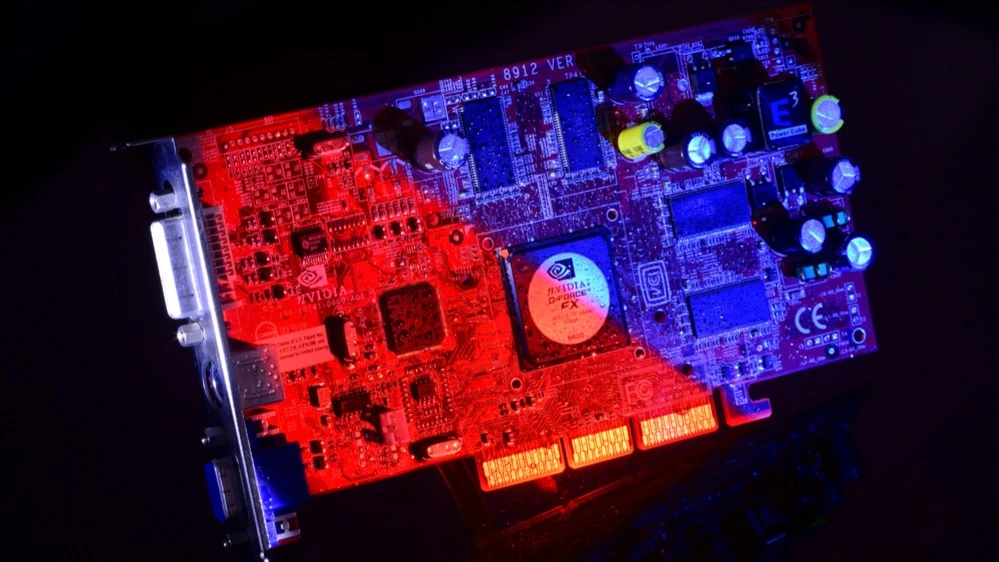
Nvidia accounts for about 8% of the S&P 500 index—twice the weight Cisco had at the peak of the dot-com bubble / Photo: Andreas Merchel / Shutterstock.com
Nvidia is repeating the mistake Cisco made during the dot-com bubble, according to George Noble, a former star fund manager at Fidelity and analyst for Peter Lynch. During the dot-com era, the telecommunications solutions provider extended credit to buyers of its equipment who could not afford to pay for it on their own. After these companies went bankrupt between 2000 and 2022, Cisco’s stock plummeted 89%, dragging down the S&P 500 index, which lost half its value, the investor notes.
According to Noble, Nvidia is repeating the same scenario: the company assumes some of the financial risks of the buyers of its chips by guaranteeing their payments for equipment leases and acquiring stakes in those companies. “The more Nvidia sells, the more it risks losing if its customers can’t pay. This is the most massive irrational allocation of capital in history,” Noble wrote.
The investor also points out that Nvidia’s vulnerability poses a risk to the entire stock market. Nvidia currently accounts for about 8% of the S&P 500 index—twice the weight that Cisco Systems had at the peak of the dot-com bubble in 2000, Noble writes.
In addition, Noble cites data from analyst and investor Sam Kovach, who provides a chart showing the change in Nvidia’s stock price over the past few years: the company’s shares, which had been rising since the spring of 2023, have begun to lose ground. Prices have now fallen below the lower boundary of the long-term uptrend. In the past, whenever the stock approached this boundary, it would begin to rise again. Kovach expects Nvidia’s stock to fall further and believes that its decline could trigger a sell-off across the entire stock market.
Kovach also points to other signs of weakness in Nvidia’s stock. He also notes that the company’s stock is falling even on days when the market is rising. On November 4, the day after the U.S. midterm elections, he writes, the Nasdaq rose 2%, while Nvidia’s stock fell 1.9%: “I’m shorting Nvidia. Its stock is trading below the 200-day moving average, and if it closes below $200, I’ll increase my short position.” Amid a broad market sell-off on November 5, Nvidia’s stock plummeted more than 9%. As a result of the crash, Nvidia’s stock lost all the gains it had made this year.
This article was AI-translated and verified by a human editor