'Incredibly dangerous' days: Wall Street talks strategies for the falling market
The Nasdaq Composite entered correction territory on Thursday


The Nasdaq Composite plunged 4.5% on Thursday / Photo: Unsplash/Oleg Chursin
The Nasdaq Composite plunged 5.2%, the S&P 500 sank more than 4%, and the Dow Jones slid 3.3% in Thursday’s tech selloff. Investors accelerated their rotation out of tech stocks amid fears of a slowdown in data center construction. Analysts are divided on how to navigate the falling market: Some say the AI rally is coming to an end, while others recommend buying the dip in tech.
What Wall Street is saying
Thursday’s market action is what happens when euphoria and hype drive stocks higher rather than fundamentals, according to David Bahnsen, founder and chief investment officer at the Bahnsen Group. The rout also served as an important reminder that the broad-market S&P 500 is “way too concentrated” in tech stocks, Bloomberg reports. “Rather than trying to time the end of this tech stock washout, we would prefer to avoid it completely and instead focus on more defensive parts of the market, such as consumer staples and energy stocks,” Bahnsen said, as quoted by Barron’s. These sectors may be less exciting, but they generate steady cash flows and include companies with long records of dividend increases, he noted.

“The shakeout in A.I.-related stocks has much further to run,” strategists at Macro Research Board wrote in a note cited by CNBC. The researchers noted that “investors are beginning to question excessive forward profit estimates.” With the broader stock market vulnerable, they recommend diversifying portfolios to reduce exposure to tech stocks. “In this environment, our bet has been a churn in the aggregate U.S. and global stocks indexes (at least for now), but with a meaningful rotation underneath the surface (including divergences in the absolute price of stocks/sectors),” the strategists argue.
The “end of the AI trade as we know it” has probably arrived, independent research house Citrini Research wrote on Wednesday. Recall that Citrini is known for an early-2026 report on AI’s disruptive impact on the economy. It now recommends shifting capital toward “boomer software” stocks (long-established players), as well as financial, entertainment, and energy companies, MarketWatch reports.
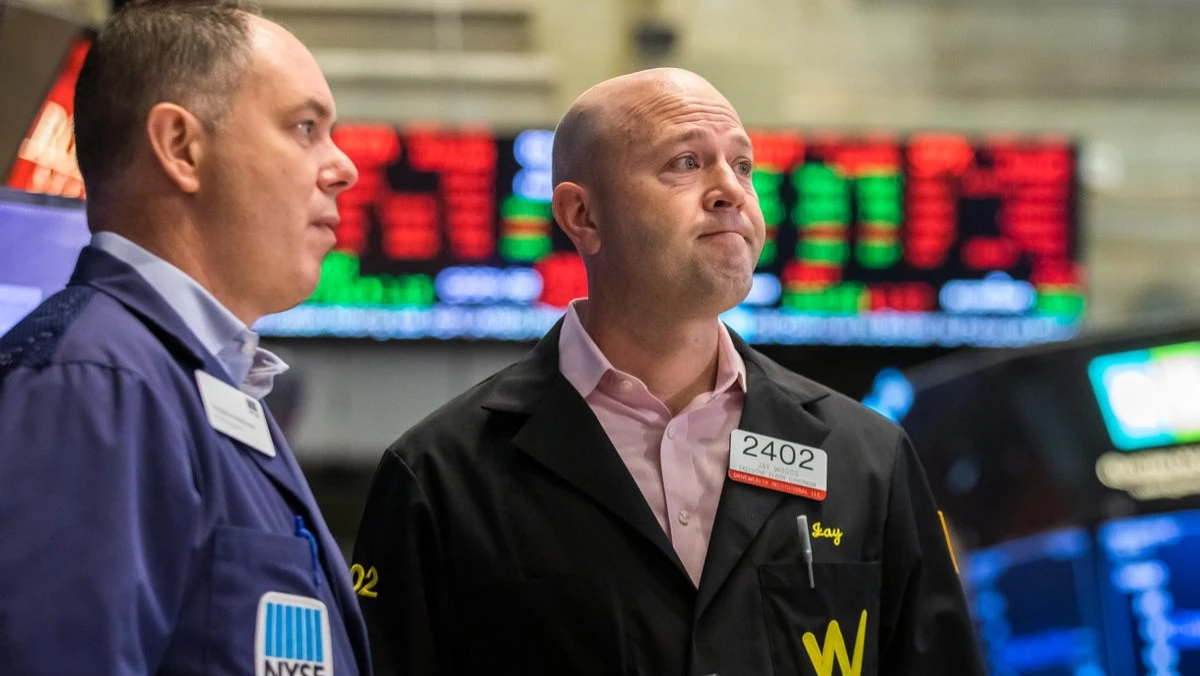
“I don't think that it's over when it comes to AI,” Raymond James chief investment officer Larry Adam told CNBC. He expects the AI infrastructure buildout to continue for at least another year, Seeking Alpha reports. Adam sees the current pullback as a buying opportunity. Some AI and semiconductor stocks are trading at a 30% discount to historical levels. He also pointed to healthy corporate earnings forecasts that continue to be revised upward, suggesting that fundamentals remain strong despite investors’ concerns. Adam recommends considering a rotation out of healthcare stocks, whose valuations he described as the most expensive in 20 years, and into tech. “I actually would use this as an opportunity to slowly transition back into tech,” he concludes.

“This is an incredibly dangerous couple of days for the market,” Cem Karsan, founder of investment management company Kai Wealth, told the Wall Street Journal. He said he had bought complex derivatives, including instruments tied to the Cboe Volatility Index, or VIX, options on the S&P 500, and credit default swaps. He is confident these instruments will pay off if volatility surges.
Futurum Group CEO Daniel Newman sees the selloff as a buying opportunity because the fundamentals underpinning the AI trade remain strong: Most companies are delivering bullish guidance alongside strong earnings. Investors are “buying high-performing companies expected to grow significantly over the next several years at a discount,” Newman wrote, as quoted by Barron’s. The strategy is suitable only for long-term investors, however, rather than those seeking quick returns, since AI stocks could fall further before recovering, he cautions.
“Anytime you're you're trying to buy into a violent sell-off or big rotational market like right now, you could experience more pain before that pays off,” agreed Baird investment strategist Ross Mayfield, also quoted by Barron’s.