The Limits of Rationality: Why the Guru Who Predicted the Dot-Com Crash Doesn't Consider AI a Bubble
The high degree of uncertainty in valuing AI companies does not necessarily mean that the market is overvaluing their potential, according to renowned investor Howard Marks

The current optimism surrounding AI may ultimately prove to be insufficient if the technology’s economic impact exceeds expectations, according to Marks / Photo: Unsplash / Nahrizul Kadri
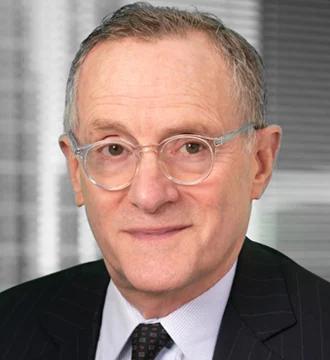
Despite the debate over the potential dangers of artificial intelligence, investors continue to pour money into this technology, as evidenced by the rise in the Bloomberg index, which tracks the 50 largest companies in the industry. Howard Marks, co-founder of Oaktree Capital Management, is not yet ready to call what is happening a bubble. In an interview with Bloomberg, he stated that the hype surrounding AI could turn out to be either a speculative bet or an undervalued one—Marks believes it is currently impossible to confidently distinguish one from the other. However, in his view, this is no reason to completely abandon investments in AI.
Howard Marks is a co-founder of the investment firm Oaktree Capital. He is known for his “memos” (notes) in which he describes his views on the stock market. He caught Wall Street’s attention in 2000 when, in a memo titled “Bubble.com,” he predicted the imminent crash of tech stocks just three months before the dot-com bubble began to burst. Warren Buffett has said that he always reads Marks’s newsletter and learns something new from it every time.
An Investor's Perspective: Taking a Chance
According to Marks, optimism has prevailed in the U.S. market since October 2022: during that time, the S&P 500 has more than doubled. One source of this optimism has been the hype surrounding AI, but Marks also attributes investor sentiment to the strong U.S. economy and the fact that, since the 2008–2009 financial crisis, the market has not faced any truly severe downturns.
A long period without major upheavals has led investors to view growth as the baseline scenario, according to Marks. As a result, negative signals have less of an impact on their expectations, and prices often end up above the intrinsic value of assets. When this happens, the key question is whether current valuations are in line with companies’ future earnings.
“In 1997, Alan Greenspan (economist and former chairman of the Federal Reserve—Oninvest) used the phrase ‘irrational optimism’—and that is, in essence, the definition of a bubble. There is certainly enthusiasm surrounding AI. The question is whether it is irrational.”
Marks believes that it is impossible to determine at this time whether investors' expectations regarding AI are indeed overblown. No one can yet reliably assess how widely the technology will be adopted, what economic impact it will have, or how much profit AI businesses will be able to generate.
The more a company’s business depends on AI, the harder it is to estimate how much it will be able to earn in the future, according to Marks, a proponent of value analysis. For traditional companies, such forecasts can be made with greater confidence; for tech companies, with less. When valuing hyperscalers like Microsoft and Amazon, one can rely not only on the prospects of AI but also on other major business segments that are already profitable. Pure-play AI startups are harder to value: many of them have not yet published financial results, their business depends on technology—and profit forecasts are largely based on assumptions.
"I believe there is too much uncertainty here to reliably estimate future earnings—and therefore the company's intrinsic value. It will be very difficult to do so. In such cases, Warren Buffett used to say, 'We're putting this in the "too difficult" pile.'"
But the high level of uncertainty in the valuation of AI companies, according to Marks, does not necessarily mean that the market is overvaluing their potential. It is possible that AI will contribute more to the economy than the market currently anticipates, and in that case, Marks says, investors’ current valuations may even turn out to be too low. Therefore, Marks does not view the lack of reliable forecasts as a reason to completely avoid AI: rather, it should influence which investment strategy to choose and how much capital to allocate to this idea.
Marks does not consider uncertainty itself to be proof of market irrationality. According to him, the current optimism surrounding AI may ultimately prove to be insufficient if the economic impact of the technology exceeds expectations. The lack of reliable forecasts does not mean that investors should avoid investing in the sector, says Marks; rather, it should influence their choice of investment vehicle and the size of their position. The co-founder of Oaktree Capital Management advises investors to assess how confident they are in their own forecasts and only then decide whether they are willing to take on risk for the sake of higher returns.
No AI Illusions: A User's Perspective
Marks is concerned not only with the investment side of AI, but also with the technology’s impact on employment. He does not rule out the possibility that AI could lead to job losses and, consequently, a decline in tax revenue. Marks believes the government should establish a special working group to study possible scenarios for the development of AI and its impact on the economy.
“I think any sensible person should consider these risks. But we also have to admit something else: we have virtually no control over them. When I come to this conclusion, I try to just let it go. My wife says that worrying in advance is like bleeding to death before the shot is even fired. We’re powerless to change anything—I, for one, certainly can’t do anything. So we just have to accept it as a fact.”
Oaktree itself is already using artificial intelligence as a working tool. According to Marks, the company uses it for data organization and preliminary analysis, but investment decisions are still made by people.
"I still believe that people play a decisive role in investing. I think artificial intelligence, just like index funds did in their day, will drive many active investors out of the market—but not the best ones."
This article was AI-translated and verified by a human editor